


Subject: Art and design
Lesson 3: Joining materials
Exploring techniques for joining paper and card; using a range of tools and equipment; making choices about which technique to use.
Lesson 3: 3D landscape art
Creating 3D landscape pictures using natural found objects; using their imagination to choose and arrange objects.
Lesson 3: Painting to music
Using paint to record emotional responses to different pieces of music, creating exciting and expressive paintings.
Sculpture and 3D: Creation station
Exploring the sculptural qualities of malleable materials and natural objects; developing the use of tools and joining techniques; designing and making clay animal sculptures.
Choose your lesson
Lesson 1: Clay
Lesson 2: Playdough
Lesson 3: 3D landscape art
Lesson 4: Designing animal sculptures
Lesson 5: Creating animal sculptures
Lesson 6: Painting animal sculptures
Key skills
- Talk about their ideas and explore different ways to record them using a range of media.
- Experiment in an exploratory way.

This content is for subscribers only. Join for access today.
Key knowledge
- Form: Modelling materials can be shaped using hands or tools.
- Texture: Simple terms to describe what something feels like (eg. bumpy).
This content is for subscribers only. Join for access today.
Key vocabulary
This content is for subscribers only. Join for access today.
Equipment list
Equipment needed across all lessons in this unit.
This list does not include equipment which is usually readily available in the classroom (e.g pencils, A4 paper etc)
 Download
Full equipment list for the subject
Quantities marked × will update. Items without quantities are unaffected
- Modelling clay ×30
- Tuff tray or other flat clean surface ×1
- Playdough ×30
- Playdough tools ×30
- Natural loose materials For example, leaves, twigs, petals, seed pods, bark etc.
- PVA glue, pots and spreaders ×15
- Sticky back plastic ×15
- A selection of small world animals ×8
- Pictures of animals As needed
- Air-drying clay ×1
- Paintbrushes ×30
- Poster or acrylic paint ×8
- Water pots ×15
This content is for subscribers only. Join for access today.
Lesson 3: Mark making with chalk
Mark making outdoors with chalk, practising creating patterns in a new medium and identifying similarities and differences between the drawing tools used.
Sculpture and 3D: Clay houses
Developing their ability to work with clay, pupils learn how to create simple thumb pots and explore the work of sculptor Rachel Whiteread.
- Subjects >
- Art and design >
- Key stage 1 >
- Year 2 >
Unit outcomes
Pupils who are secure will be able to:
- Flatten and smooth their clay, rolling shapes successfully and making a range of marks in their clay.
- Make a basic pinch pot and join at least one clay shape onto the side using the scoring and slipping technique.
- Roll a smooth tile surface.
- Join clay shapes and make marks in the tile surface to create a pattern.
- Draw a house design and plan how to create the key features in clay.
- Create a clay house tile that has recognisable features made by both impressing objects into the surface and by joining simple shapes.
Suggested prior learning
Sculpture and 3D: Paper play
Get started
Lessons
Lesson 1: Exploring clay
Lesson 2: Pinch pots
Lesson 3: Applying skills in clay
Lesson 4: Designing a tile
Lesson 5: House tiles
Key skills
- Begin to generate ideas from a wider range of stimuli, exploring different media and techniques.
- Experiment in sketchbooks, using drawing to record ideas.
This content is for subscribers only. Join for access today.
Key knowledge
- Form: Pieces of clay can be joined using the ‘scratch and slip’ technique.
- Form: A clay surface can be decorated by pressing into it or by joining pieces on.
This content is for subscribers only. Join for access today.
Key vocabulary
flatten
pinch pot
This content is for subscribers only. Join for access today.
Equipment list
Equipment needed across all lessons in this unit.
This list does not include equipment which is usually readily available in the classroom (e.g pencils, A4 paper etc)
Download
Full equipment list for the subject
Quantities marked × will update. Items without quantities are unaffected
- Clay ×30
-
Boards for working on with clay
×30 - Rolling pin ×15
- Modelling tools ×1
-
A range of everyday objects that can be pressed into the clay
×30
The equipment below is optional.
- Wire loop tools ×1
This content is for subscribers only. Join for access today.
Related content
Resources
Unit resources

Art and design
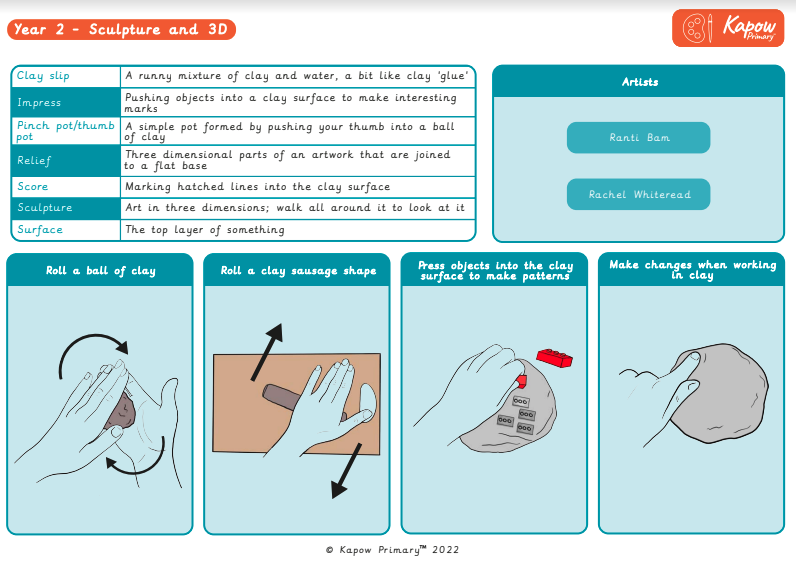
Knowledge organiser – Art & design Y2: Sculpture and 3D: Clay houses
Aimed at pupils, two pages providing key facts and definitions from the unit 'Clay houses'.
Art and design
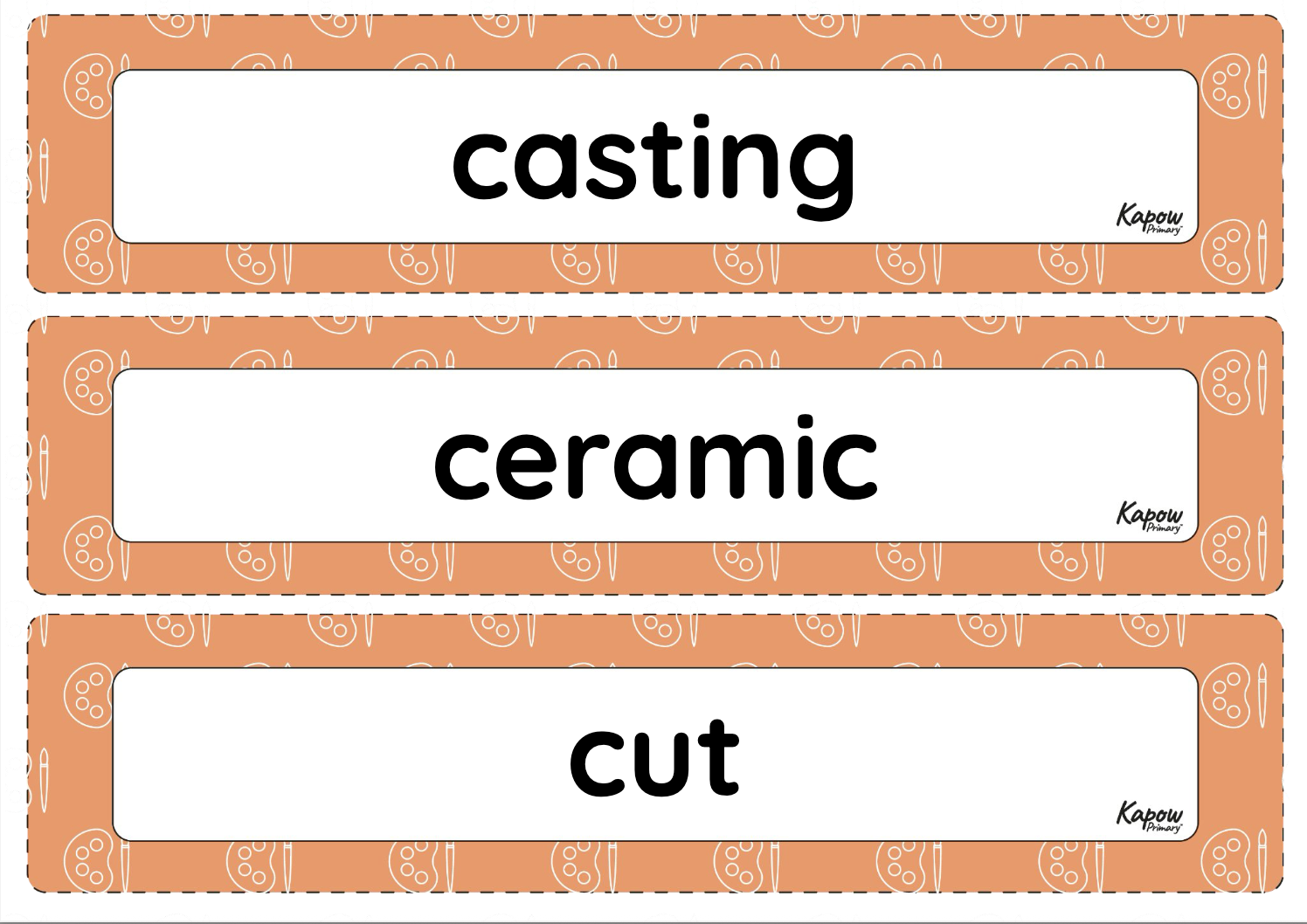
Vocabulary display – Art and design Y2: Sculpture and 3D: Clay houses
A display version of the vocabulary from the unit 'Clay houses'.
Subject resources
This content is for subscribers only. Join for access today.
Cross-curricular opportunities
Build on the learning
Sculpture and 3D: Abstract shape and space
Get started