




- Subjects >
- Science >
- Key stage 2 >
- Year 4 >
Unit outcomes
Pupils who are secure will be able to:
- Describe how sounds are made.
- Describe how sounds are heard through different mediums.
- Explain the relationship between vibration strength and volume.
- Describe the relationship between volume and distance.
- Describe pitch and how to change it.
- Explain how insulating materials can be used to muffle sound.
When working scientifically, pupils who are secure will be able to:
- To observe closely how different instruments create a sound.
- Research how whales and dolphins communicate underwater.
- Present results using a bar chart.
- Suggest which variables to measure and for how long.
- Design simple results tables.
- Identify when results or observations do not match predictions.
Suggested prior learning
Materials: States of matter
Get started
Lessons
Lesson 1: Vibrations
Lesson 2: Sound waves
Lesson 3: Volume
Lesson 4: Volume and distance
Lesson 5: Pitch
Lesson 6: Sound insulation
Key skills
Planning
- To

This content is for subscribers only. Join for access today.
Key knowledge
To know:
- Sound is a
This content is for subscribers only. Join for access today.
Key vocabulary
air
bar chart
This content is for subscribers only. Join for access today.
Related content
Unit resources


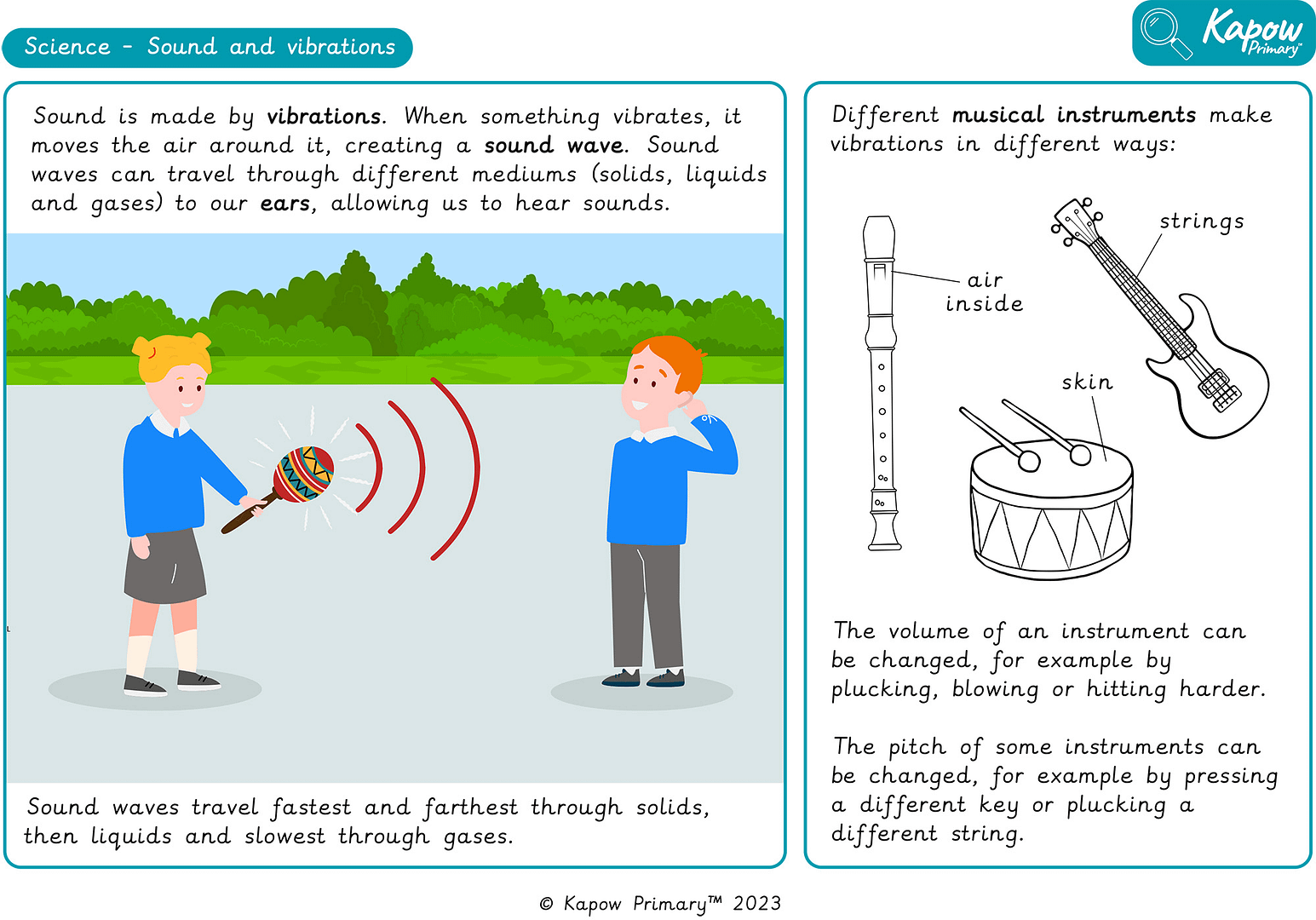
Knowledge organiser – Science Y4: Energy: Sound and vibrations
Aimed at pupils, a double page which gives key facts and definition from the unit ‘Sound and vibrations’.
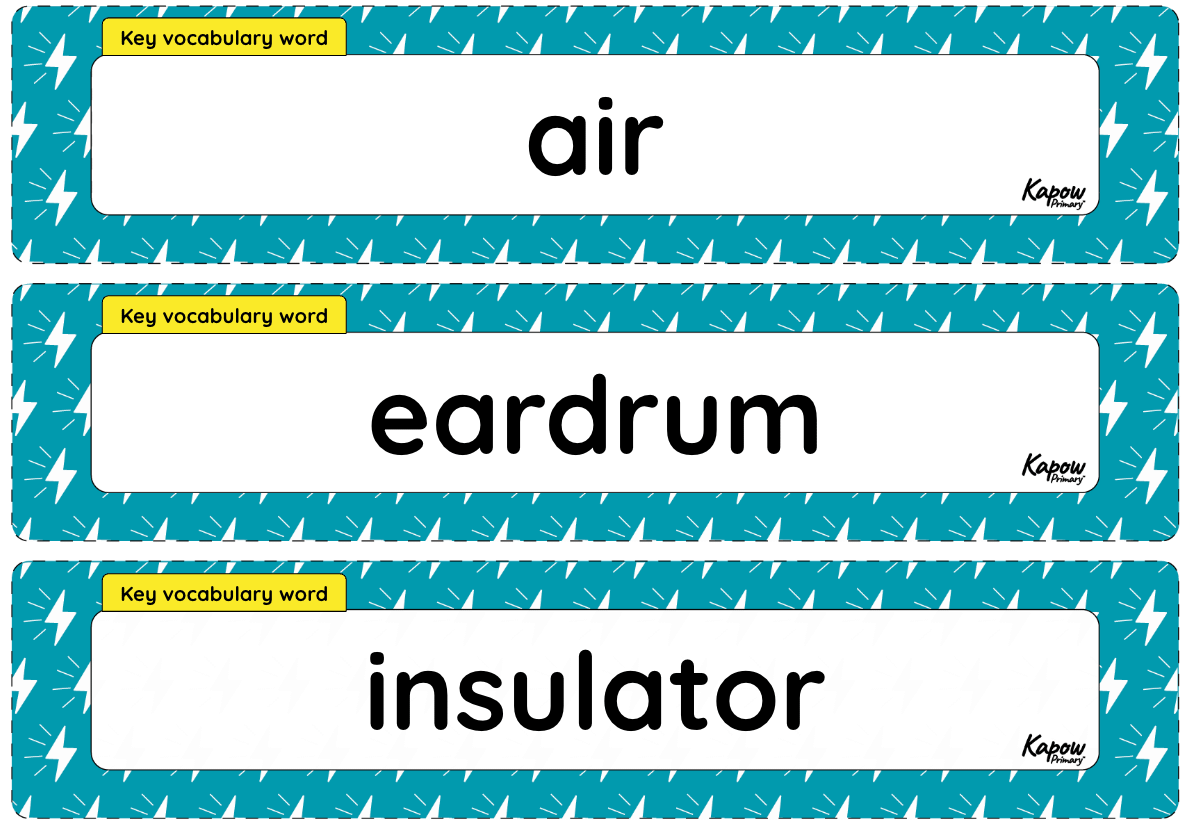
Vocabulary display – Science Y4: Energy: Sound and vibrations
A display version of the key vocabulary for the unit 'Sound and vibrations'.
Subject resources
This content is for subscribers only. Join for access today.
Cross-curricular opportunities
Music.
English: Reading – comprehension.
Maths: Statistics; Measurement.
British values: Mutual respect.