




Unit outcomes
Pupils who are secure will be able to:
- Identify a range of influences that shape identity, such as family, culture, beliefs and personal interests.
- Link aspects of identity to their own behaviour or choices.
- Describe what commitment means and give examples of how it can be shown within families in different ways, including legal commitments such as marriage or civil partnerships.
- Describe ways their own and others’ families support and protect each other and suggest what someone can do if they, or someone they know, feels unsupported and needs help.
- Describe why healthy friendships matter for wellbeing.
- Suggest practical ways to start, maintain and repair friendships and recommend positive ways to handle friendship challenges.
- Select and apply appropriate self-regulation techniques to stay calm and in control during disagreements.
- Understand what it means to be assertive and the importance of balancing your own needs and wants against being polite and respectful.
Suggested prior learning
How can we respect each other?
Get started
Lessons
Lesson 1: What makes me who I am?
Lesson 2 : How do families show commitment to each other?
Lesson 3: How can families support and protect each other?
Lesson 4: What helps us make and maintain healthy friendships?
Lesson 5: How can we manage challenges in friendships?
Lesson 6: How can I be assertive and respectful?
Key skills
- Discussing how the time

This content is for subscribers only. Join for access today.
Key knowledge
To know:
- ‘Commitment’ means promising
This content is for subscribers only. Join for access today.
Key vocabulary
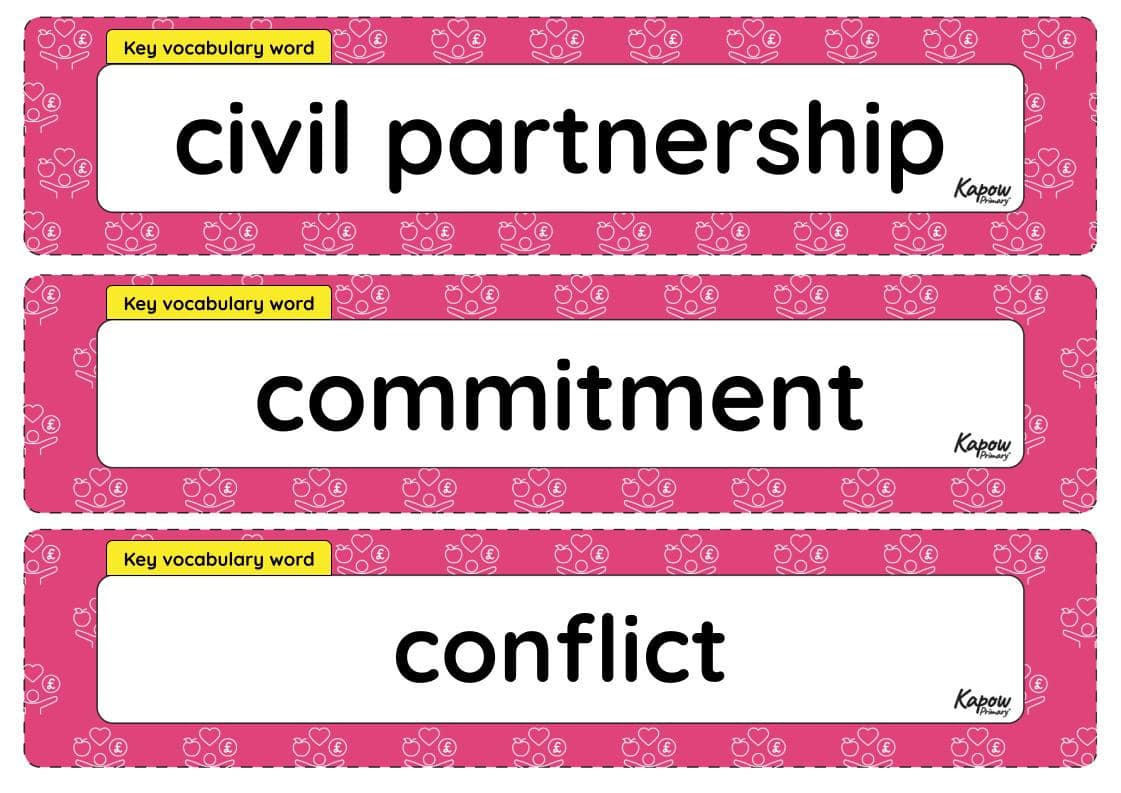
civil partnership
commitment
This content is for subscribers only. Join for access today.
Related content
Resources
Unit resources


RSE & PSHE
Vocabulary display – RSE & PSHE Y5: Why are healthy relationships important?
A display version of the vocabulary for the unit 'Why are healthy relationships important'
Cross-curricular opportunities
English: Spoken language.
British values: Individual liberty; Mutual respect; Tolerance of those with different faiths and beliefs.