




Unit outcomes
Pupils who are secure will be able to:
- Identify warning signs that something is unsafe in a range of everyday situations (personal, online, road, water, home), including signs you can see (e.g. road signs, “deep water” notices, hazard symbols) and signs you can feel (e.g. uncomfortable feelings, pressure from others, unsafe online behaviour).
- Demonstrate strategies to get help in or leave uncomfortable or unsafe situations.
- Explain how recognising hazards and planning ahead can prevent accidents.
- Choose safe places to cross roads and explain why (considering traffic, speed and visibility).
- Explain key reasons why water can be dangerous, even for confident swimmers (e.g. because of depth, currents and cold temperatures).
- Distinguish between helpful and harmful medicines and explain how to use medicine safely.
Suggested prior learning
Lessons
Lesson 1: How can I tell if a situation is unsafe?

Lesson 2: What do I do if a situation feels unsafe?
Lesson 3: How can I stay safe around traffic?
Lesson 4: Why can water be dangerous?
Lesson 5: What drugs are safe or unsafe?
Lesson 6: How can I prevent accidents?
Key skills
Key skills
- Recognising that different relationships

This content is for subscribers only. Join for access today.
Key knowledge
To know:
- Their body belongs
This content is for subscribers only. Join for access today.
Key vocabulary
hazard/s
inappropriate
This content is for subscribers only. Join for access today.
Related content
Resources
Unit resources


RSE & PSHE
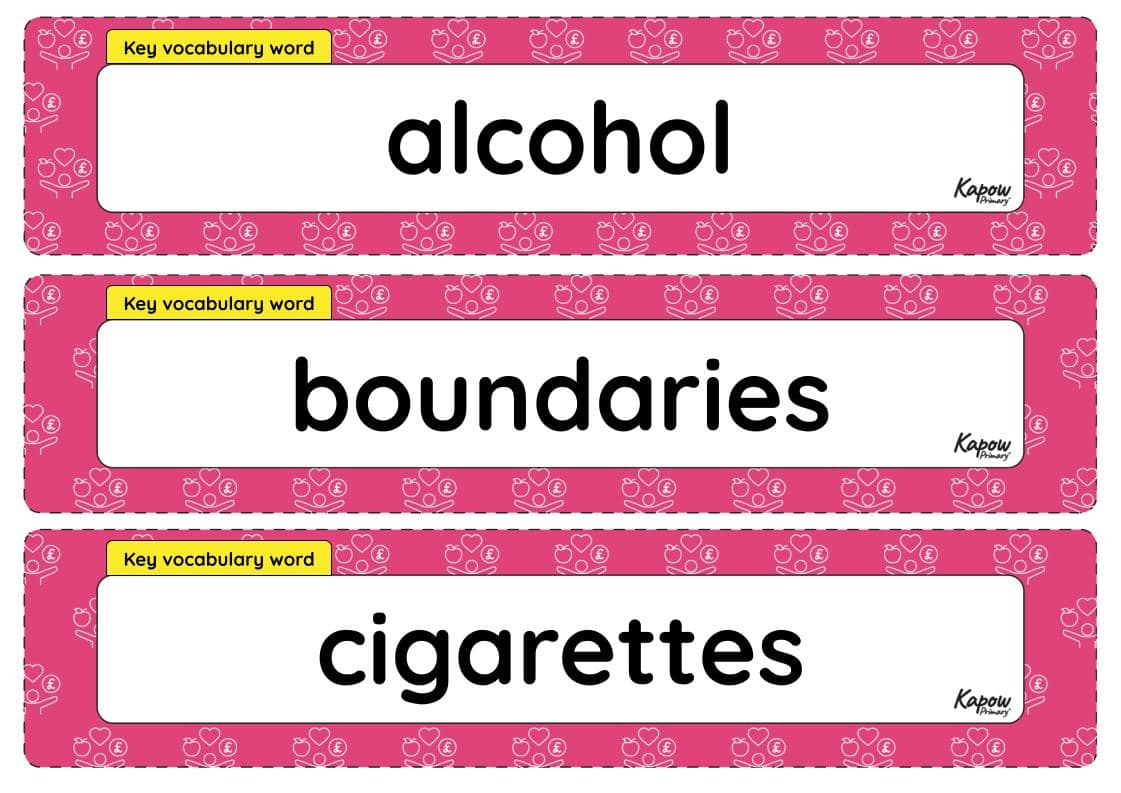
Vocabulary display – RSE & PHSE Y4: What signs help me recognise what is safe or unsafe?

RSE & PSHE
Knowledge organiser – RSE & PHSE Y4: What signs help me recognise what is safe or unsafe?