




This unit is archived. Our revised unit is aligned to current guidance. Visit the new unit
Please note
This unit has now been replaced by the Year 1 unit Sound patterns. Kapow no longer updates these lessons, and they may not reflect the national curriculum or current guidance. They remain a permanent part of your subscription and will continue to be available for reference and use. We recommend that you explore the new versions of the lessons.
Please note
This unit has now been replaced by the Year 1 unit Sound patterns (Theme: Fairytales) and will no longer be updated.
Unit outcomes
Pupils who are secure will be able to:
- Chant the well-known phrase, “I’ll huff…”
- Make changes to their voices to represent a character.
- Choose a suitable sound to represent a specific point in a story.
- Play a rhythmic pattern along with their spoken words.
- Identify and hold up the correct sign to correspond to some music.
- Play/chant along with the elements of a story with prompting from the teacher.
Suggested prior learning

Lessons
Lesson 1: Timbre and rhythmic patterns: Character voices
Lesson 2: Timbre and rhythmic pattern: Starting with instruments
Lesson 3: Timbre and rhythmic patterns: Rhythms
Lesson 4: Timbre and rhythmic patterns: Responding to music
Lesson 5: Timbre and rhythmic patterns: Keeping the pulse
Key skills
- Recognising and understanding the

This content is for subscribers only. Join for access today.
Key knowledge
- To know that an
This content is for subscribers only. Join for access today.
Key vocabulary
bassoon
beat
This content is for subscribers only. Join for access today.
Related content
Unit resources


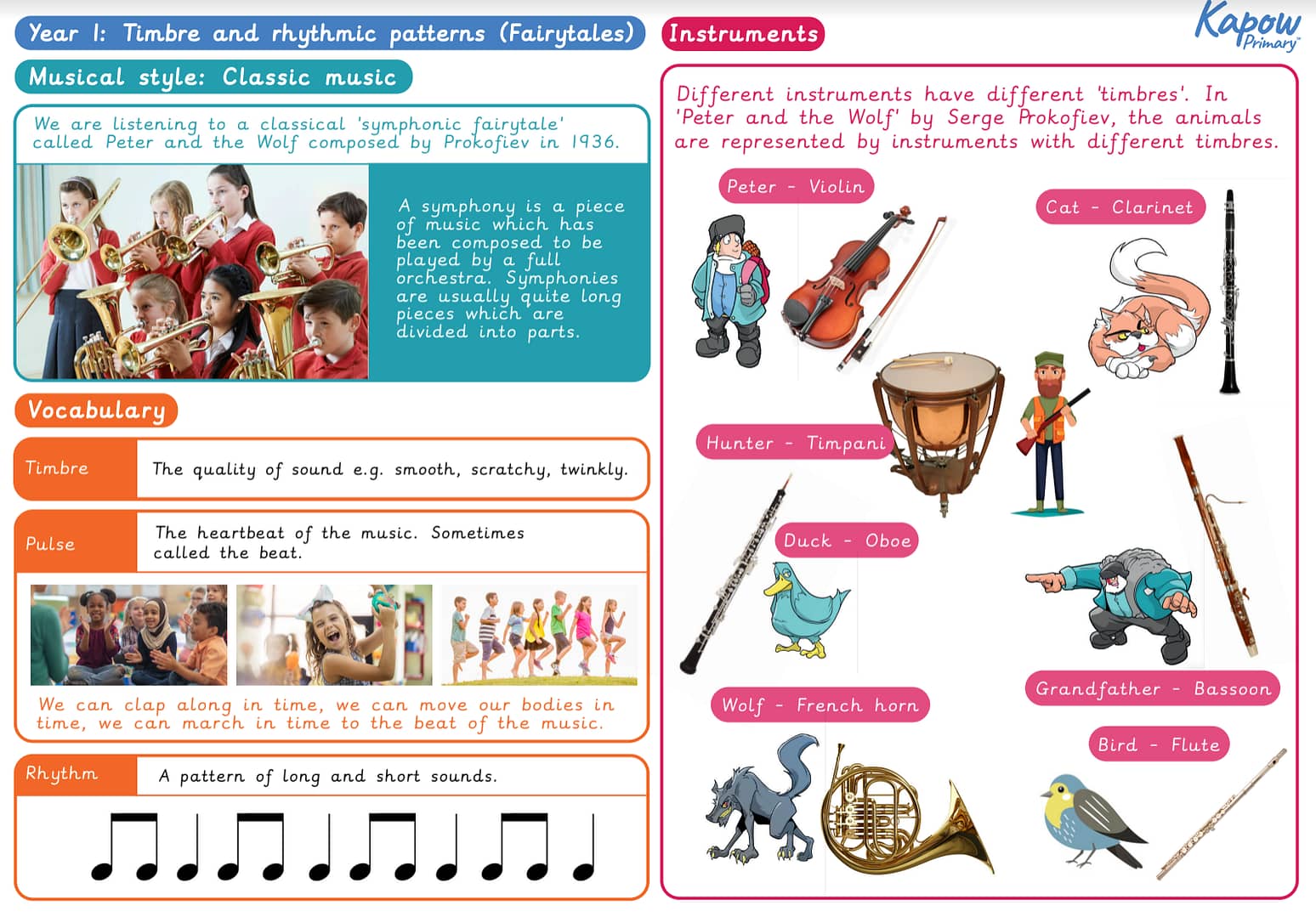
Knowledge organiser: Music – Y1 Timbre and rhythmic patterns (Fairytales)
Aimed at pupils, a single page which gives key facts and definitions from the unit "Archived unit: Timbre and rhythmic…
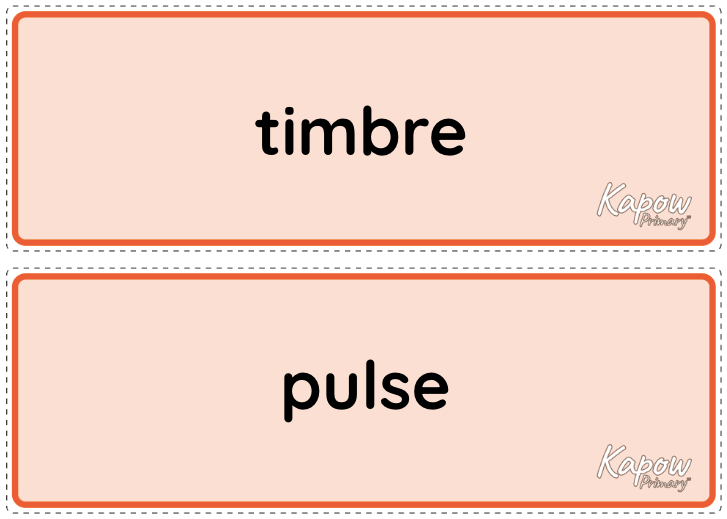
Vocabulary display: Timbre and rhythmic patterns
A display version of the key vocabulary from the Timbre and rhythmic patterns unit.
Cross-curricular opportunities
English
‘Pupils should be taught to:
develop pleasure in reading […] by:
- recognising and joining in with predictable phrases
- becoming very familiar with key stories, fairy stories and traditional tales, retelling them and considering their particular characteristics’