




- Subjects >
- Computing >
- Key stage 2 >
- Year 4 >
Please note
Scratch is a project of the Scratch Foundation, in collaboration with the Lifelong Kindergarten Group at the MIT Media Lab. It is available for free at https://scratch.mit.edu.
Unit outcomes
Pupils who are secure will be able to:
- Understand that problems can be solved more easily using computational thinking.
- Recognise decomposition, abstraction, algorithm design and pattern recognition as key computational thinking skills.
- Explain how decomposition and abstraction simplify problem-solving.
- Identify patterns in problems and use them to solve problems.
- Design clear algorithms and justify their choices.
- Create logical sequences of steps to complete a task or project.
- Use computational thinking skills to code, refine and evaluate their work.
Suggested prior learning
Programming 1: Algorithms and debugging
Get started
Lessons

Lesson 1: Decomposition and pattern recognition
Lesson 2: Abstraction
Lesson 3: Algorithm design
Lesson 4: Computational thinking in action
Lesson 5: Evaluating computational thinking
Key skills
- Breaking down what they

This content is for subscribers only. Join for access today.
Key knowledge
To know:
- Decomposition is the
This content is for subscribers only. Join for access today.
Key vocabulary
abstraction
algorithm
This content is for subscribers only. Join for access today.
Related content
Unit resources



Knowledge organiser – Computing Y4: *New* Computational thinking
Aimed at pupils, two pages providing key facts and definitions from the unit ‘Computational thinking’.
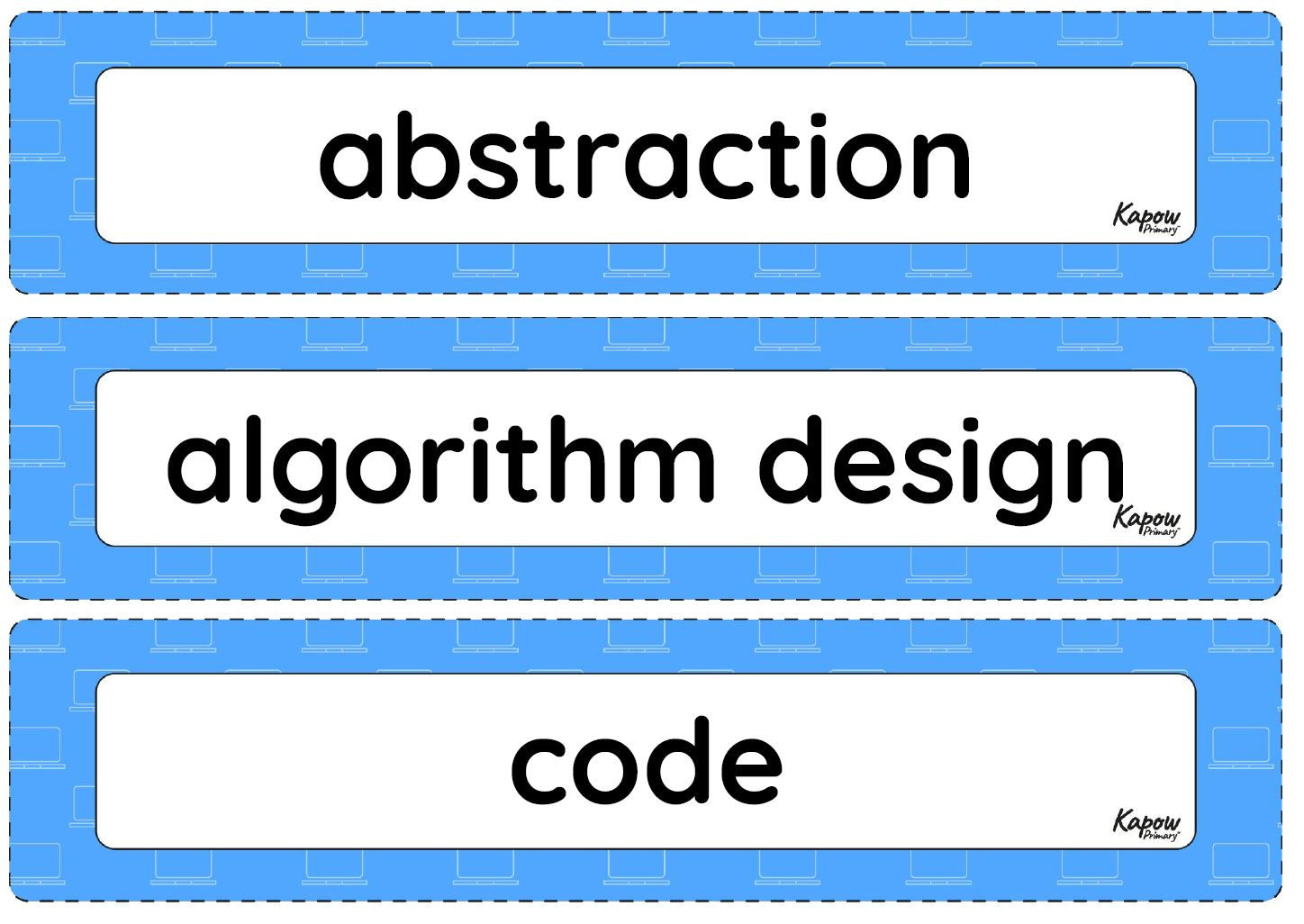
Vocabulary display – Computing Y4: *New* Computational thinking
A display version of the vocabulary from the unit 'Computational thinking'.
Subject resources
This content is for subscribers only. Join for access today.
Cross-curricular opportunities
English: Spoken Language.
Design and technology: Design.
Suggested next steps
ARCHIVED Year 5: Programming 1: Music
Get started