




Before you continue

This unit is archived. Our revised unit is aligned to current guidance. Visit the new unit
Please note
This unit has been replaced and will no longer be updated. Kapow no longer updates these lessons, and they may not reflect the National curriculum or current guidance. They remain a permanent part of the subscription and will continue to be available for reference and use. We recommend exploring the new versions of the lessons.
Unit outcomes
Pupils who are secure will be able to:
- Describe what prayer means.
- Identify some reasons why people might pray.
- Explain how some people use their bodies during prayer.
- Identify some similarities and differences between the ways in which people pray.
- Understand why special objects and items of clothing are important to some people when they pray.
- Draw connections between prayer practices within the Hindu, Muslim and Jewish worldviews.
Suggested prior learning
Teacher video: How do some people talk to God?

Lessons
Lesson 1: Why do some people talk to God?

Lesson 2: What can prayer mean?
Lesson 3: How do some people use their bodies in prayer?
Lesson 4: What objects do some people use when they pray?
Lesson 5: How do some Hindu people pray?
Lesson 6: Where do some prayers come from?
Key skills
Disciplinary
- Asking questions about what

This content is for subscribers only. Join for access today.
Key knowledge
Substantive
To know:
- Prayer means communicating
This content is for subscribers only. Join for access today.
Key vocabulary
avatar
deity
This content is for subscribers only. Join for access today.
Related content
Unit resources


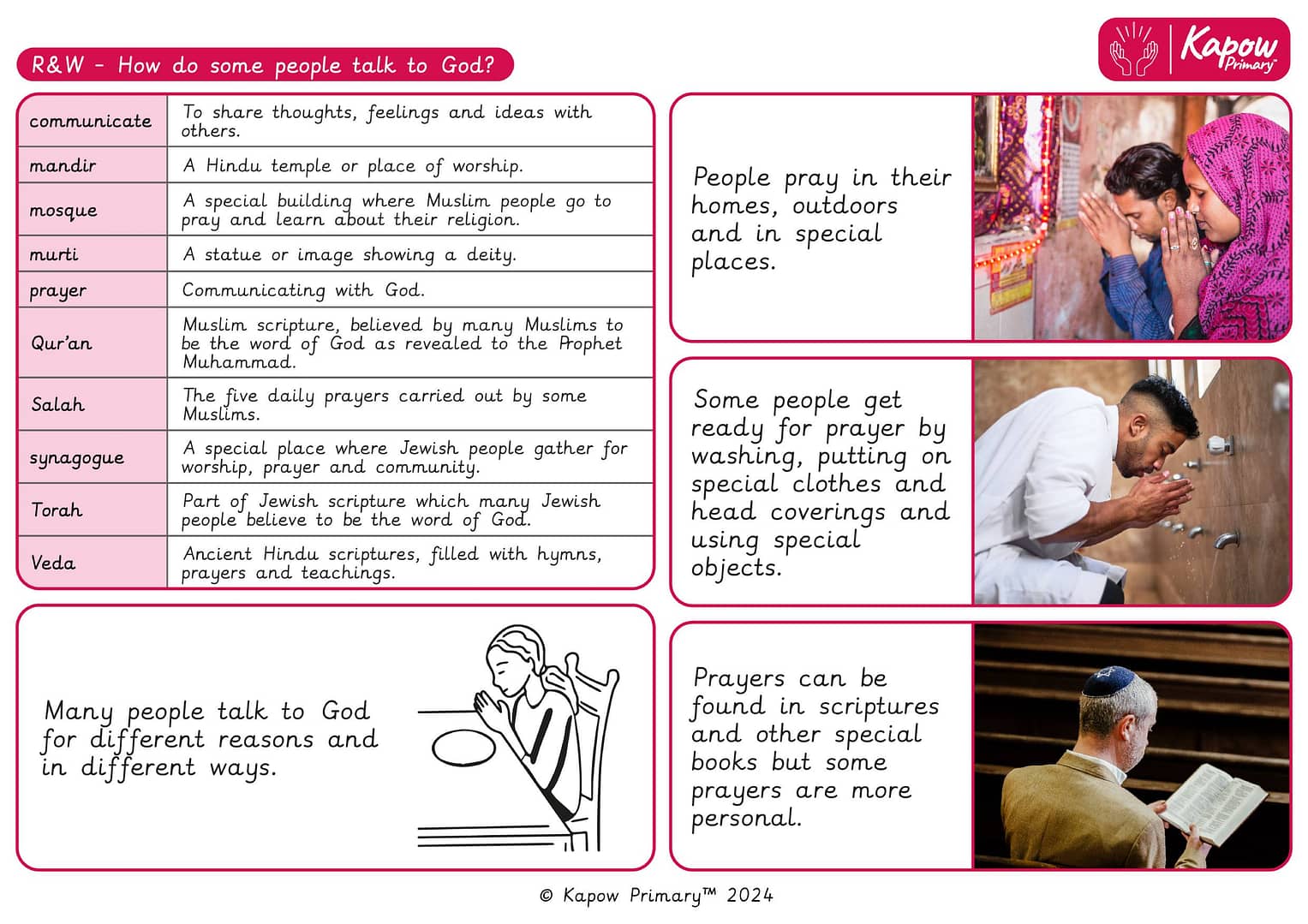
Knowledge organiser – R&W Y2: How do some people talk to God?
Aimed at pupils, a single page document that gives key facts and definitions from the 'How do some people talk…
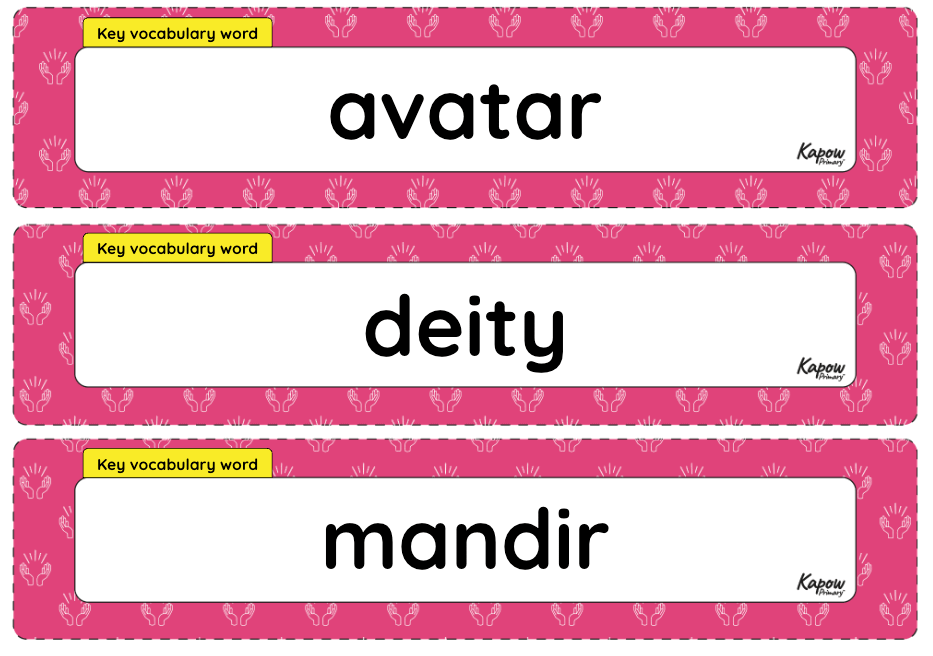
Vocabulary display – R&W Y2: How do some people talk to God?
A display version of the key vocabulary from the 'How do some people talk to God?' unit.
Cross-curricular opportunities
RSE: Respectful relationships.
British values: Tolerance of those with different faith and beliefs, mutual respect.
English: Participate in discussions and debates.