Bell

This lesson is archived.

Learning objective

  • To evaluate the context, intention and value of street art.

Success criteria

  • I can discuss the similarities and differences between art styles.
  • I can discuss ideas about what art is or should be and justify choices.
  • I can explore street art techniques to create a Christmas message. 

National curriculum

Art and design

Pupils should be taught to:

  • To develop their techniques, including their control and their use of materials, with creativity, experimentation and an increasing awareness of different kinds of art, craft and design.
  • To create sketch books to record their observations and use them to review and revisit ideas.
  • To improve their mastery of art and design techniques, including drawing, painting and sculpture with a range of materials [for example, pencil, charcoal, paint, clay].
  • About great artists, architects and designers in history.

See National curriculum - Art - Key stages 1 and 2.

Before the lesson

Kapow no longer updates these lessons, and they may not reflect the national curriculum or current guidance. They remain a permanent part of your subscription and will continue to be available for reference and use. We recommend that you explore the new versions of the lessons.

Watch
Watch
Resource: Graffiti letters A-Z (one between two, see Adaptive teaching).

Lesson plan

1: Recap and recall

Organise the children into small groups of three to four. Display the Presentation: Speak like an expert. 

Ask the children to recall what they learned about chiaroscuro from the previous lesson.

Explain that they will take turns to become the experts within the group, recalling what they can remember about the technique. After each minute, the next child carries on from where the other one left off so that they are not all repeating the same information.

Answers could include;

  • It is an Italian phrase.
  • It means light and dark.
  • It often depicts dramatic differences between light and dark.
  • It’s used to make objects look more 3D in a painting or drawing.
  • Leonardo da Vinci is well known for using this technique.
  • It can also be applied to photography.
Presentation: Speak like an expert

Take feedback from the children.

2: Attention grabber

Display slide 1 of the Presentation: Christmas street art and ask the children the question, ‘Should you graffiti?’ Explain to the children that there are no right or wrong answers as it is their opinion.

Take feedback from the children.

Display the images on slides 2 to 3 to discuss the questions and ask the children their thoughts.

Presentation: Christmas street art

3: Main event

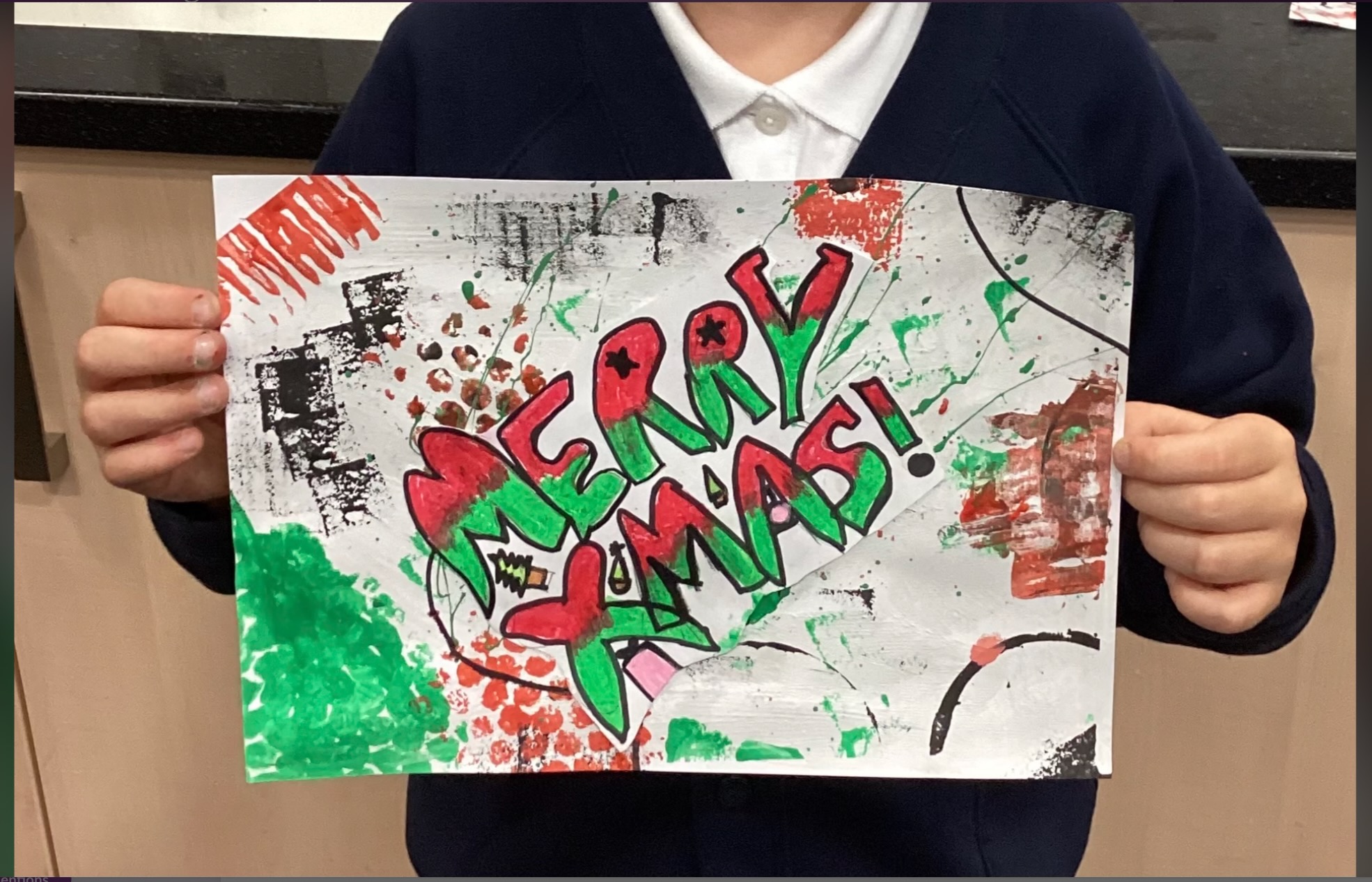
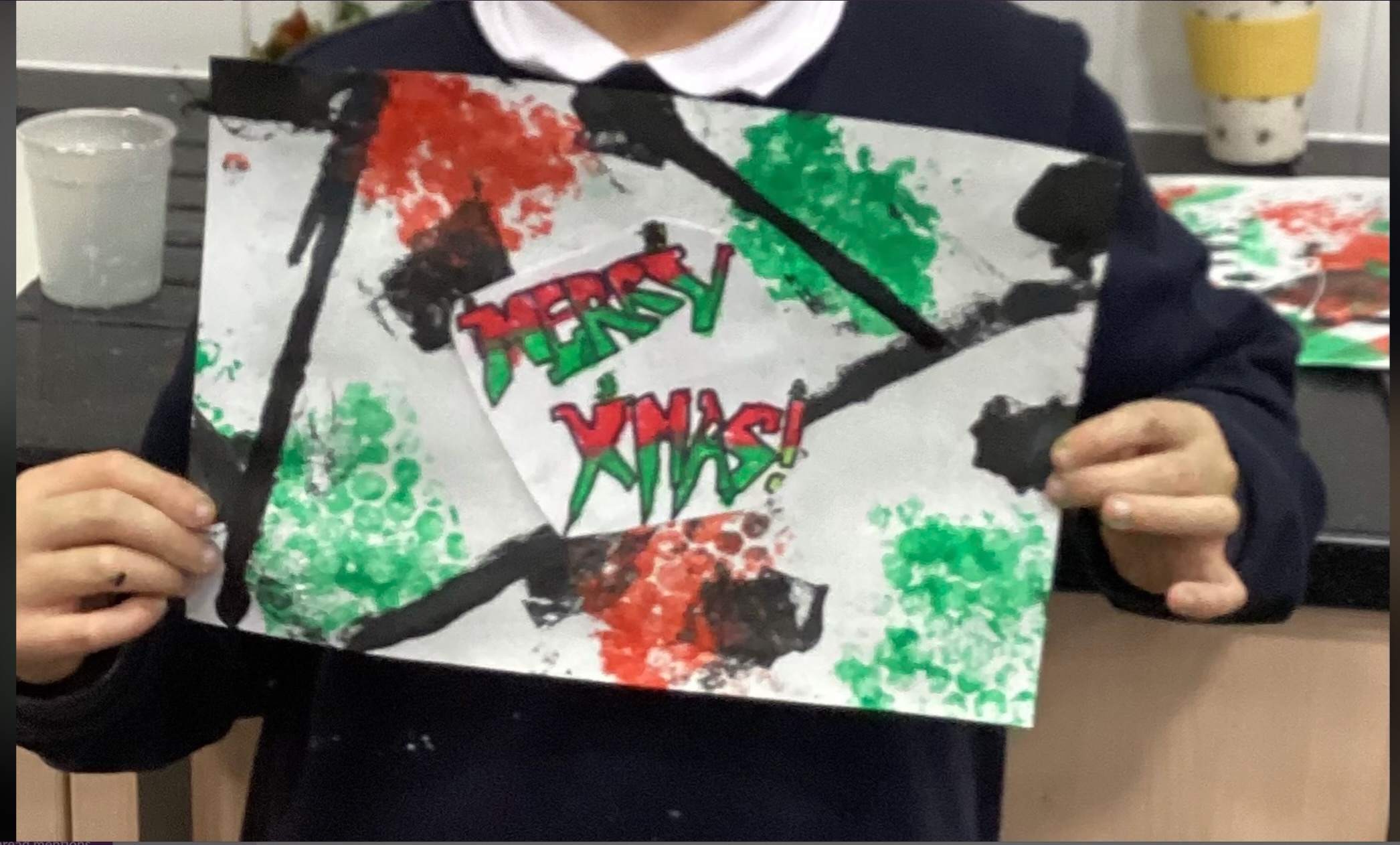
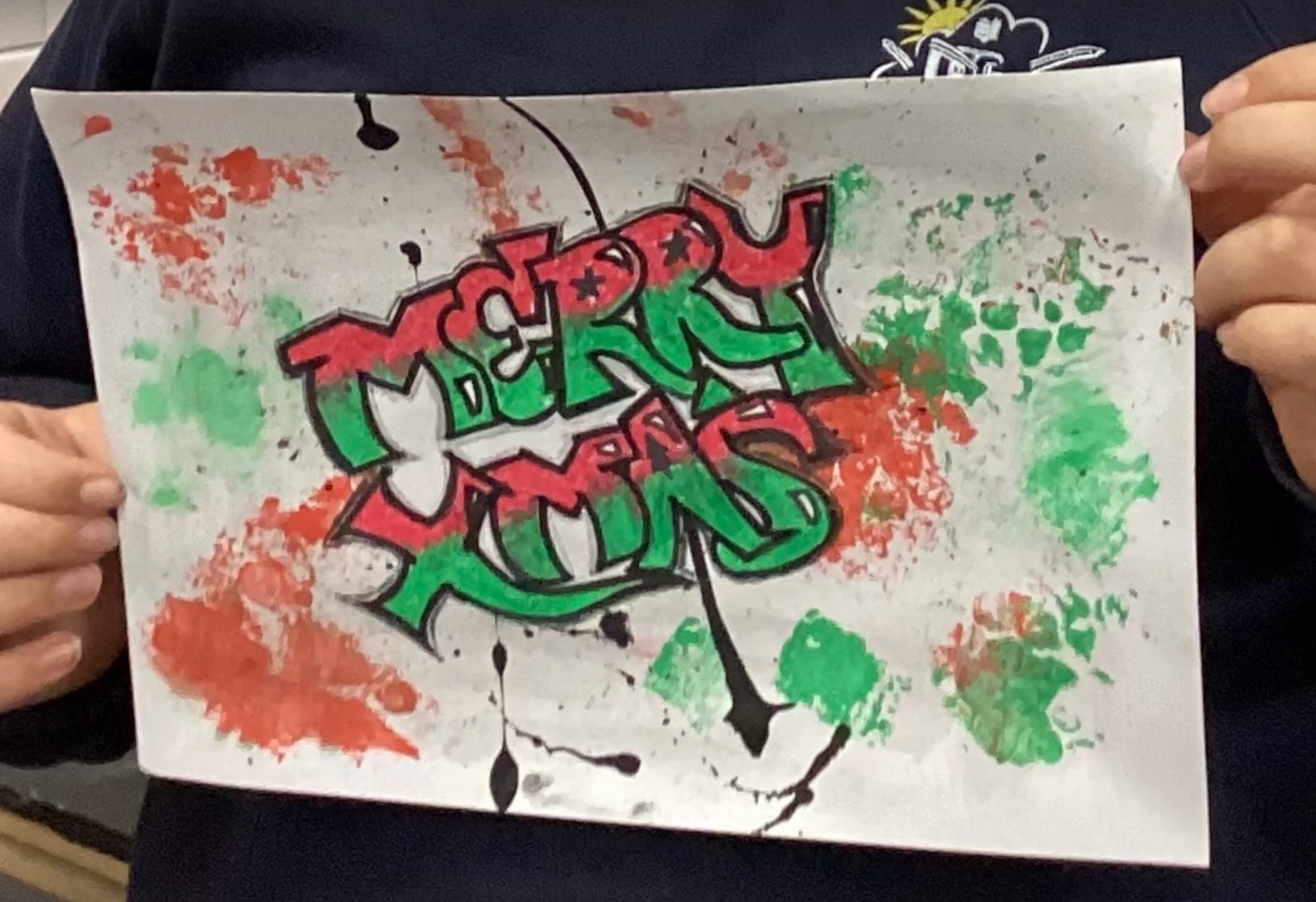
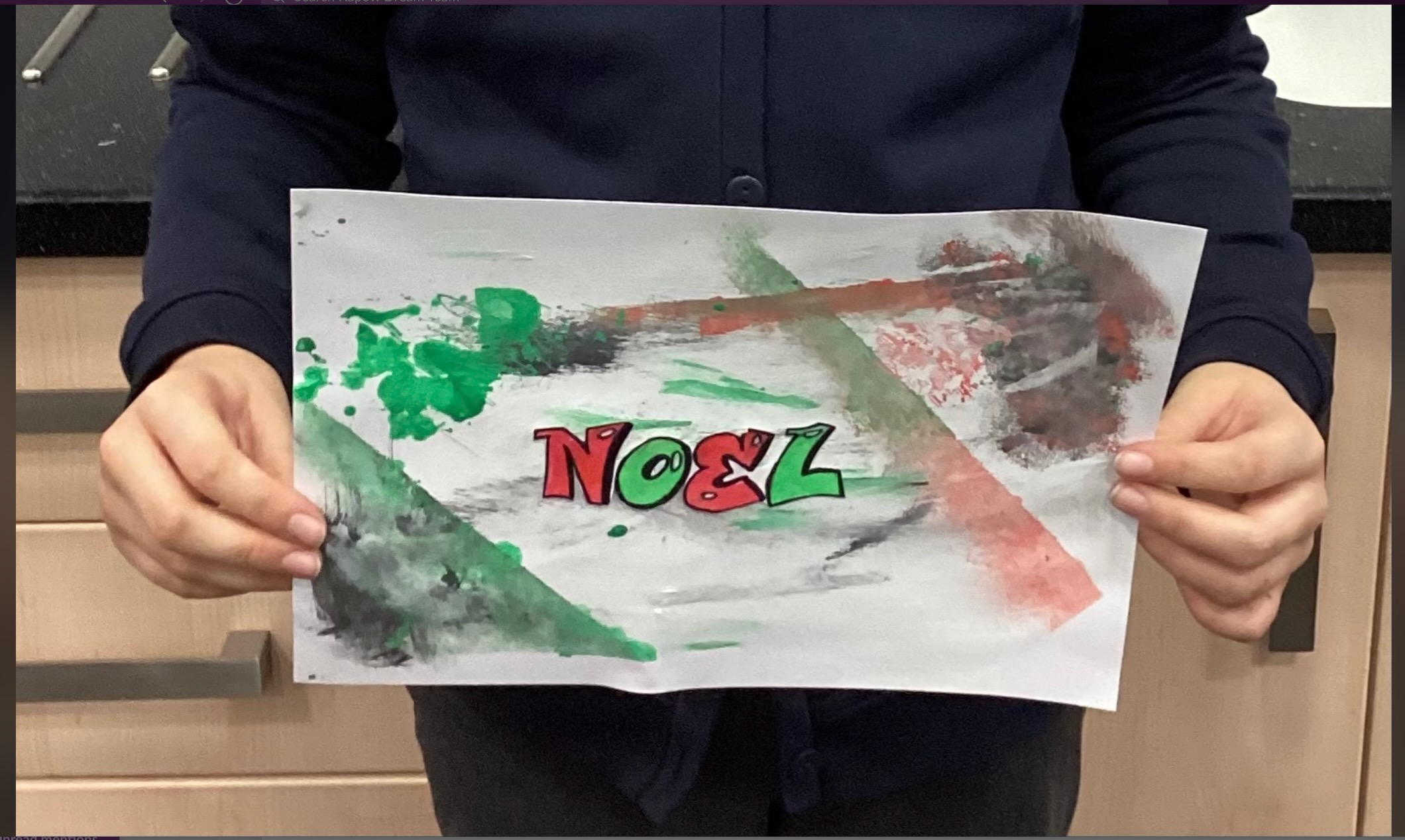
Explain to the children that they are going to make a piece of street art with a Christmas theme.

Graffiti wall backgrounds

Demonstrate creating the background for their graffiti piece or show the Pupil video: Christmas graffiti up to 01:30.

Pupil video: Christmas graffiti

  • Hand out one of the A4 sheets of thick paper or thin card to each child.
  • Use light grey paint to create blocks of random texture and colour.
    • use large strokes, moving the brush horizontally and vertically across different places of the paper;
    • explain that there is no need to blend the marks or cover the entire sheet.
  • Next, the children use various techniques to create interesting textures and patterns to replicate the effect of spray painting. They can try to:
    • print with bubble wrap for areas of circles;
    • flick and drip paint onto the surface or over a stencil to create shapes and patterns that look like they have been sprayed on;
    • print with sponges for another sprayed painted effect.

Let the children get creative with this part, allow them to try these ideas. However, make sure they are careful not to do too much or their artwork will lose the textures they are aiming for.


Graffiti lettering

While their backgrounds dry, the children can begin to create a Christmas word in graffiti style. Play the remainder of the Pupil video: Christmas graffiti.

Then hand out the other piece of thick paper or thin card to each child.

  1. Ask the children to choose a simple Christmas word or phrase, for example, Merry Xmas or Season’s Greetings, etc.
  2. Using a pencil, ask the children to write their word or phrase across the paper in capital letters and then draw around them to create block letters.
  3. Then add extra design details to the letters to transform them into a graffiti style, such as by extending the corners with curls or arrows. Hand out the Resource: Graffiti letters A-Z to any children who may need a visual reference to draw from.
  4. Ask the children to colour the words in, again give the children the creative freedom to decide how they want to do this. As there has been lots of pencil drawing to transform the letters, it might help the children to draw around the words in a black marker pen before colouring in.
  5. Next, the children carefully cut the words out using scissors. They may find it hard to reach the spaces in the middle and in between the letters. Explain to the children to colour these areas in black; they will create the look of a shadow once stuck onto their backgrounds.
  6. Finally, the children stick the letters to the backgrounds, wherever they choose. They can repeat the black outline around the words at the end to make sure they really pop.

4: Wrapping up

Ask the children to share their work with a partner. Give them a few minutes to discuss their piece using the following questions:

  • How do you feel about your work?
  • Did you enjoy making it? Why?
  • Do you feel proud of it? Why?
  • Would you want to show it to other people? Why?
  • How would you want to show it?

Show the class an example of artwork by Pichiavo using the link: Pichiavo - Three Graces mural.

Pichiavo are two renowned Spanish street artists who combine graffiti with classical painting styles to create amazing murals on buildings around the world.

Ask the children to discuss Pichiavo’s work with what they have created; how is it the same? How is it different?

And then repeat the question – Is it art?

Take feedback from the class.

Adaptive teaching

Pupils needing extra support

Can use the Resource: Graffiti letters A-Z to support ideas when creating their graffiti artwork. 

Pupils working at greater depth

Should be encouraged to try more mark-making techniques, generating ideas of their own; could create a stencil to use.

Assessing progress and understanding

Pupils with secure understanding indicated by: participating in a discussion examining street art’s purpose and intention; forming their own opinions about what art can be and justifying their ideas; applying a graffiti style to a Christmas-inspired piece of art.

Pupils working at greater depth indicated by: leading discussions with potentially strong opinions about what art is, justifying with reasoned ideas. 

Vocabulary definitions

  • audience

    The group of people the artist intended to interact with a work of art.

  • commissioned

    When someone is asked to create a piece of art.

  • graffiti

    Spray-painted words and images that appear on property without permission.

  • imagery

    A collection of visual images.

  • impact

    The strong effect or influence that something has on a situation or person.

  • mural

    A painting made directly on a wall or other permanent structure.

  • street art

    Artwork that is created in a public space, typically without official permission.

Our team comprises experienced classroom teachers who love the foundation subjects
Find out more
Kapow logo

Maintained by: Kapow Primary team

_
Lesson 4: Street art Previous Lesson
Please don’t screenshot or copy images from this page.
Kapow Primary resources are created by teachers and protected by copyright. Copying images or slides into your own presentations (for example using the Snipping Tool) counts as reproducing the resource and isn’t permitted under the Kapow licence.
This resource is being accessed through your school’s Kapow licence.
Thank you for respecting the work of the teachers who create these materials.
close popup

Are you sure you want to download this lesson plan?

Downloading may not be your best option. Be sure you are looking at the most up-to-date version by always viewing your resources online.

Bookmark or save the link to this lesson so you can find it quickly! Do you want to continue?