


What does oracy mean? Helping children speak with confidence
Written by Kapow Primary team
Published on 19th August 2026
Last Updated: 19th August 2026
Written by Kapow Primary team
Published on 19th August 2026
Last Updated: 19th August 2026
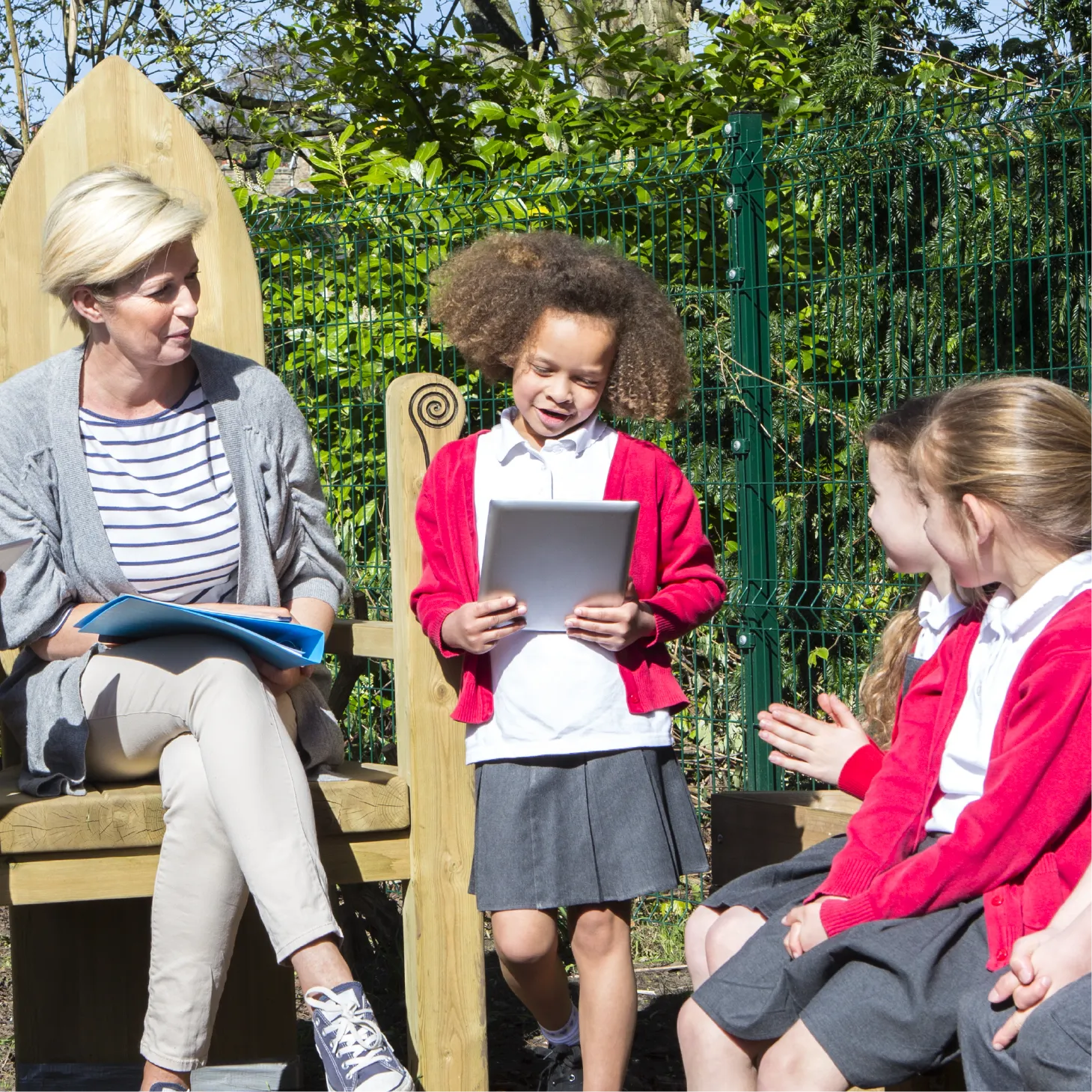
Oracy in primary schools helps children use talk to share ideas, listen and learn. In an episode of the Primary Focus podcast, Kapow Primary specialists spoke with Neil Mercer from Oracy Cambridge about why speaking up can be hard for some children and how teachers can help through clear, structured opportunities to talk.
Oracy is often used to mean speaking and listening. But it is more than taking turns to talk. It is about how children use spoken language to think, explain ideas, listen to others and build understanding.
In the classroom, oracy might look like:
When pupils have regular chances to talk, teachers can hear what they know, spot mistakes and see who needs more support. Without those chances, learning can stay hidden.
Podcast moment: What do we mean by oracy?
Neil Mercer explains that the oracy framework has three connected parts: learning ‘how’ to talk, learning ‘through’ talk and learning ‘about’ talk.
Together, these move oracy beyond simply asking pupils to ‘discuss’ something. Talk becomes a skill that is planned, modelled and built over time.
It’s something we ask children to do every day: explain your thinking, share your ideas, talk to your partner.
For some children, this comes naturally. For others, it is much harder. They may know the answer but not have the words to explain it. They may lack confidence, need more thinking time or wait for someone else to speak first.
This can be linked to:
Without support, the same confident speakers can dominate discussion while quieter pupils stay on the edge. The aim is not just better talk. It is to make classroom talk easier for more children to join.
Podcast moment: Why is speaking up harder for some children?
Most teachers already know that talk matters. But it can be hard to make room for purposeful talk in a busy school day and link it clearly to learning.
Teachers juggle a full curriculum, limited time and many other priorities. Talk can also be harder to assess than writing because it is less visible and more tied to context. As a result, oracy is often treated as something that develops by chance rather than as an area of learning that needs careful planning.
Children are often asked to discuss, explain or debate before being taught what strong talk looks like. It can be easy to see some children as naturally confident speakers and others as naturally quiet. But oracy is not just about personality. Like reading or writing, oracy is a set of oracy skills that can be taught, practised and improved.
Seeing oracy as a teachable skill can also change the teacher’s role. Instead of waiting for quieter pupils to become more confident on their own, teachers can give them the structure, language and rehearsal time they need to join in.
A key message from the episode is that oracy does not improve just through more chances to talk. It improves when it is taught.
Teachers can teach speaking directly by:
In practice, this could include:
These simple structures give children a way in. Instead of being put on the spot, they have time and support to shape their ideas.
Podcast moment: Why oracy needs to be taught explicitly
Ground rules help pupils know what good talk sounds and feels like. They also make discussion safer and more purposeful, especially for children who are less confident speaking up.
Examples might include:
Podcast moment: Setting ground rules around speaking in the classroom
Like reading and writing, spoken language grows over time. One-off chances to speak help, but they are not enough on their own.
Children benefit from:
Over time, this helps pupils build a toolkit they can use in different settings, from paired talk to group work, presentations and debate.
Oracy is not about adding something separate to the timetable. It is about seeing how important talk already is and making sure more pupils are supported to take part.
When classroom talk is planned and taught:
And that is what helps children find their voice.
To hear more from Neil Mercer and Kapow curriculum specialists Marie Thornby and Caroline Hall, watch the full Primary Focus episode on oracy.
