


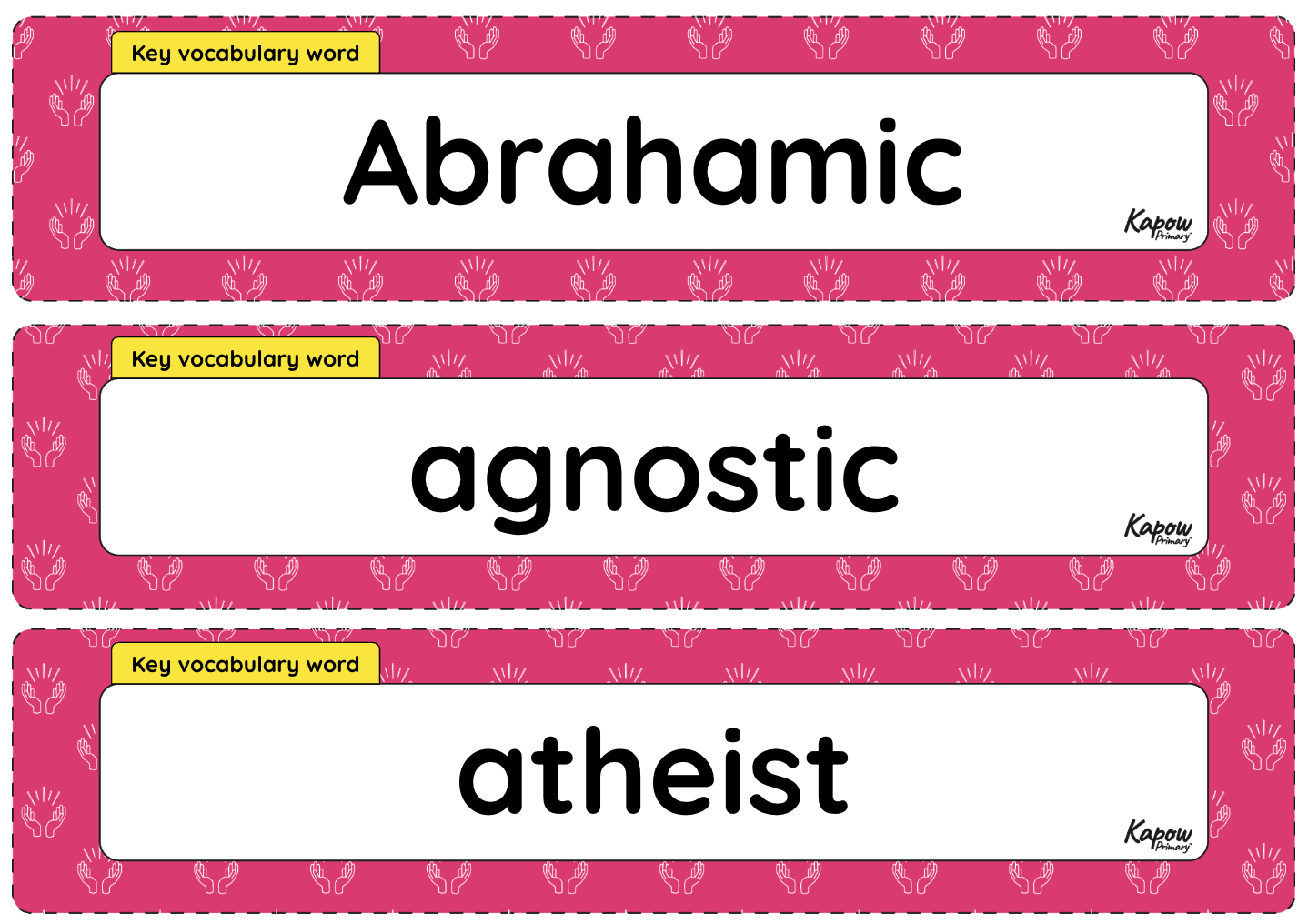
A display version of the key vocabulary for year 5/6.
Featured Document Type: Mixed-age
Science: National curriculum coverage — mixed-age
A mapping document showing each of the National curriculum’s statutory attainment targets and which Science mixed-age units work towards them, broken down into scientific knowledge and understanding and working scientifically.
Religion and worldviews: Religious Education Council curriculum framework coverage — mixed-age
This is a Religious Education Council curriculum framework coverage mapping document. It shows the Religious Education Council’s curriculum framework attainment targets (non-statutory) mapped against Kapow Primary’s Religion and worldviews units.
Science: Key skills and knowledge by unit and year group — mixed-age
Note: The latest progression information can now be found in the Science curriculum portal
Vocabulary display: R&W – Why do people have to stand up for what they believe in?
Knowledge organiser – R&W Y5/6 (A): Why do people have to stand up for what they believe in?
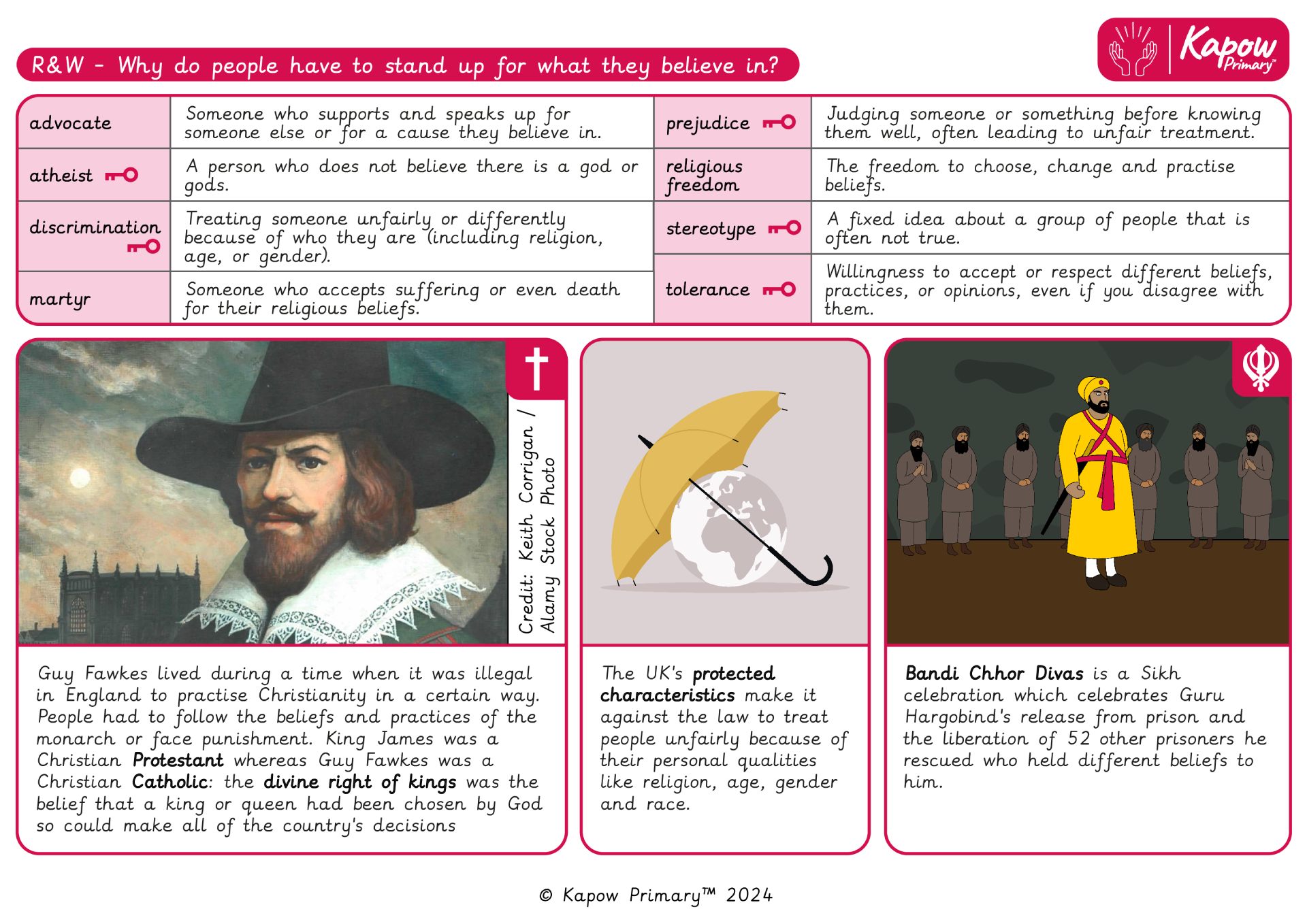
A Knowledge organiser that captures the essential knowledge and skills learnt throughout the unit Religion and worldviews, Year 5/6 (A), Why do people have to stand up for what they believe in?
This resource is designed to help pupils understand how religious and personal beliefs influence people’s decisions to stand up for justice and equality. Through key vocabulary such as tolerance, advocate, prejudice, and religious freedom, pupils explore historical and cultural examples like Guy Fawkes and Bandi Chhor Divas. The organiser encourages reflection on protected characteristics, the consequences of discrimination, and the role of personal conviction in defending others’ rights. It is ideal for deepening understanding of social justice, moral courage, and respect for diversity.
Spanish: National curriculum coverage — mixed-age
See how units in our mixed-age Spanish scheme of work ensure coverage of the National curriculum.
This document accompanies our Spanish: Long-term plan — mixed-age and our Spanish: Progression of knowledge, skills and vocabulary — mixed-age for mixed-age settings.
Vocabulary display – R&W Y1/2 (A): What do some people believe God looks like?
Knowledge organiser – R&W Y1/2 (A): What do some people believe God looks like?
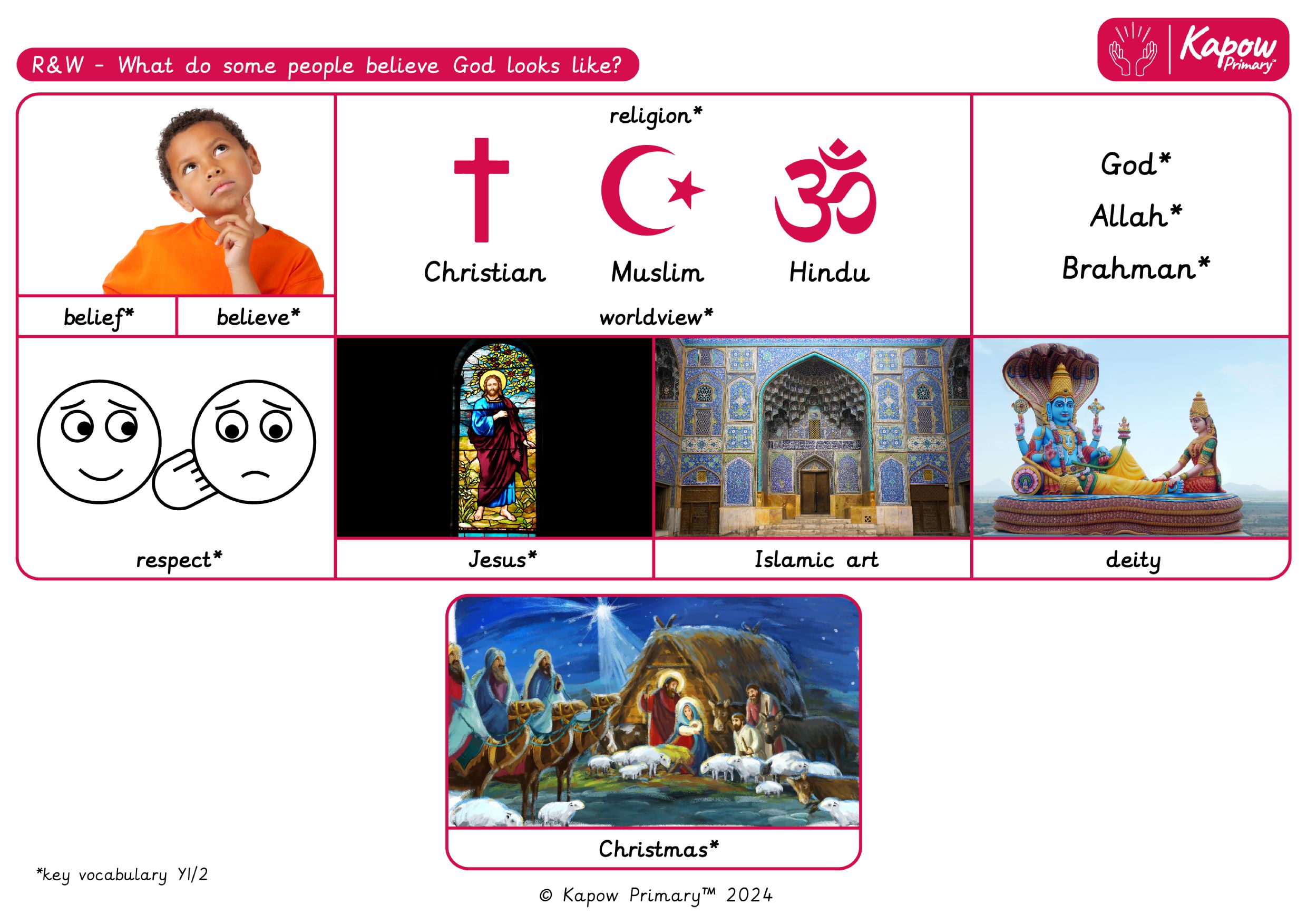
A Knowledge organiser that captures the essential knowledge and skills learnt throughout the mixed-age unit Religion and worldviews, Y1/2 (A), What do some people believe God looks like?
This resource is designed to support pupils as they begin to explore how different religions express their beliefs about God. It introduces key vocabulary including “belief,” “deity,” “Brahman,” and “Allah,” alongside visual representations of Christian, Muslim, and Hindu worldviews. Through images of Jesus, Islamic art, and Hindu deities, pupils gain a visual and conceptual understanding of how ideas of God are expressed in different faiths. This organiser promotes respect for diversity and helps lay the foundation for future learning in religious education.
