


This video introduces Kapow Primary’s Music scheme of work, designed to support teachers with engaging lessons, skills videos, and step-by-step guidance. Covering notation, composition, improvisation, and performance, the spiral curriculum helps pupils build confidence and musical knowledge year after year.
year: Year 5
Introducing History
This video introduces Kapow Primary’s History scheme of work that builds knowledge, develops critical thinking, and brings the past to life through engaging lessons and teacher support.
Introducing Geography

This video introduces Kapow Primary’s Geography scheme of work, supporting teachers with national curriculum-aligned lessons, CPD, and fieldwork guidance.
Introducing French

This video provides an overview of Kapow Primary’s French scheme of work, supporting teachers with CPD, lesson guidance, and engaging resources to build pupils’ language skills and cultural understanding.
Introducing Design & Technology

This video introduces our Design & Technology scheme, designed to bring the design process to life with real-world projects and builds skills progressively. With integrated CPD and fully resourced lessons, teachers gain the confidence to deliver D&T effectively.
Introducing Computing
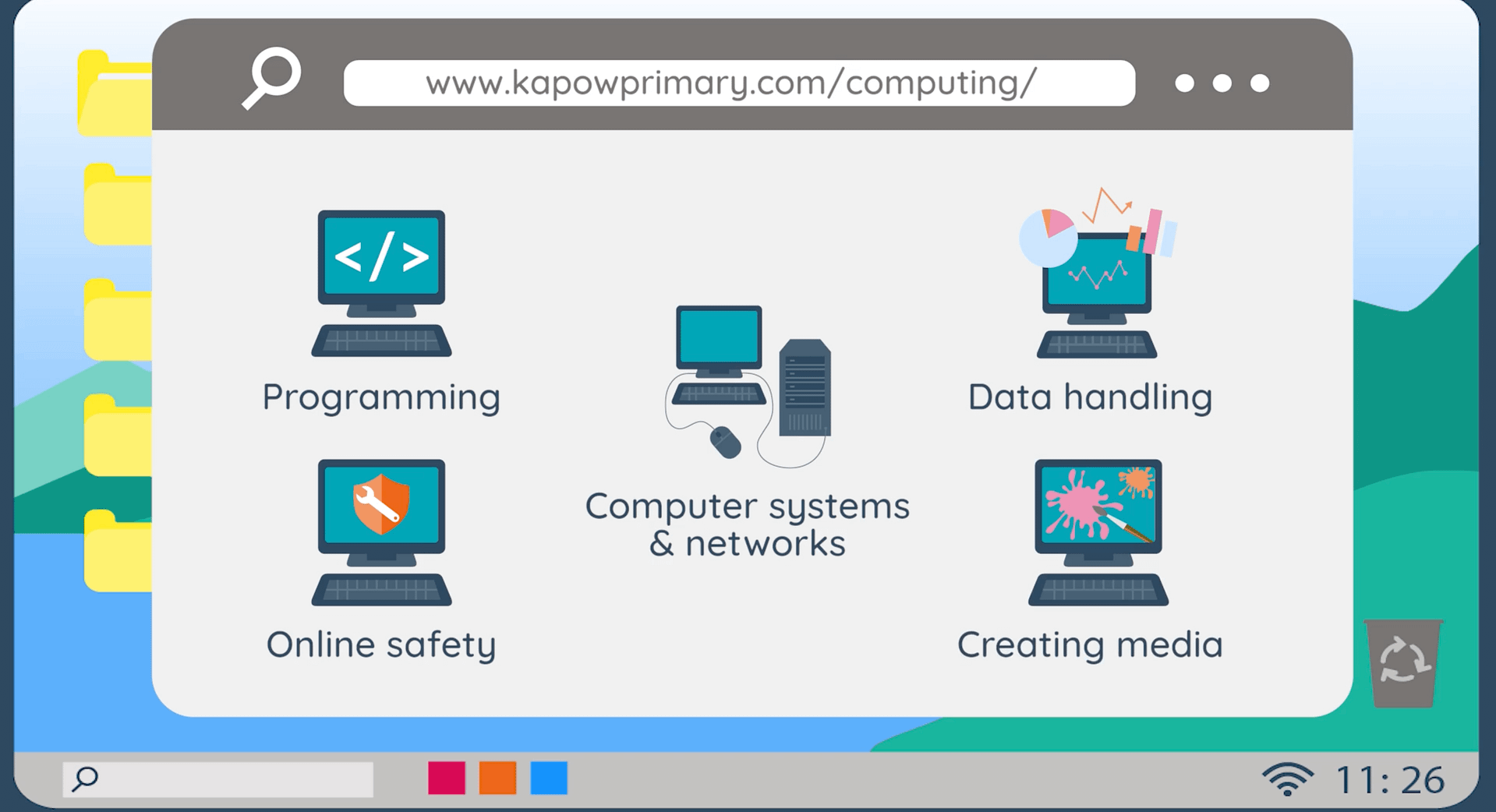
This video provides an overview of Kapow Primary’s Computing scheme of work, designed to support teachers in delivering engaging, high-quality lessons from Reception to Year 6. With a spiral curriculum, integrated CPD, and flexible planning options, it builds teacher confidence while ensuring pupils develop essential digital skills.
Knowledge organiser – Science Y5/6 (B): Energy: Circuits, batteries and switches
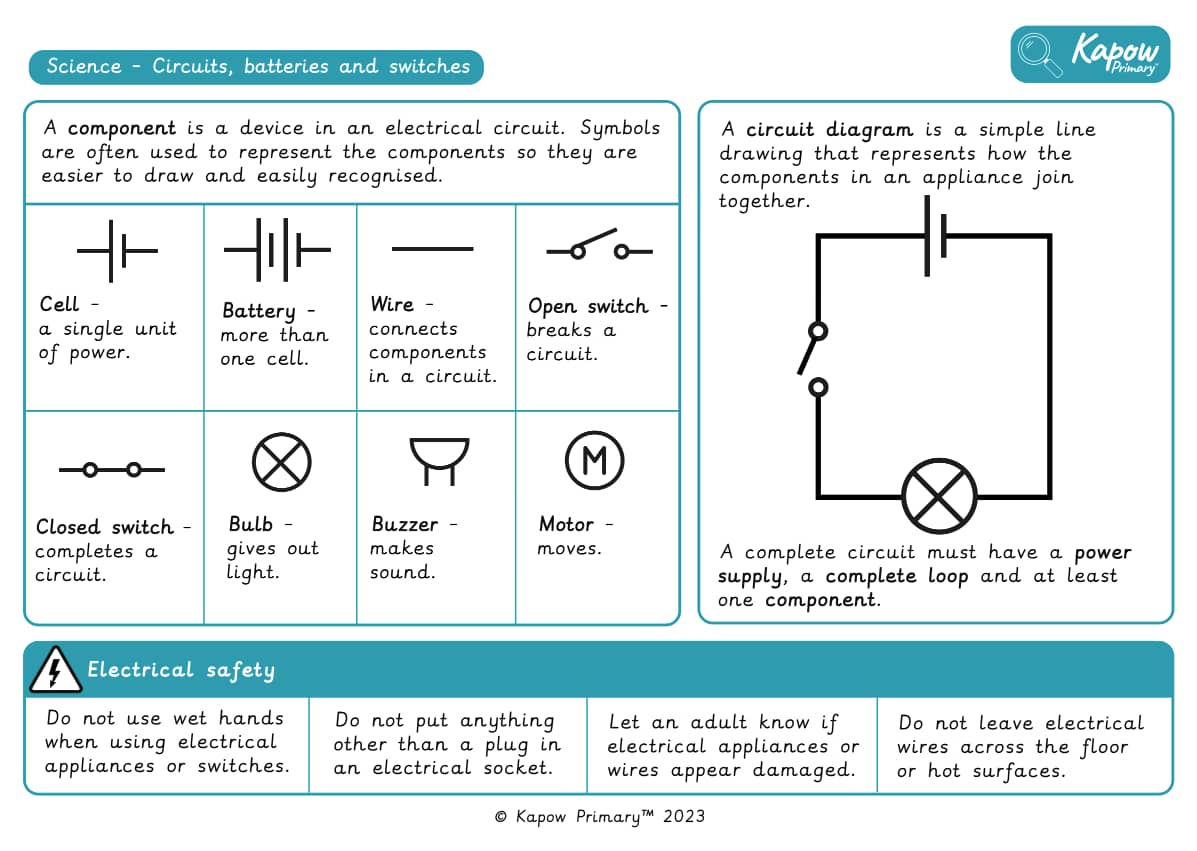
Vocabulary display – Science Y5/6 (B): Energy: Circuits, batteries and switches
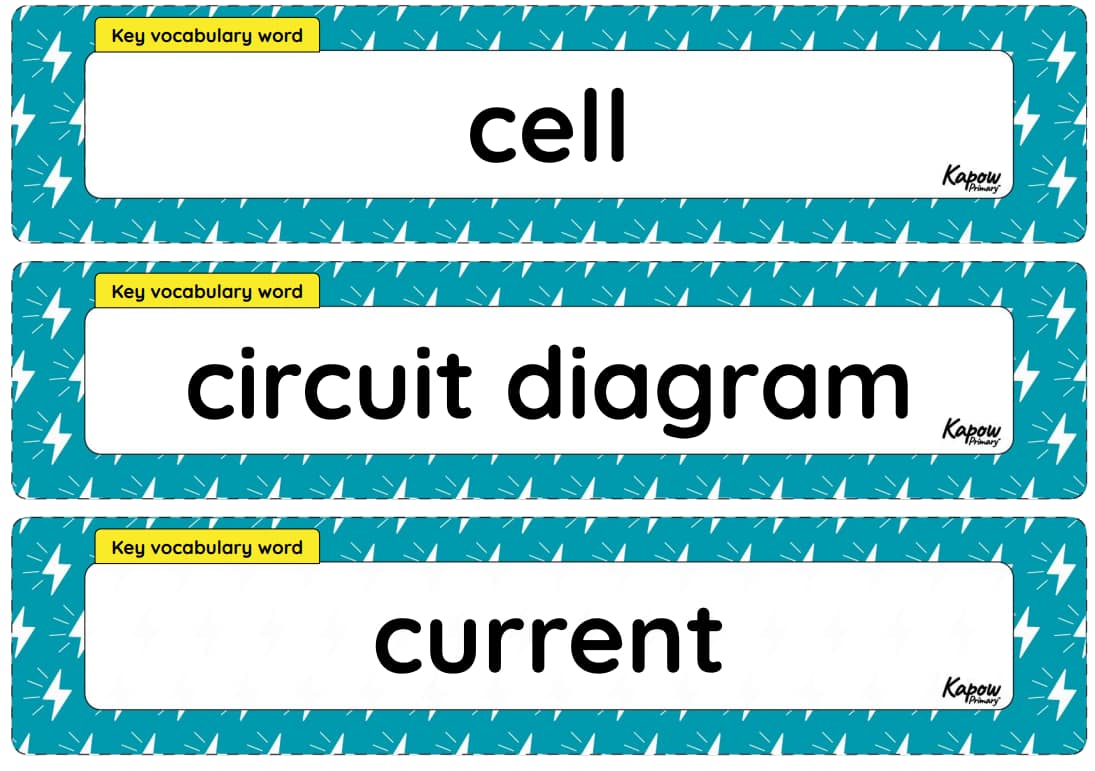
This unit vocabulary display includes keywords from the unit Science, Year 5/6 (B), Energy: Circuits, batteries and switches and additional unit-specific words that may be helpful in a display.
Key vocabulary is clearly labelled on the display, highlighting essential words that the pupils are expected to retain and reuse in future units. Understanding these words enhances comprehension of the subject and supports understanding of prominent organised worldviews.
See the full Science: Progression of key vocabulary.