




- Subjects >
- Computing >
- Key stage 2 >
- Year 4 >
Unit outcomes
Pupils who are secure will be able to:
- Identify the components of a network and describe the roles of routers and servers.
- Identify examples of local and global networks.
- Explain how the internet connects networks around the world.
- Explain the difference between a website and a web page.
- Recognise that websites are made up of different types of data.
- Describe the pathway data takes when a website is accessed.
- Use a search engine and links to find information on the World Wide Web.
- Identify ways people communicate and work together using networks.
- Explain why some areas of a network are restricted.
- Explain how permissions and usernames and passwords allow users to access different parts of a network.
Suggested prior learning
Computing systems: Connecting devices
Get started
Teacher video: Connecting networks unit overview

Lessons
Lesson 1: Components in a network
Lesson 2: Local and global networks
Lesson 3: The World Wide Web
Lesson 4: Search engines
Lesson 5: Communication and collaboration
Key skills
Key skills
Identifying and operating hardware
- Using

This content is for subscribers only. Join for access today.
Key knowledge
Networks
To know:
- A network is
This content is for subscribers only. Join for access today.
Key vocabulary
component (Y3)
connect (Y1)
This content is for subscribers only. Join for access today.
Equipment list
Equipment needed across all lessons in this unit.
This list does not include equipment which is usually readily available in the classroom (e.g pencils, A4 paper etc)
 Download
Full equipment list for the subject
Quantities marked × will update. Items without quantities are unaffected
- Scissors right- and left-handed options recommended. ×30
- A small ball of sticky tack ×10
- 10 pieces of string, each approximately two metres long 10
- A3 paper 10
- Colouring pencils ×10
- Dictionaries ×15
- Devices (laptops, tablets or desktop computers) ×15
This content is for subscribers only. Join for access today.
Related content
Unit resources


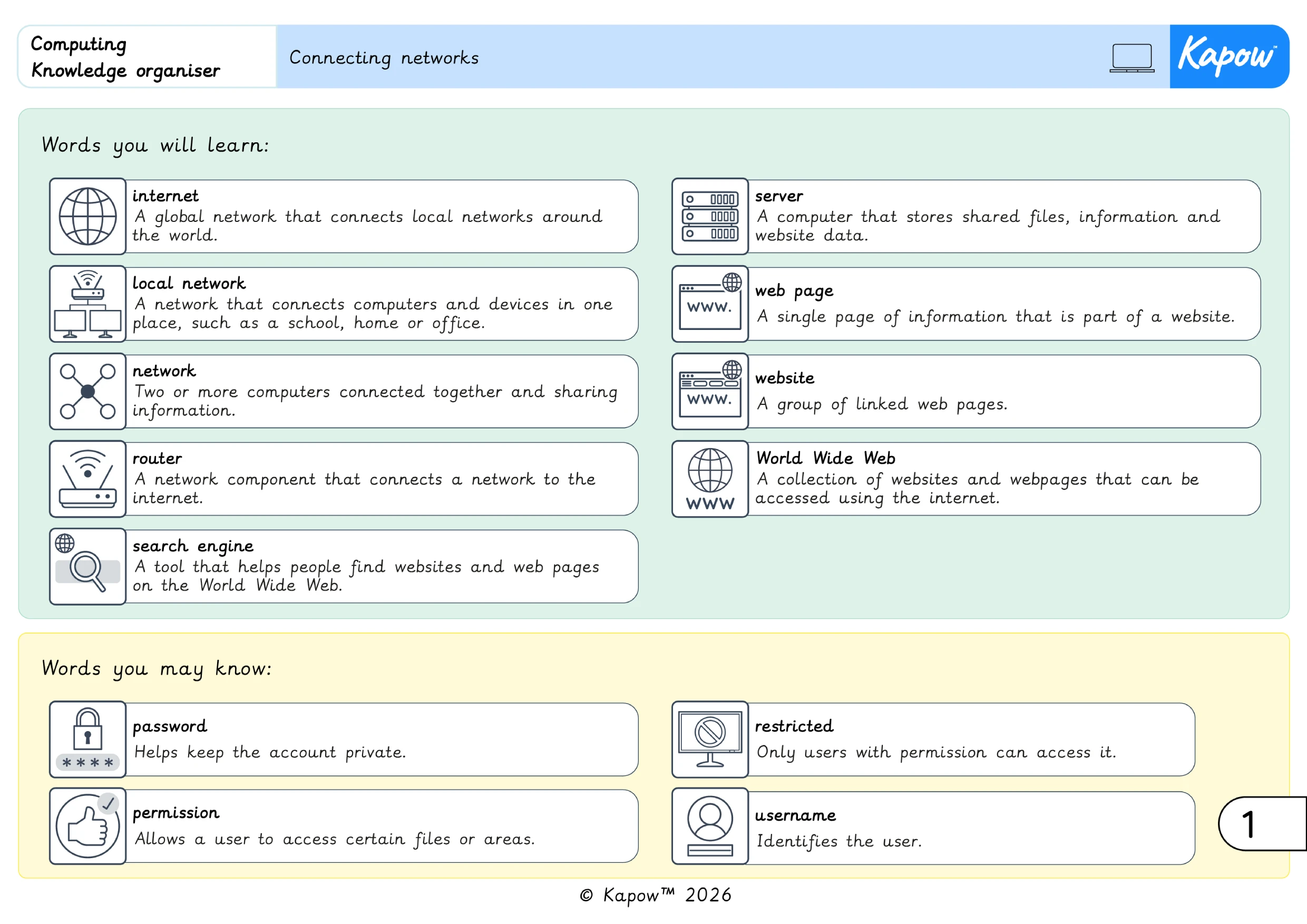
Knowledge organiser – Computing Y4: Computing systems: Connecting networks
Aimed at pupils, two pages providing key facts and definitions from the unit ‘Connecting networks’.
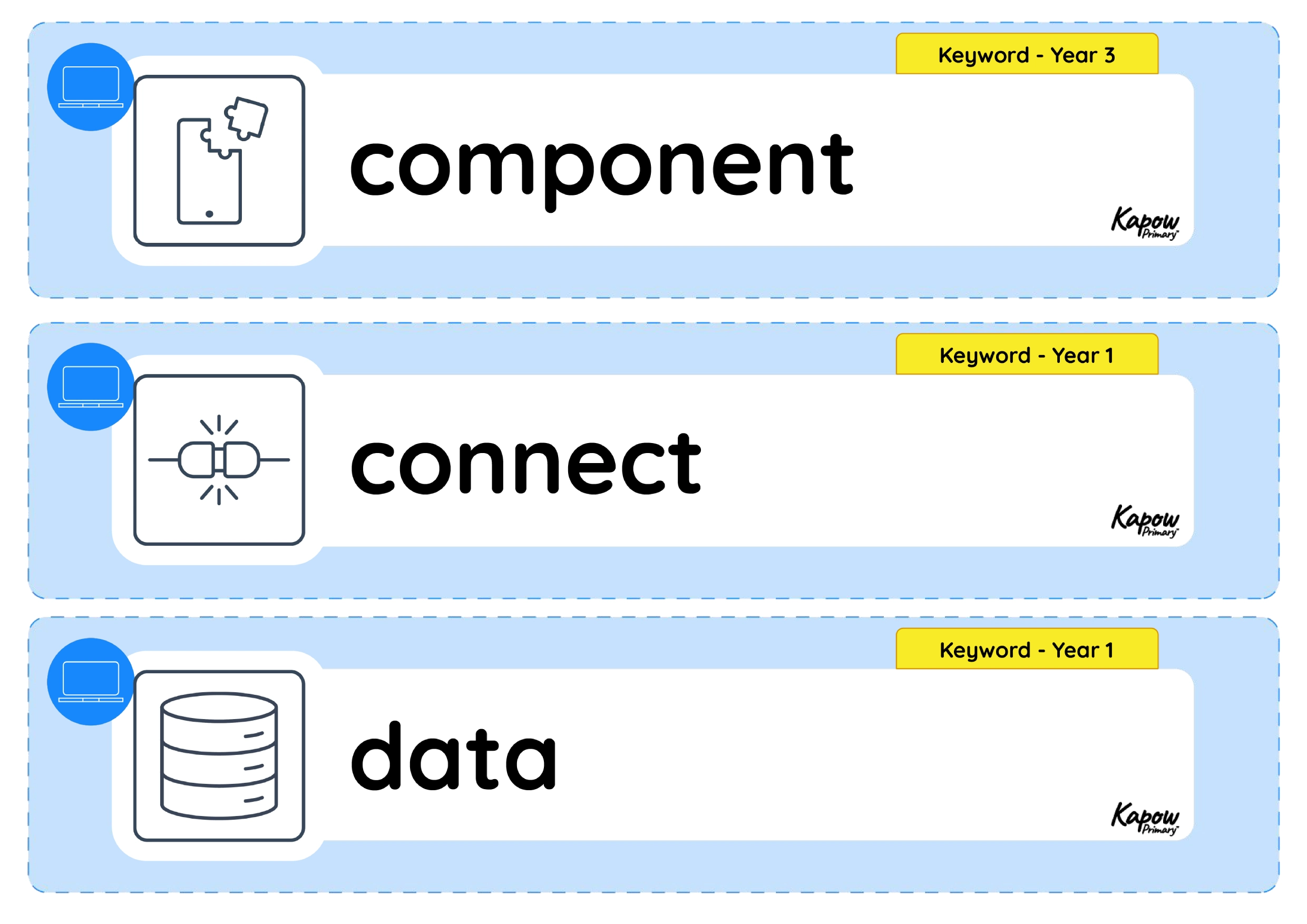
Vocabulary display – Computing Y4: Computing systems: Connecting networks
A display version of the vocabulary from the unit 'Connecting networks'.
Subject resources
This content is for subscribers only. Join for access today.
Cross-curricular opportunities
- English: Spoken language: Using discussion to explain ideas about networks and develop accurate computing vocabulary when describing components and connections.
- History: Exploring how the internet developed over time and considering the changes that led to today’s global network.
- Science: Working scientifically: Asking effective questions and using online searches to find and check information from different sources.
- RSE & PSHE: Relationships education – Online safety and awareness: Exploring how usernames, passwords and permissions protect private information and restrict access to online content.
- RSE & PSHE: Health and wellbeing – Wellbeing online: Considering the benefits of online communication and collaboration while recognising the importance of using online tools safely and appropriately.
- British values: Mutual respect; Democracy: Developing mutual respect through collaborative discussion and decision-making, and democracy through sharing views and voting on ideas.
Build on the learning
Computing systems: Websites, search and storage
Get started
