




- Subjects >
- RSE & PSHE >
- Key stage 2 >
- Year 3 >
Important
These lessons have been refreshed to keep the content current and relevant. They will be fully reviewed and updated when the new National curriculum is published in 2027.
Unit outcomes
By the end of the unit, pupils should be able to:
- Name different jobs and explain what a career is.
- Describe different ways people can learn or train for a career.
- Explain what an influence is and identify some things that can influence career choices.
- Recognise that different people can be influenced by different things when thinking about careers.
- Identify some of their own strengths and skills, and describe how these can be useful at school.
- Explain how the same skill can be useful in different jobs and roles.
- Recognise gender stereotypes about jobs and explain why gender does not determine a person’s strengths, skills or career choices.
- Describe how someone has challenged a gender stereotype and choose an appropriate way to challenge one.
- Give some reasons why people might change careers.
- Explain how existing strengths and skills can be useful in a new career.
Lesson 1: What careers do people have? and Lesson 6: Why might someone make a career change? allow for a visit from parents or members of the community to share their careers to support children’s learning in this unit.
Suggested prior learning

Lessons
Lesson 1: What careers do people have?
Lesson 2: What influences career choices?
Lesson 3: What job might be for me?
Lesson 4: Should your gender affect what job you do?
Lesson 5: How can gender stereotypes be challenged?
Lesson 6: Why might someone make a career change?
Key skills
Key skills
- Recognising a wider range of jobs available.
- Identifying their personal strengths and skills and considering how these relate to jobs.

This content is for subscribers only. Join for access today.
Key knowledge
- People sometimes assume something about someone because they are a boy or a girl and this is called gender stereotyping.
- Stereotypes can restrict people’s sense of what they can do or become.
This content is for subscribers only. Join for access today.
Key vocabulary
career (Y3/4)
fair (Y1/2)
This content is for subscribers only. Join for access today.
Equipment list
Equipment needed across all lessons in this unit.
This list does not include equipment which is usually readily available in the classroom (e.g pencils, A4 paper etc)
 Download
Full equipment list for the subject
Quantities marked × will update. Items without quantities are unaffected
- Whiteboards and pens ×30
- Wonder box 1
-
3 sticky notes
×15 -
Pens or pencils in a different colour from the original responses
×30
Optional
The equipment below is optional
- Flipchart 1
- Highlighters As needed
-
1 bag or box containing objects linked to different jobs; for example: camera, plant pot, laptop, measuring tape, stethoscope and brush
1
This content is for subscribers only. Join for access today.
Related content
Unit resources

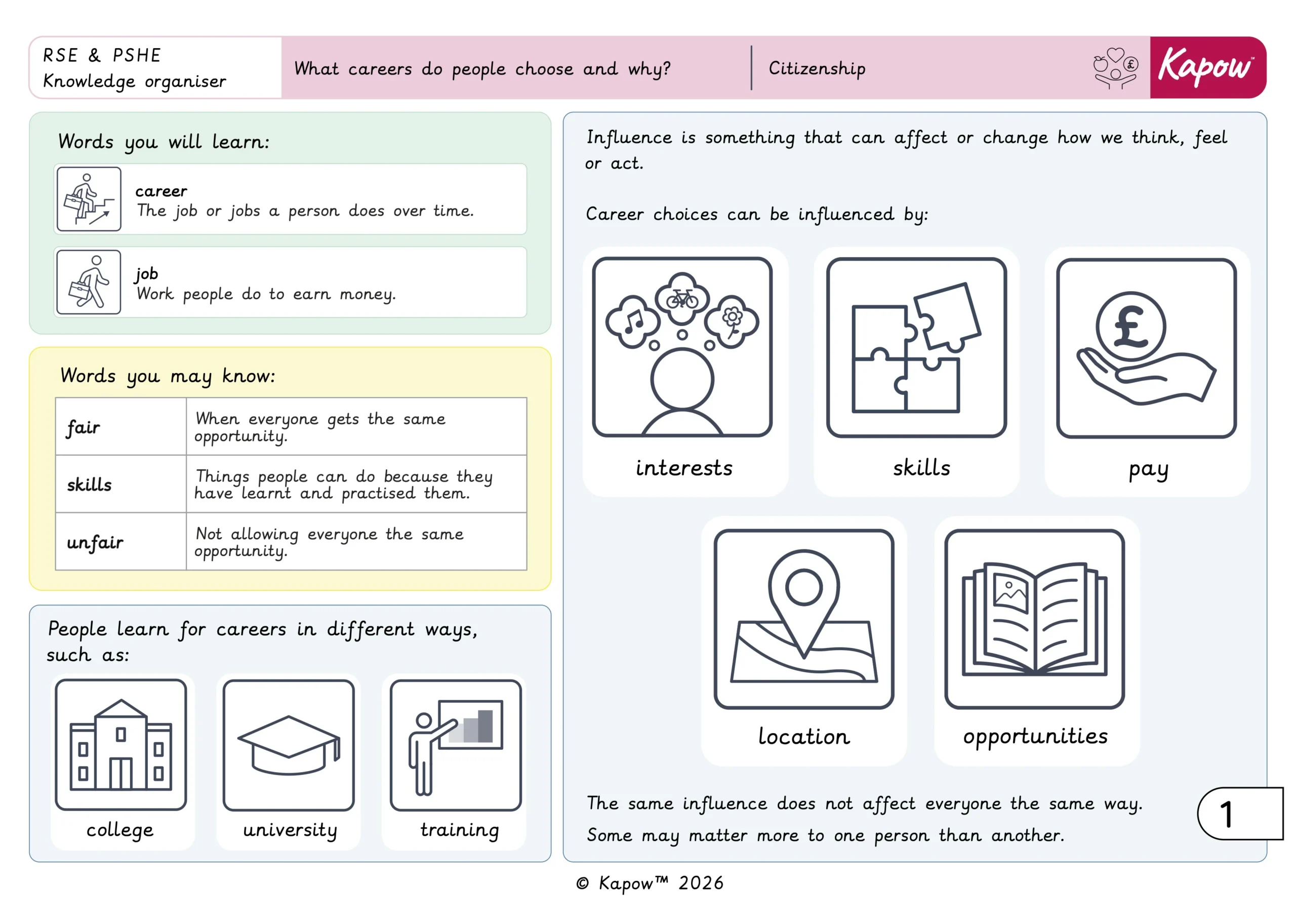
Knowledge organiser – RSE & PSHE Y3: Citizenship: What careers do people choose and why?
Aimed at pupils, two pages providing key facts and definitions from the unit ‘What careers do people choose and why?'
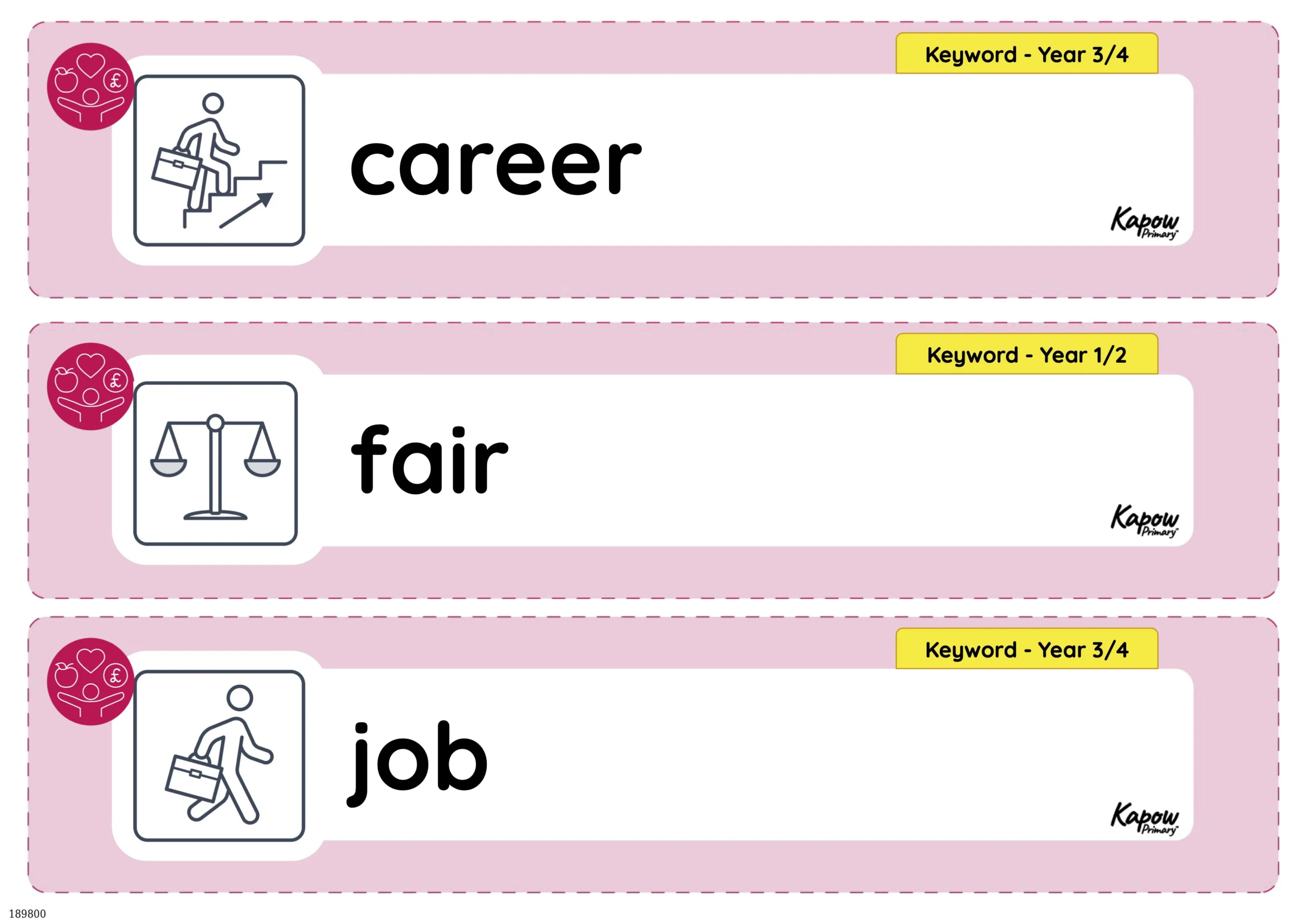
Vocabulary display – RSE & PSHE Y3: Citizenship: What careers do people choose and why?
A display version of the vocabulary from the unit 'What careers do people choose and why?'.
Subject resources
This content is for subscribers only. Join for access today.
Cross-curricular opportunities
- English – Spoken language: articulating and justifying opinions through discussions about career choices, personal strengths, gender stereotypes and reasons people may change careers.
- British values – Individual liberty: exploring how people make career choices based on their interests, strengths and circumstances, recognising that gender stereotypes should not limit opportunities.
- British values – Mutual respect: respecting different career choices, strengths and experiences, and recognising the importance of challenging unfair assumptions about people’s abilities and opportunities.