


Y1/2 (A): Why should we care for the world?
Building on their understanding of creation stories, children explore beliefs about the relationship between humans and nature.
Unit outcomes
Pupils who are secure will be able to:
- Explain different beliefs about who owns the world.
- Recognise the belief that humans were created last for a reason.
- Recognise why only humans can care for the world.
- Identify the belief that God created humans as stewards over nature through scripture.
- Recognise what some stories about Muhammad tell us about looking after the world.
- Express why stewardship is important to some Muslim people.
- Identify why people who believe in ahimsa may think it is important to look after all living creatures.
- Identify reasons why it is important to care for the world.
Lesson 6 suggests inviting a visitor from a local Christian, Hindu, Humanist, Jain, Jewish or Muslim community (see Lesson 6: Teacher knowledge for more information).
Suggested prior learning
Y1/2 (A): How did the world begin?
Get started
Teacher video: Why should we care for the world?

Lessons
Y1/2 (A): Lesson 1: Who owns the world?
Y1/2 (A): Lesson 2: Who can care for the world?
Y1/2 (A): Lesson 3: Why do some people believe we should care for the world?
Y1/2 (A): Lesson 4: What do some Muslim people believe about caring for the world?
Y1/2 (A): Lesson 5: What other reasons are there for caring for the world?
Y1/2 (A): Lesson 6: Why should we care for the world?
Key skills
Disciplinary
- Asking questions about things

This content is for subscribers only. Join for access today.
Key knowledge
Substantive
To know:
- Some people believe
This content is for subscribers only. Join for access today.
Key vocabulary
belief
Brahman
This content is for subscribers only. Join for access today.
Related content
Unit resources


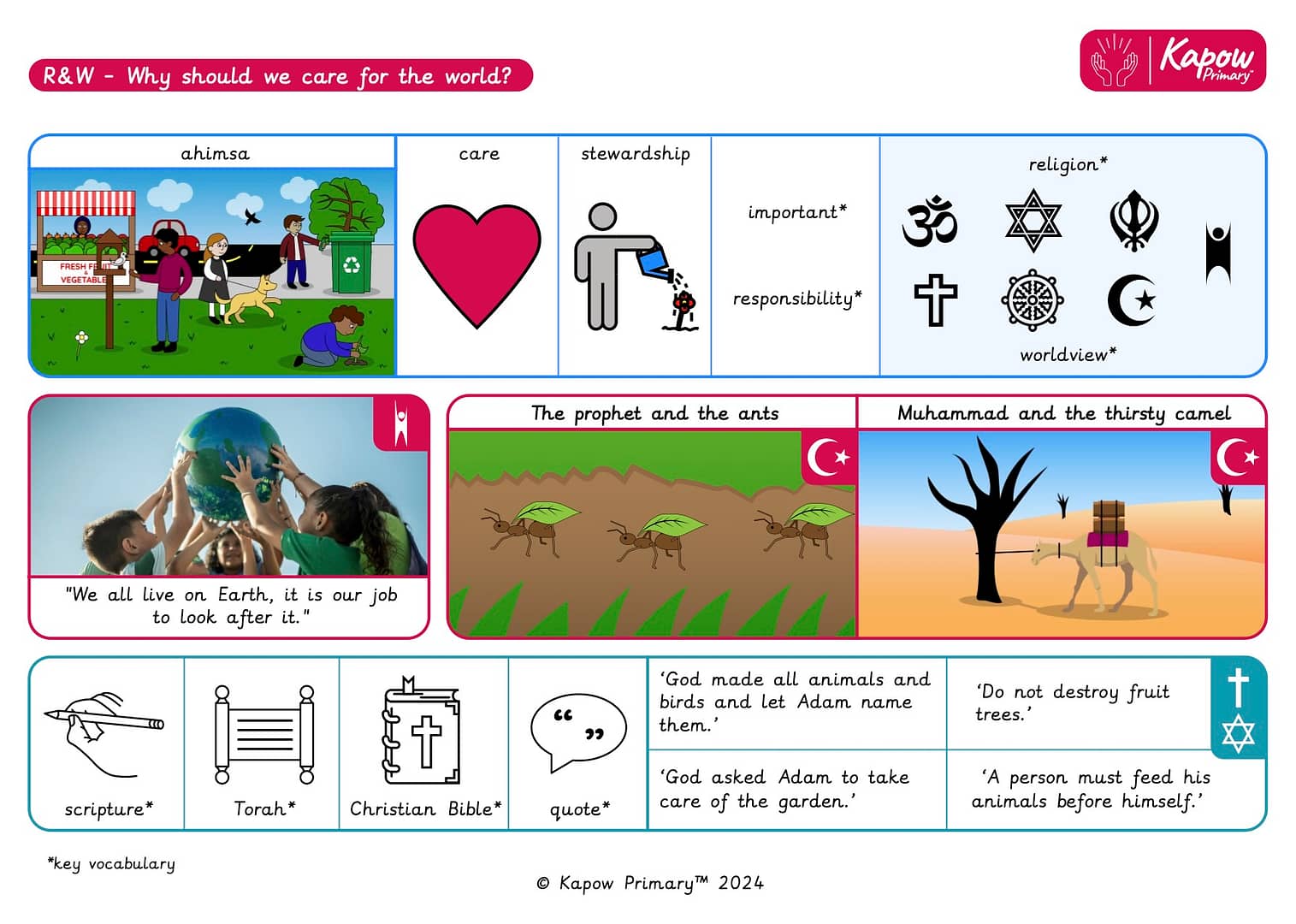
Knowledge organiser – R&W Y1/2 (A): Why should we care for the world?
Aimed at pupils, a single page document that gives key facts and definitions from the mixed-age unit 'Why should we…
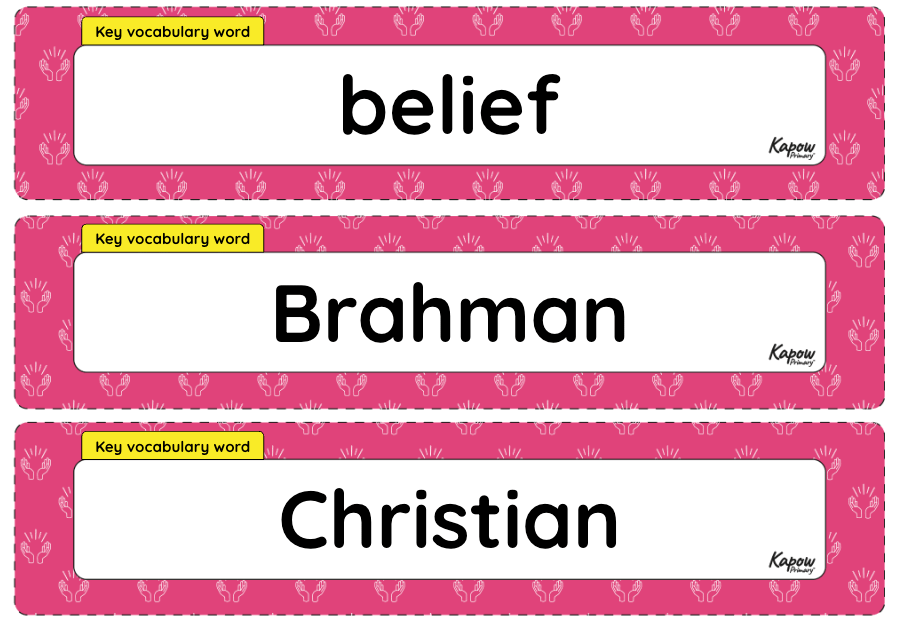
Vocabulary display – R&W Y1/2 (A): Why should we care for the world?
A display version of the vocabulary from the 'Why should we care for the world?' unit.
Subject resources
This content is for subscribers only. Join for access today.
Cross-curricular opportunities
English: Reading.
English: Spoken language.
PSHE: Living in the wider world.
British values: Mutual respect.
British values: Tolerance of those with different faiths and beliefs.
