




- Subjects >
- Music >
- Key stage 2 >
- Year 3 >
Important
This unit has been updated to reflect Kapow Primary’s revised Music progression.
Note: if teaching the recommended Instrumental scheme and curriculum time is limited, omit this unit and teach Music, Instrumental lessons, Unit 1: South Africa instead.
See Music: Instrumental scheme for more information.
Unit outcomes
Pupils who are secure will be able to:
- Copy body percussion patterns while maintaining a steady beat.
- Create their own body percussion patterns and perform them while maintaining a steady beat.
- Recognise crotchets, paired quavers and crotchet rests and say how many beats they are worth.
- Create and play a rhythm that uses crotchets, paired quavers and crotchet rests.
- Recall the note lengths of crotchets, paired quavers, crotchet rests and minims.
- Begin to maintain a rhythm that uses crotchets, paired quavers, crotchet rests and minims while hearing other rhythms.
- Create and notate a four-beat rhythm using notes and rests accurately.
- Check a rhythm adds up to four beats using note values.
- Perform confidently as part of a group performance while maintaining a steady beat.
- Perform their rhythm as part of a group while other rhythms are being played.
Prior learning
Mountain melodies: Steps and leaps
Get started
Teacher video: Reading rhythms: Patterns and layers unit overview

Lessons
Lesson 1: Keeping a beat
Lesson 2: Crotchets, paired quavers and rests
Lesson 3: Playing minims
Lesson 4: Writing rhythms
Lesson 5: Performing rhythms
Key skills
Creating sound
- Using correct technique

This content is for subscribers only. Join for access today.
Key knowledge
Notation
To know that:
- the shape
This content is for subscribers only. Join for access today.
Key vocabulary
beat (Y2)
confidence
This content is for subscribers only. Join for access today.
Equipment list
Equipment needed across all lessons in this unit.
This list does not include equipment which is usually readily available in the classroom (e.g pencils, A4 paper etc)
 Download
Full equipment list for the subject
Quantities marked × will update. Items without quantities are unaffected
- Musical instruments ×8
- Percussion instruments (untuned) ×30
This content is for subscribers only. Join for access today.
Related content
Unit resources


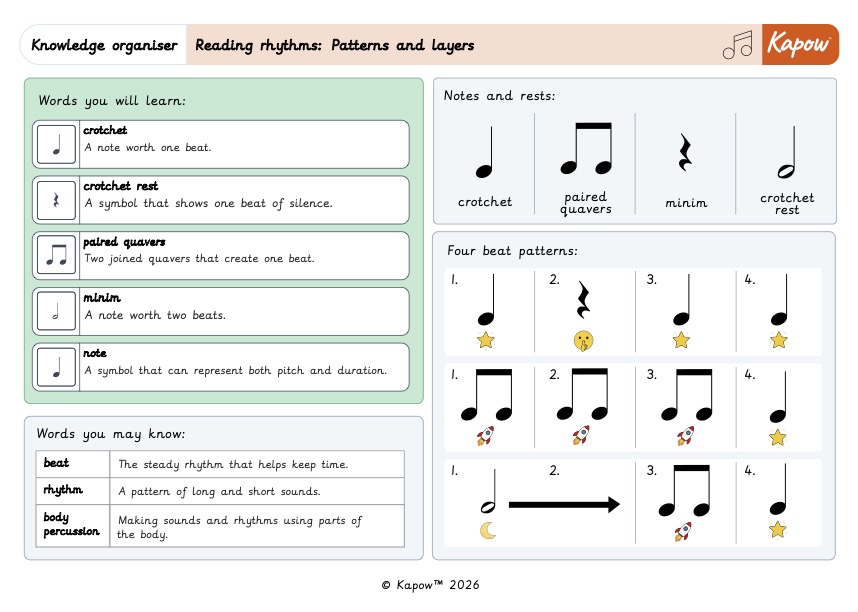
Knowledge organiser – Music Y3: Reading rhythms: Patterns and layers
Aimed at pupils, two pages providing key facts and definitions from the unit 'Patterns and layers'
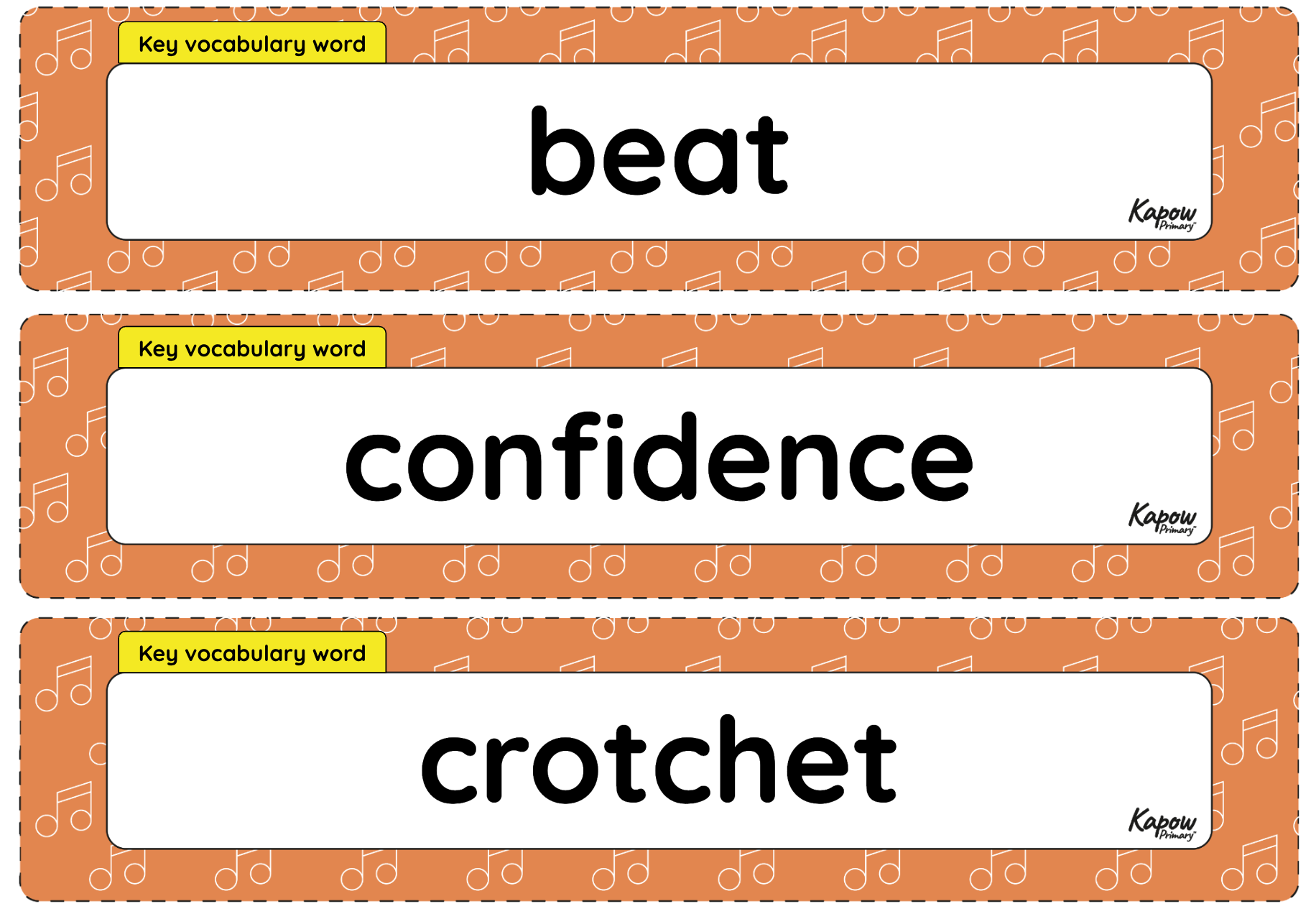
Vocabulary display – Music Y3: Reading rhythms: Patterns and layers
Subject resources
This content is for subscribers only. Join for access today.
Cross-curricular opportunities
None.
