Updated for 24/25, the progression of skills and knowledge document shows when vocabulary is introduced in our History scheme of work.
This document shows the progression of key vocabulary across the disciplinary concepts, historical enquiry, substantive concepts and chronological awareness strands. The children do not need to retain vocabulary related to topic knowledge (e.g., ‘sarcophagus’ and ‘aqueduct’), so it is not shown in this document.
This document shows how pupils’ understanding of vocabulary builds when following the Geography scheme of work. The vocabulary is shown by strand to make it easier to see progression in Geographical skills and Fieldwork, Human and Physical geography and Locational knowledge.
Our Place knowledge strand involves understanding similarities and differences between places. Therefore, it doesn’t have its own associated vocabulary; rather, pupils’ understanding of ‘place’ will involve an awareness of much of the vocabulary used in other strands.
We have separated human and physical geography to make progression clearer, however it is important to be aware that the human and physical are interconnected and some terms could arguably be described as human and physical geography terms.
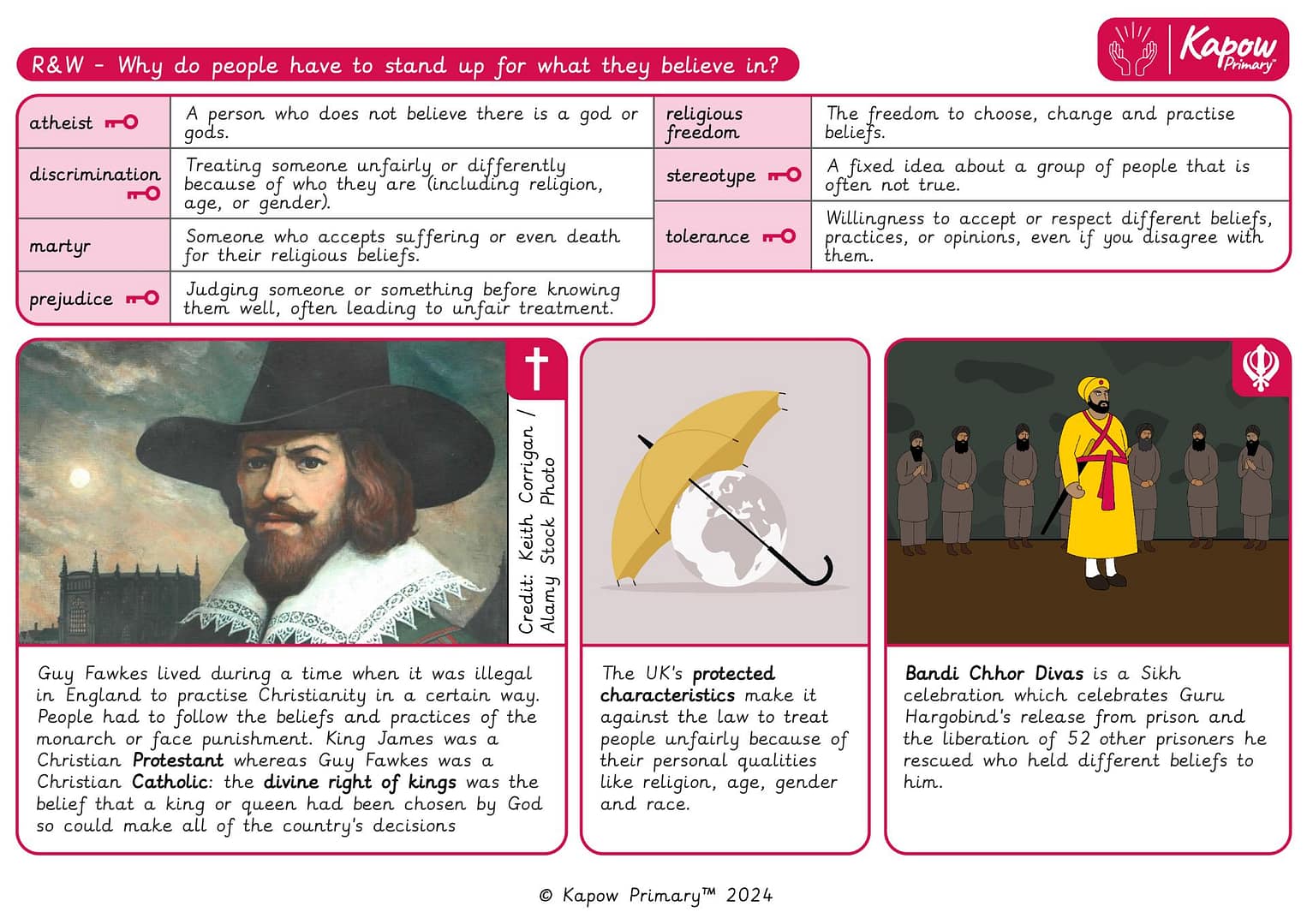
A Knowledge organiser that captures the essential knowledge and skills learnt throughout the unit Religion and Worldviews, Year 5, Why Do People Have to Stand Up for What They Believe In?
This Religion and Worldviews resource is designed to support the pupils as they explore the concept of standing up for beliefs and values. It introduces key vocabulary such as activism, justice, morality, protest, and commitment, helping the pupils understand how religious and non-religious worldviews inspire individuals to take action. The pupils will also examine historical and contemporary examples of people who have stood up for their beliefs and the impact of their actions.
This document shows which Wellbeing lessons plans give coverage of the statutory Relationships Education, Relationships and Sex Education (RSE) and Health Education published by the Department for Education. For EYFS (reception) units it shows which Development Matters statements and Early Learning goals each unit is working towards.