




Unit outcomes
Pupils who are secure will be able to:
- Identify cognates and use the context to deduce the meaning of new words.
- Identify the appropriate time to use a dictionary to look up unfamiliar words.
- Apply rules to generate all forms of an adjective.
- Use a range of adjectives and descriptive phrases to describe clothing.
- Describe an outfit and its purpose in multi-clause sentences using porque – because.
- Create an outfit by following the description in a design brief accurately.
- Read or say sentences aloud using the correct pronunciation when giving a presentation.
Suggested prior learning
Y5/6 (A): Unit 2: Spanish portraits
Get started
Lessons
Y5/6 (B): Lesson 1: Identifying meaning
Y5/6 (B): Lesson 2: Describing clothes
Y5/6 (B): Lesson 3: Giving reasons
Y5/6 (B): Lesson 4: Designing an outfit
Y5/6 (B): Lesson 5: Creating an outfit
Y5/6 (B): Lesson 6: Presenting an outfit
Key skills
Language comprehension
- Identifying

This content is for subscribers only. Join for access today.
Key knowledge
Grammar
- To know
This content is for subscribers only. Join for access today.
Key vocabulary
unos - some
unas - some
This content is for subscribers only. Join for access today.
Related content
Unit resources


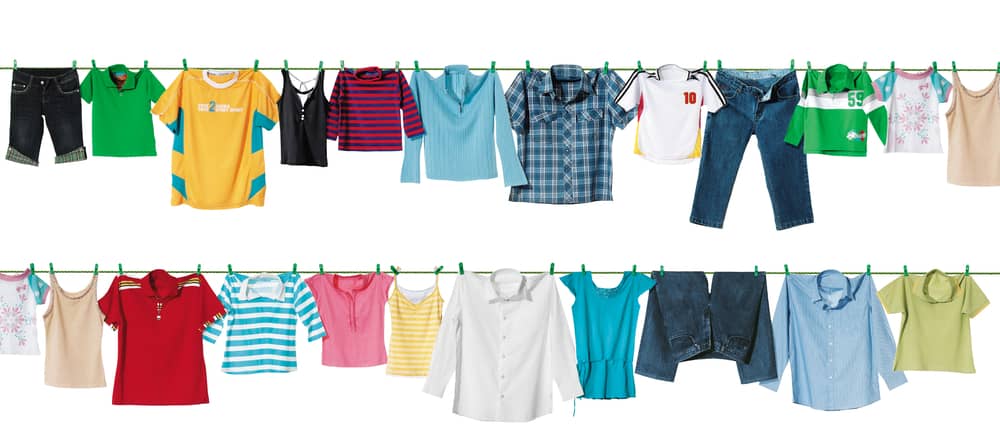
Knowledge organiser – Spanish Y5/6 (B): Clothes
Aimed at pupils, two pages providing key facts and definitions from the unit "5/6 (B): Unit 3: Clothes in Spanish".
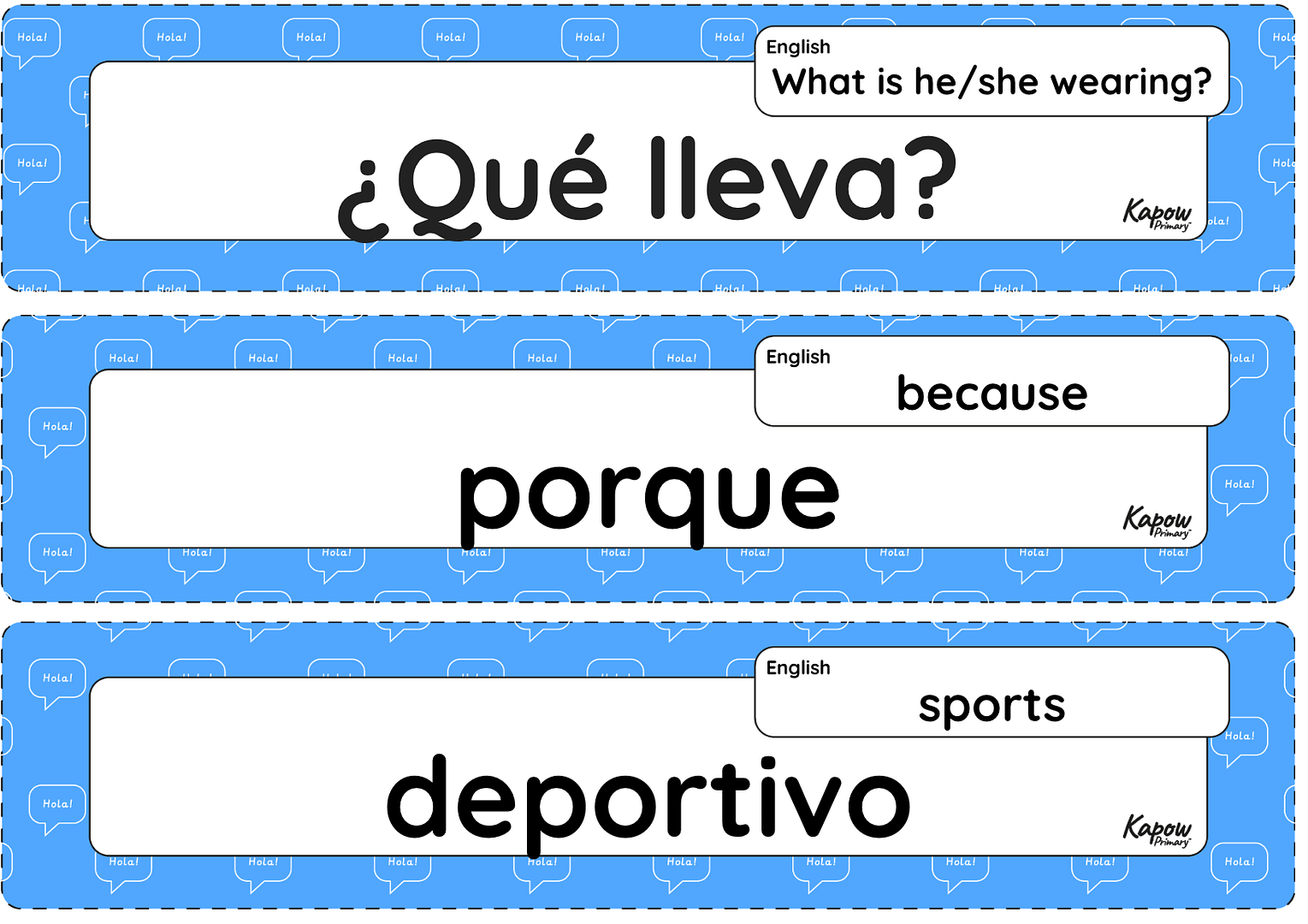
Vocabulary display: Clothes in Spanish
A display version of the key vocabulary from the unit 'Clothes in Spanish'.

Translations: Clothes in Spanish
Translations of key texts and transcripts from resources in this unit.
Subject resources
This content is for subscribers only. Join for access today.
Cross-curricular opportunities
Design and technology
Design
Pupils should be taught to:
- Generate, develop, model and communicate their ideas through discussion, annotated sketches, cross-sectional and exploded diagrams, prototypes, pattern pieces and computer-aided design.
Build on the learning
Y5/6 (B): Unit 4: School life in Spanish
Get started