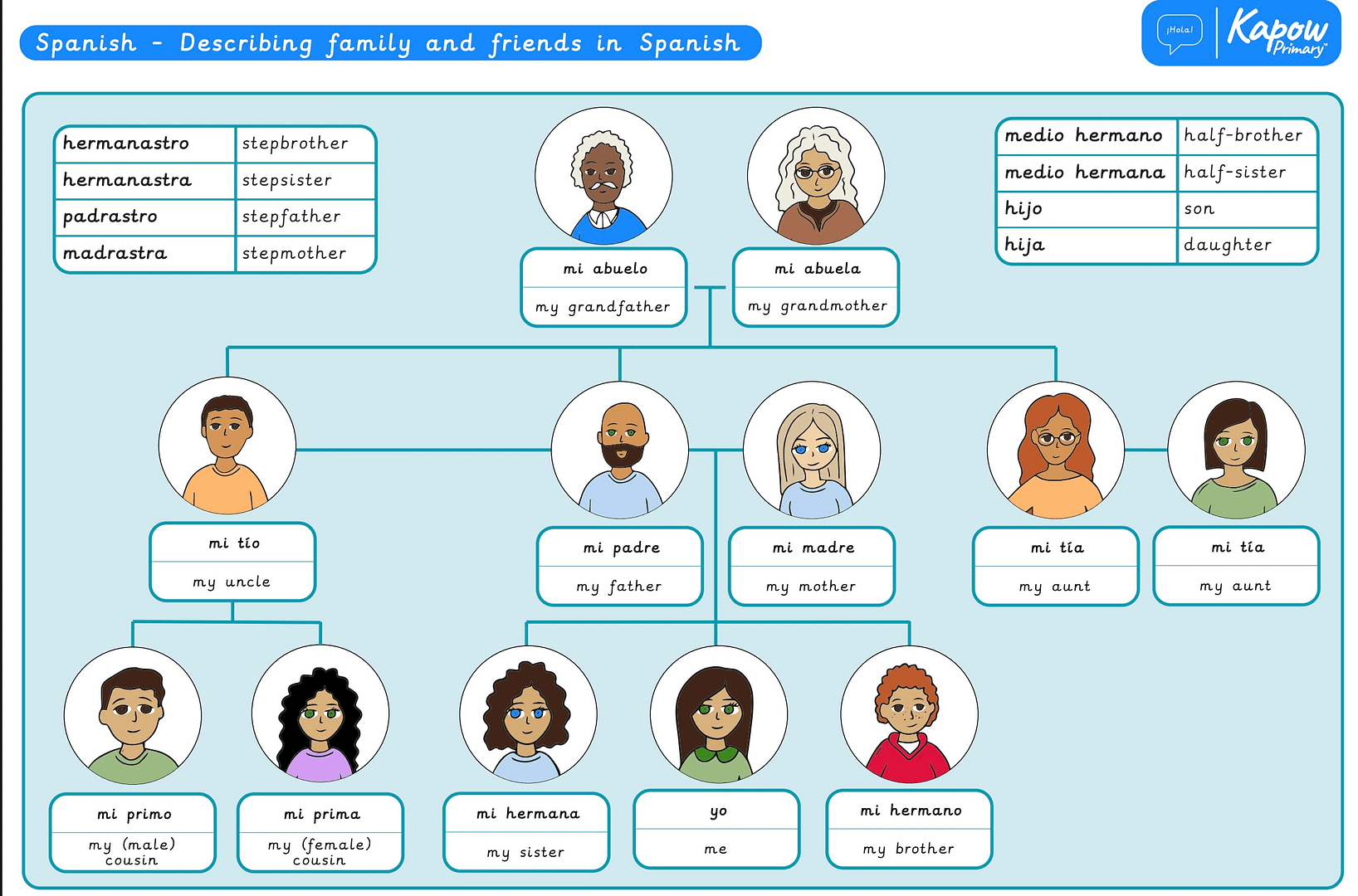
A Knowledge Organiser that captures the essential knowledge and skills learnt throughout the unit Spanish, Year 5, Describing friends and family.
This resource is designed to support pupils as they learn to describe family members and relationships in Spanish. It introduces key vocabulary for family roles (such as hermano, abuela, and primo) and extends understanding with terms for step- and half-relatives. Through illustrated family trees, pupils explore sentence structures used to describe people and relationships, including how to express sibling information and identify others using the question ¿Quién es? (Who is it?). The document also reinforces verb conjugations and subject pronouns in the present tense, helping pupils construct accurate sentences using me llamo, tengo, and vive. It provides an engaging foundation for confidently discussing personal relationships in Spanish.
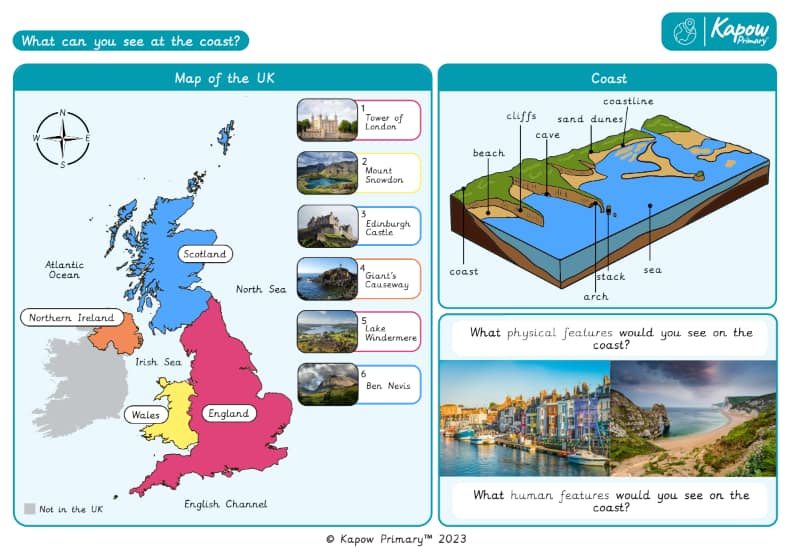
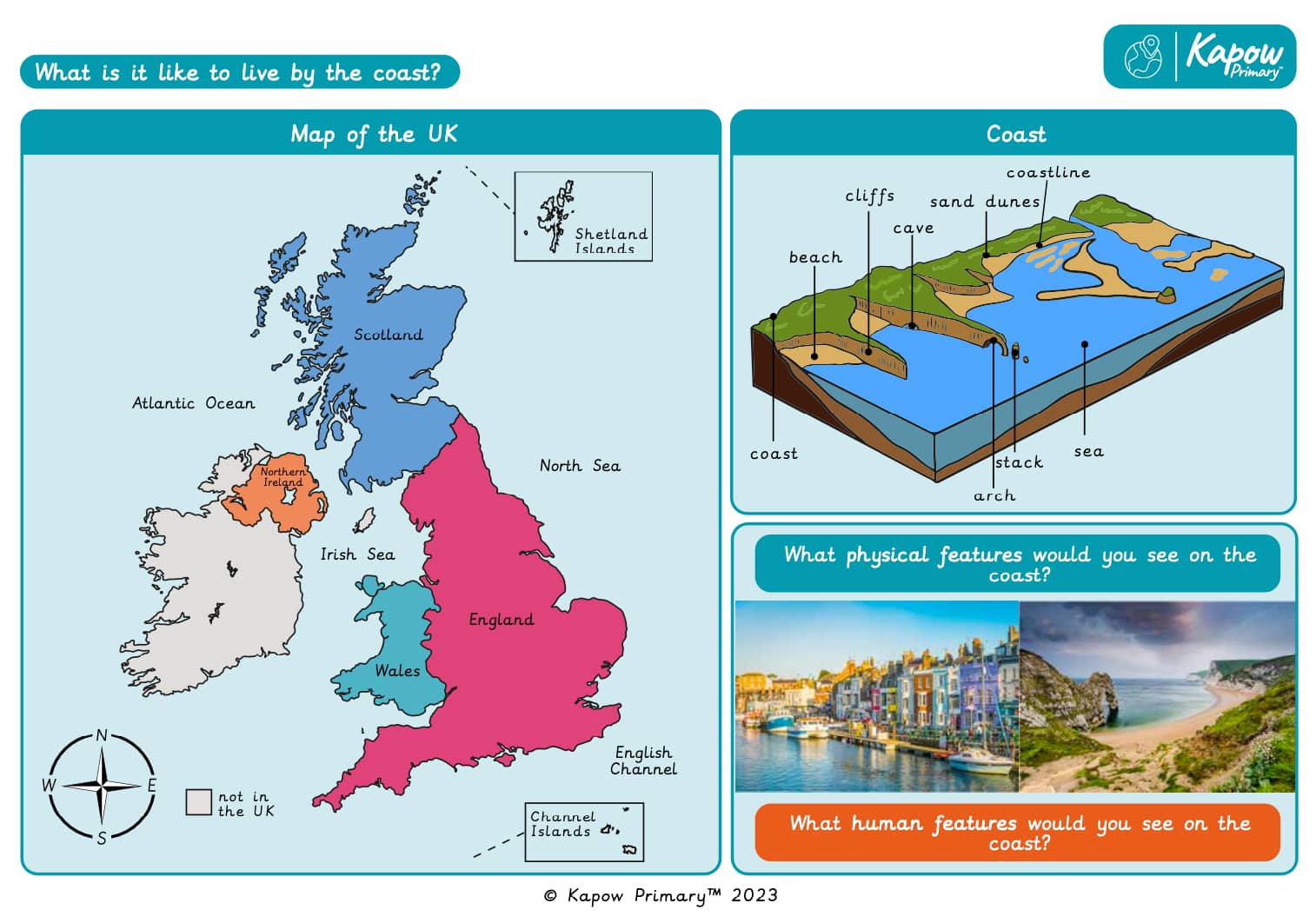
A Knowledge organiser that captures the essential knowledge and skills learnt throughout the unit Geography, Year 1/2, Cycle A, What Can You See at the Coast?
This Geography resource is designed to support the pupils as they explore coastal environments and their key physical and human features. It introduces key vocabulary such as beach, cliff, harbour, tide, and erosion, helping the pupils understand how coastal landscapes are formed and how they change over time. The pupils will also learn about different coastal habitats, wildlife, and the impact of human activity on the coast.
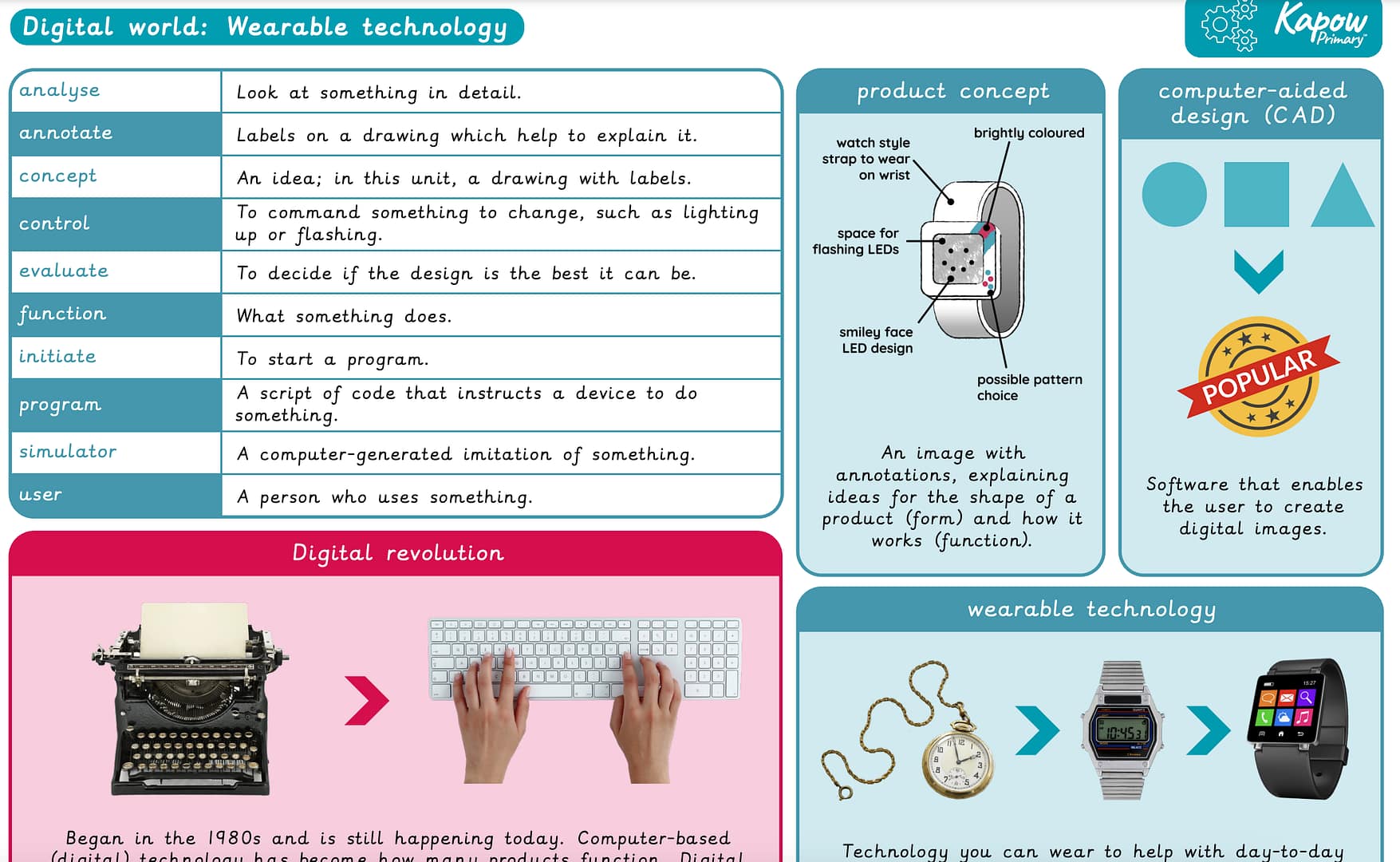
A Knowledge organiser that captures the essential knowledge and skills learnt throughout the unit Design and Technology (D&T), Year 3, Wearable Technology.
This Design and Technology resource is designed to support the pupils as they explore the concept of wearable technology and its applications. It introduces key vocabulary such as circuit, sensor, input, output, and prototype, helping the pupils understand how technology is integrated into clothing and accessories to enhance functionality. The pupils will also learn about the design process, including planning, testing, and evaluating their own wearable technology ideas.
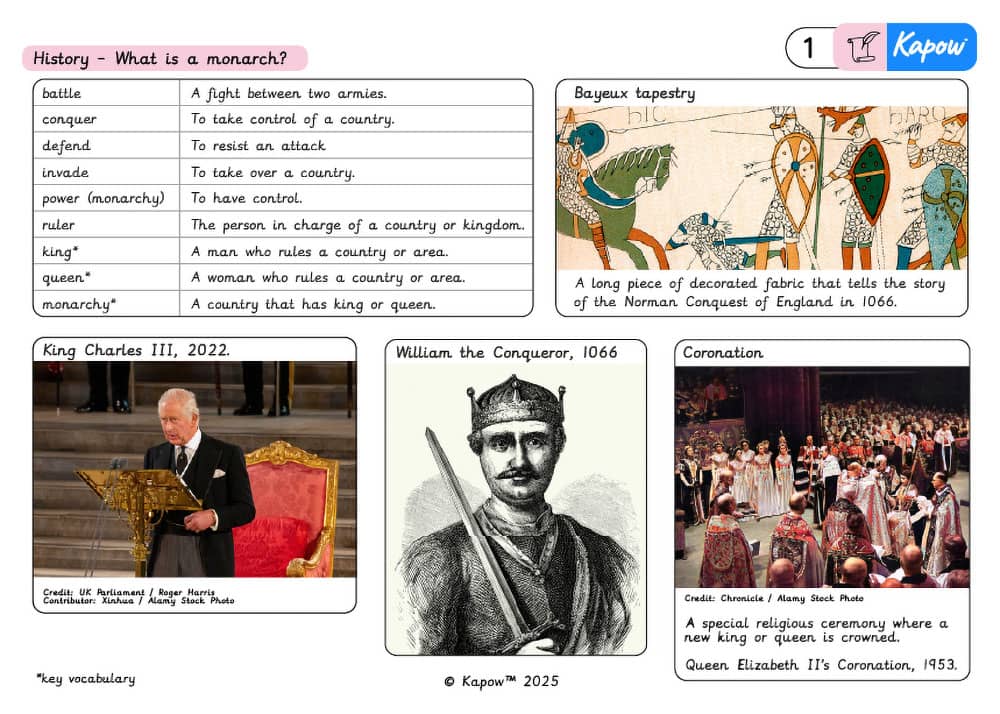
A Knowledge organiser that captures the essential knowledge and skills learnt throughout the Year 2 unit History, Y2, What is a monarch?
This History resource is designed to support children as they explore monarchy now and in the past. It highlights key vocabulary, features significant monarchs and includes images to show how castles changed over time. It is perfect for consolidating essential knowledge.
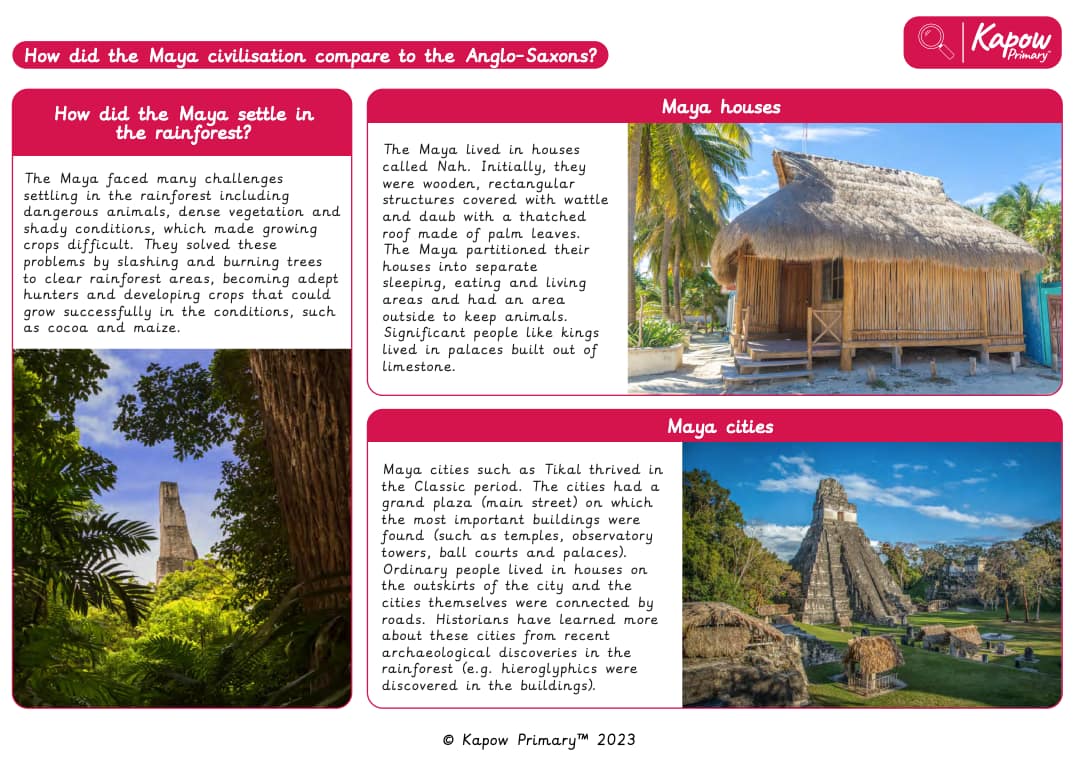
A Knowledge Organiser that captures the essential knowledge and skills learnt throughout the unit Archived – History, Year 4, How did the Maya civilisation compare to the Anglo-Saxons?
This resource is designed to support pupils as they explore how the Maya civilisation developed and how it contrasted with Anglo-Saxon life. It introduces the challenges the Maya faced in settling the rainforest and the innovative solutions they used—such as slash-and-burn farming and crop adaptation. Pupils learn about Maya architecture, including the structure of houses and cities like Tikal, and how these were uncovered through archaeological discoveries. A clear timeline places the Maya periods alongside the Anglo-Saxon era, while key terms such as city-state, hieroglyphics, and creation story support historical literacy. This unit provides rich opportunities for comparative thinking and cultural understanding.