




Please note
This unit has been updated for Summer 2026. There have been no changes to the Progression of knowledge, skills and key vocabulary documents.
Unit outcomes
Pupils who are secure will be able to:
- Recall that a monarch is a king or queen.
- Identify some of the monarch’s roles.
- Explain that a king or queen is crowned in a special ceremony called a coronation.
- Name some of the main steps in the coronation ceremony.
- Use sources to explain how William the Conqueror became King of England.
- Explain how William the Conqueror kept order and conquered England.
- Explain how castles have changed over time.
- Identify that the power of monarchs has changed over time.
- Make comparisons between past and present monarchies.
Lesson 5: How did castles change? includes an option to design and build a castle. This may require building bricks or a selection of recycled boxes.
This unit could include an optional visit to a castle so the children can explore its features first-hand. Follow school risk assessment policies and procedures if arranging an external visit.
Suggested prior learning
Y1/2 (B): How was school different in the past?
Get started
Lessons
Y1/2 (B): Lesson 1: What is a monarch?

Y1/2 (B): Lesson 2: Who is our monarch today?
Y1/2 (B): Lesson 3: How did William the Conqueror become King of England?
Y1/2 (B): Lesson 4: How did William the Conqueror rule?
Y1/2 (B): Lesson 5: How did castles change?
Y1/2 (B): Lesson 6: What was a monarch in the past?
Key skills
- Sequencing up

This content is for subscribers only. Join for access today.
Key knowledge
- To know
This content is for subscribers only. Join for access today.
Key vocabulary
king
monarchy
This content is for subscribers only. Join for access today.
Related content
Unit resources


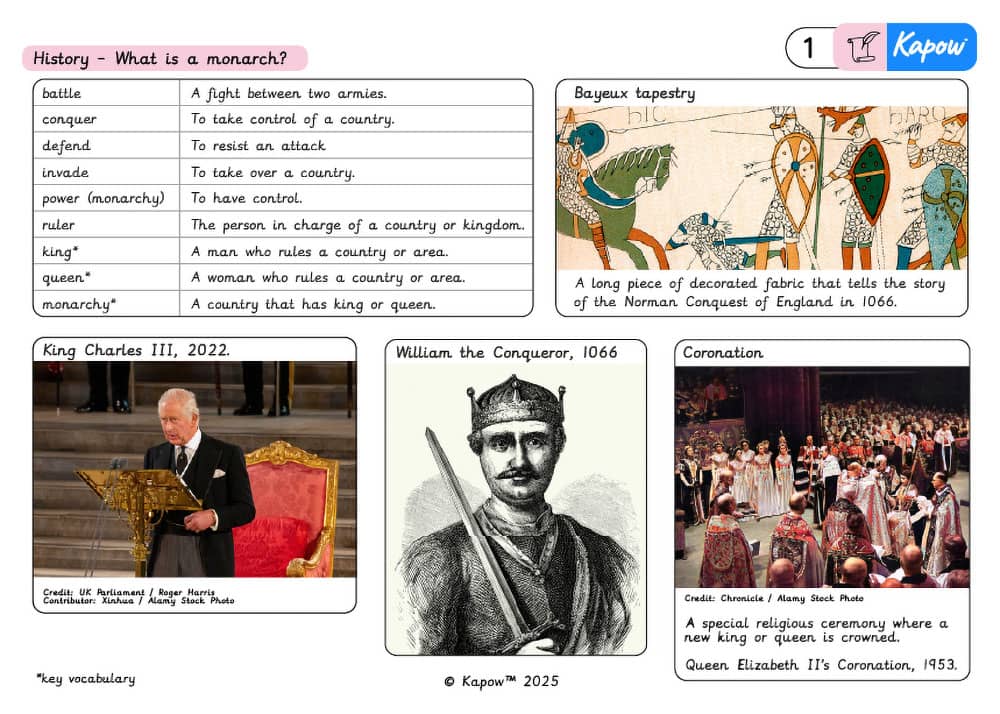
Knowledge organiser – History Y1/2 (B): What is a monarch?
Aimed at pupils, two pages providing key facts and definitions from the unit ‘What is a monarch?’
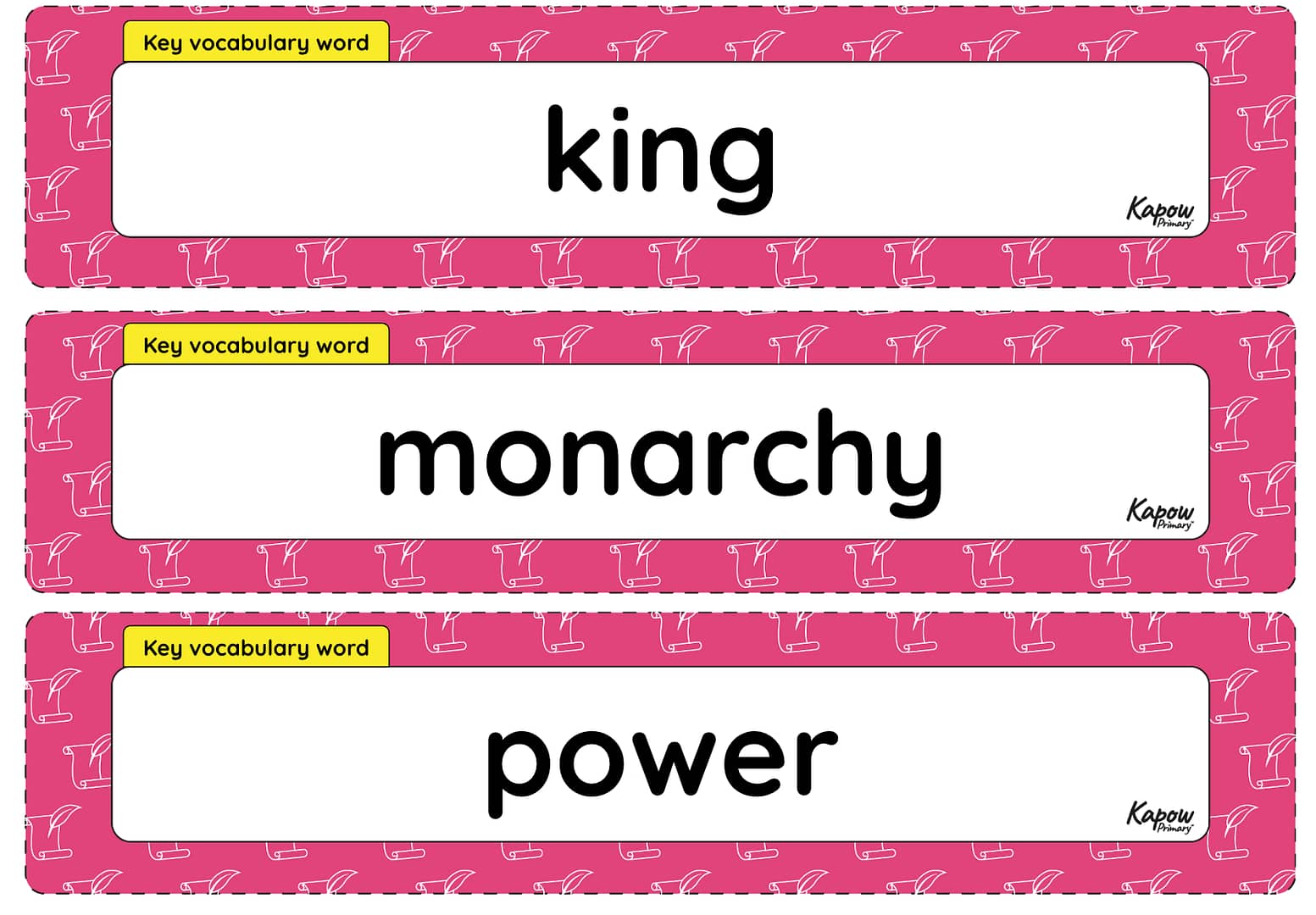
Vocabulary display – History Y1/2 (B): What is a monarch?
A display version of the key vocabulary from the 'What is a monarch?' unit.
Subject resources
This content is for subscribers only. Join for access today.
Cross-curricular opportunities
- Art and design.
- English: Spoken language.
- Design and technology: Make.
Build on the learning
Y3/4 (A): British history 1: Would you prefer to have lived in the Stone, Bronze or Iron Age?
Get started