




Unit outcomes
Pupils who are secure will be able to:
- Order three photographs correctly on a simple timeline.
- Use the terms ‘before’ and ‘after’ when discussing their timelines.
- Talk about three memories and place one of them on a timeline.
- Explain why memories are special and name four events that they celebrate throughout the year.
- Think of three ways they celebrate their birthday.
- Ask a visitor one question about childhood in the past.
- Know a similarity and a difference between childhood now and in the past.
- Add three ideas to a time capsule about themselves.
- Use key vocabulary to compare the present, the past and possible changes in the future.
Suggested prior learning
Adventures through time
Get started
Lessons
Y1/2 (A): Lesson 1: What is my history?
Y1/2 (A): Lesson 2: How can I find out more about myself?
Y1/2 (A): Lesson 3: How are special events remembered?
Y1/2 (A): Lesson 4: What was it like for children in the past?
Y1/2 (A): Lesson 5: What have I learnt about childhood in the past?
Y1/2 (A): Lesson 6: How am I making history?
Key skills
- Sequencing three or four

This content is for subscribers only. Join for access today.
Key knowledge
- To know that a
This content is for subscribers only. Join for access today.
Key vocabulary
change
different
This content is for subscribers only. Join for access today.
Related content
Unit resources


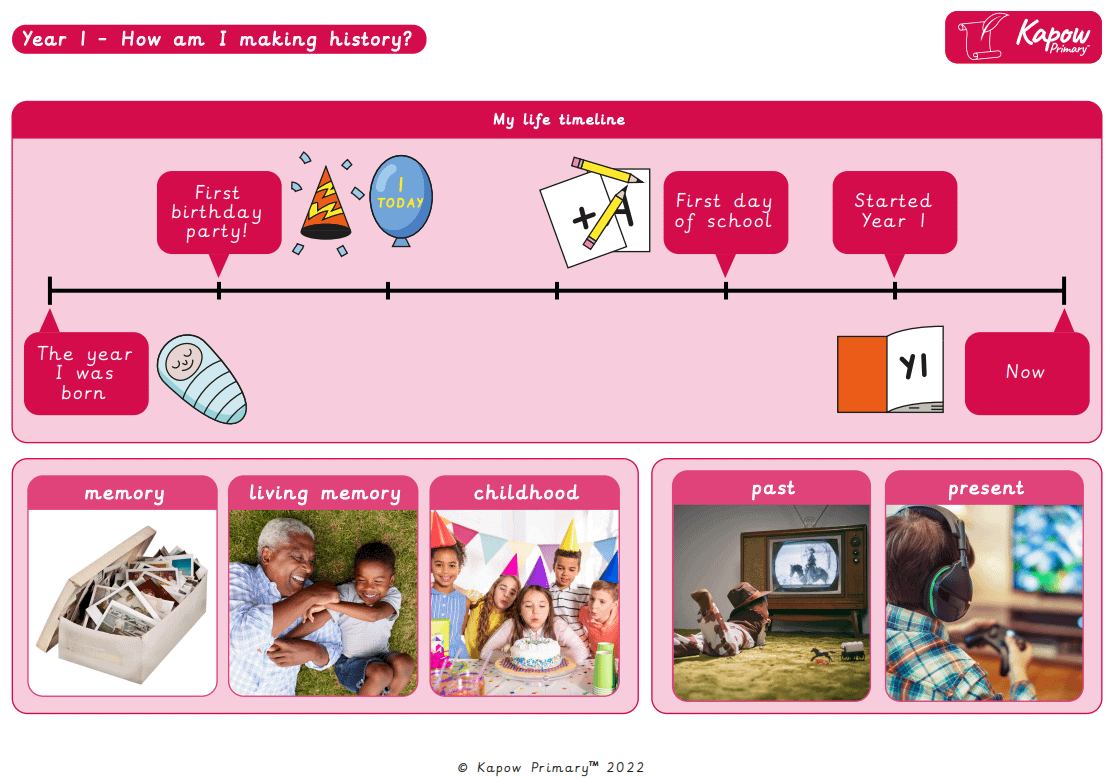
Knowledge organiser – History Y1: How am I making history?
Aimed at pupils, a single page document that gives key facts and definitions from the 'How am I making history?'…
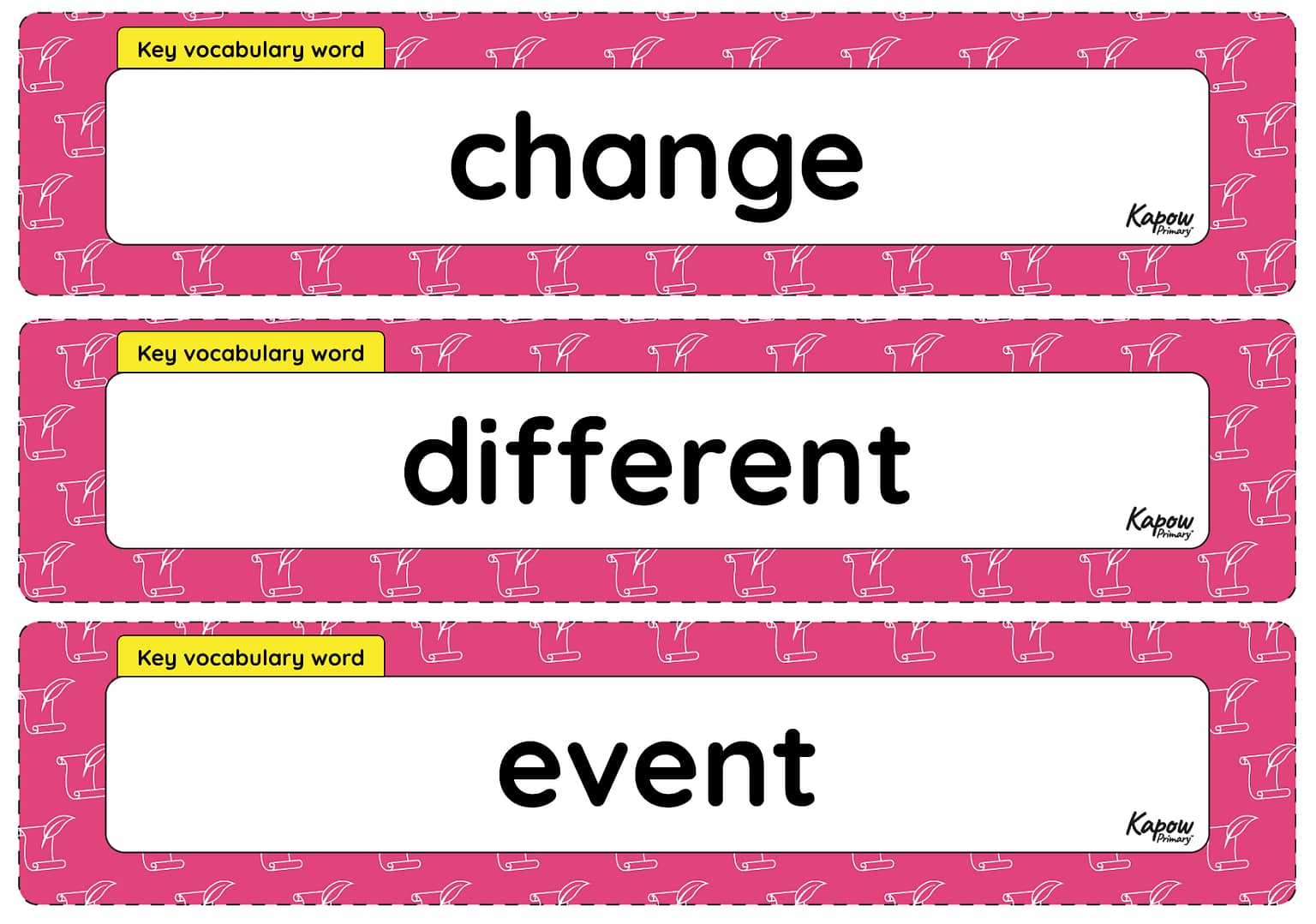
Vocabulary display – History Y1/2 (A): How am I making history?
A display version of the key vocabulary from the 'How am I making history?' unit.
Subject resources
This content is for subscribers only. Join for access today.
Cross-curricular opportunities
RSE & PSHE
‘Pupils should know:
- that families are important for children growing up because they can give love, security and stability.’
See PSHE Association guidance.
Art and design
‘Pupils should be taught:
- to use drawing, painting and sculpture to develop and share their ideas, experiences and imagination.’
See National curriculum - Art and design key stages 1 to 2.
Mathematics
‘Pupils should be taught to:
- recognise and use language relating to dates, including days of the week, weeks, months and years.’
See National curriculum - Mathematics key stages 1 to 2.
English
‘Pupils should be taught to:
- ask relevant questions to extend their understanding and knowledge.’
See National curriculum - English key stages 1 to 2.
British values: Tolerance of different faiths and beliefs.
Build on the learning
Y1/2 (A): How have toys changed?
Get started