

year: Year 5
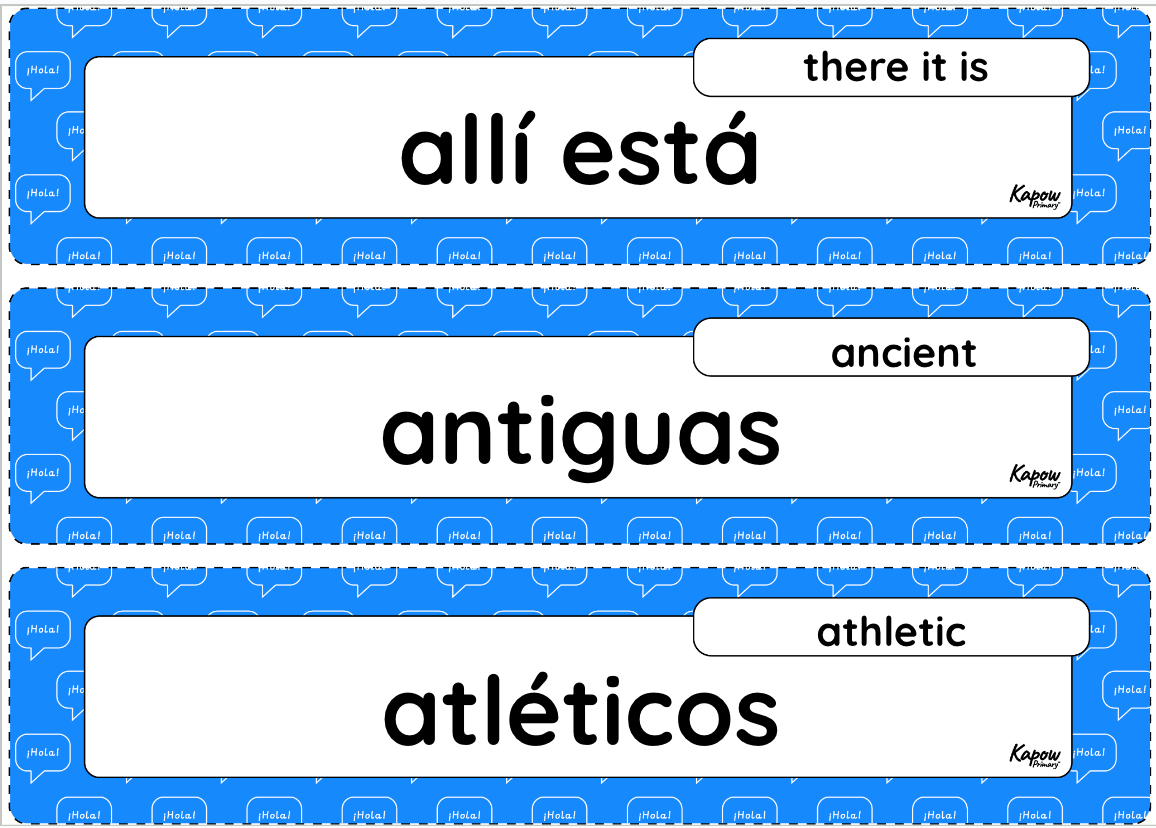
Translations: At the Spanish market

Subject leader video: What does progression look like in Kapow’s Spanish curriculum?
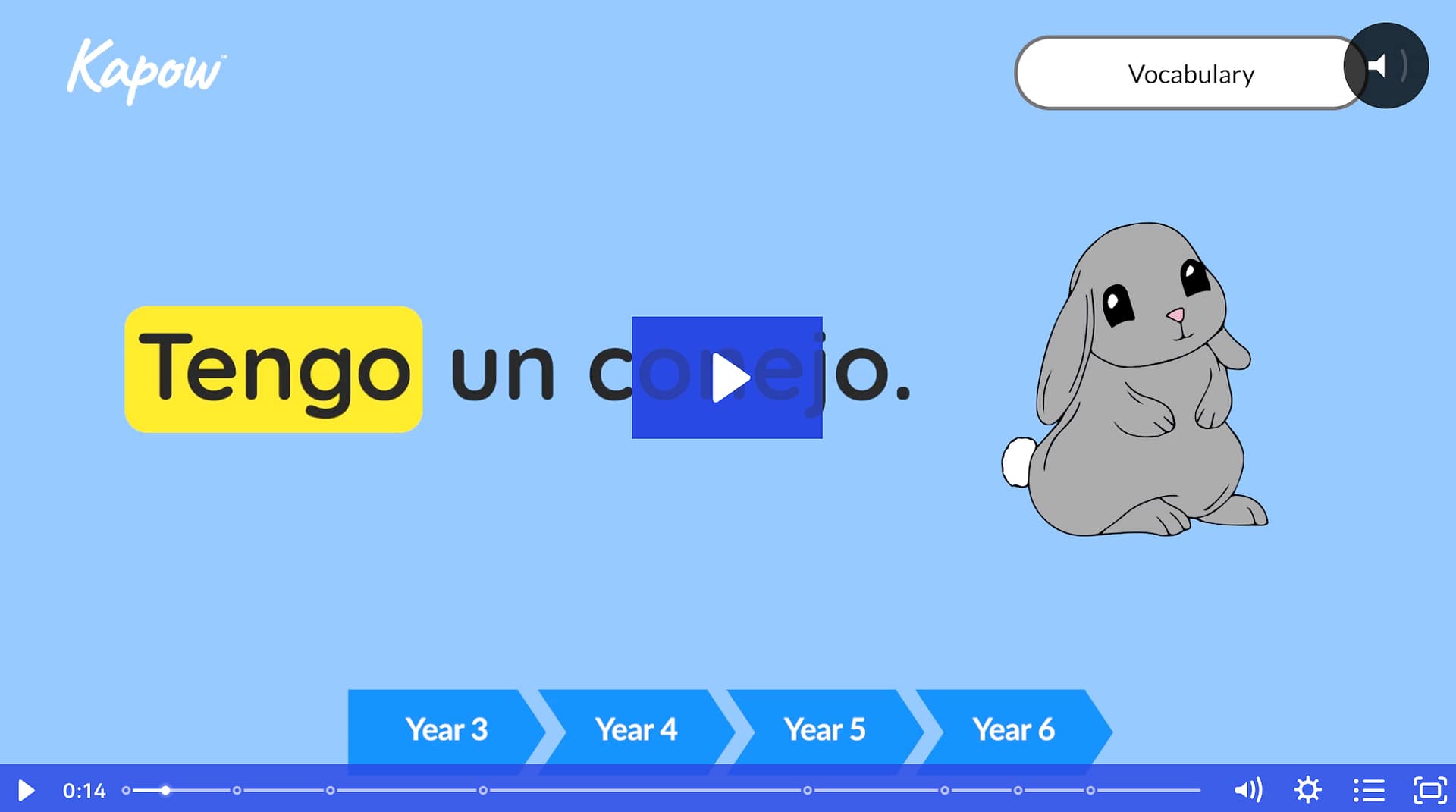
This video helps Spanish subject leaders gain an understanding of the Kapow Primary Spanish scheme of work, describing the knowledge and skills that pupils acquire and how they make progress during primary school.

Subject leader video: What does progression look like in Kapow’s French curriculum?
This video helps French subject leaders gain an understanding of the Kapow Primary French scheme of work, describing the knowledge and skills that pupils acquire and how they make progress during primary school.
Subject leader video: What does progression look like in Kapow’s Geography curriculum?
This video helps Geography subject leaders gain an understanding of the Kapow Primary Geography scheme of work, describing the knowledge and skills that pupils acquire and how they make progress during primary school.
Knowledge organiser – Spanish Year 5/6 (B): School life
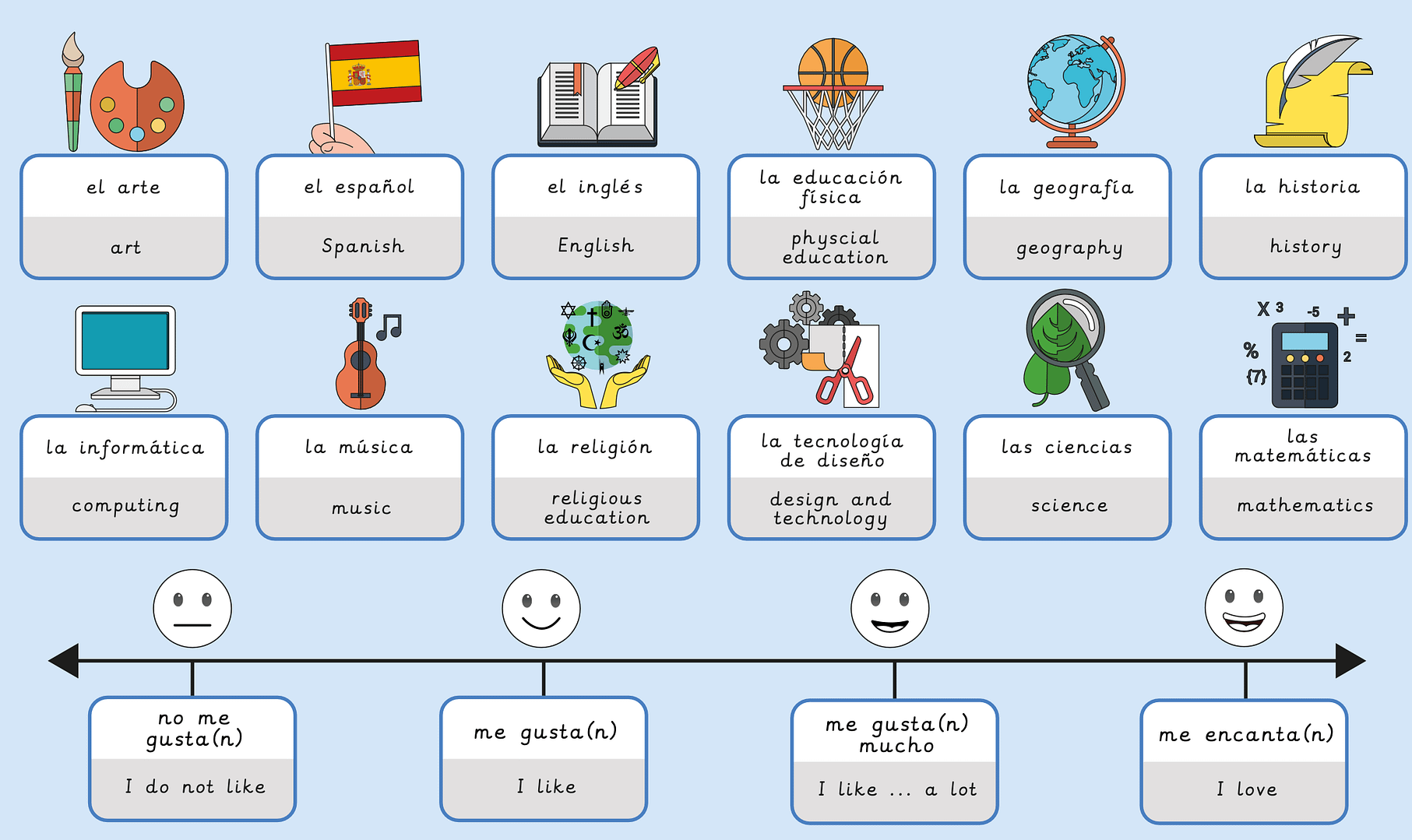
A Knowledge organiser that captures the essential knowledge and skills learnt throughout the unit Spanish, Year 5/6 (B), School Life.
This Spanish resource is designed to support the pupils as they explore vocabulary and phrases related to school routines and daily activities. It introduces key vocabulary such as school subjects, timetable, classroom objects, and opinions, helping the pupils develop their Spanish-speaking, listening, and reading skills. The pupils will also learn how to describe their school day, express preferences about subjects, and engage in simple conversations about school life.
Vocabulary display – Spanish Y5/6 (B): School life in Spanish
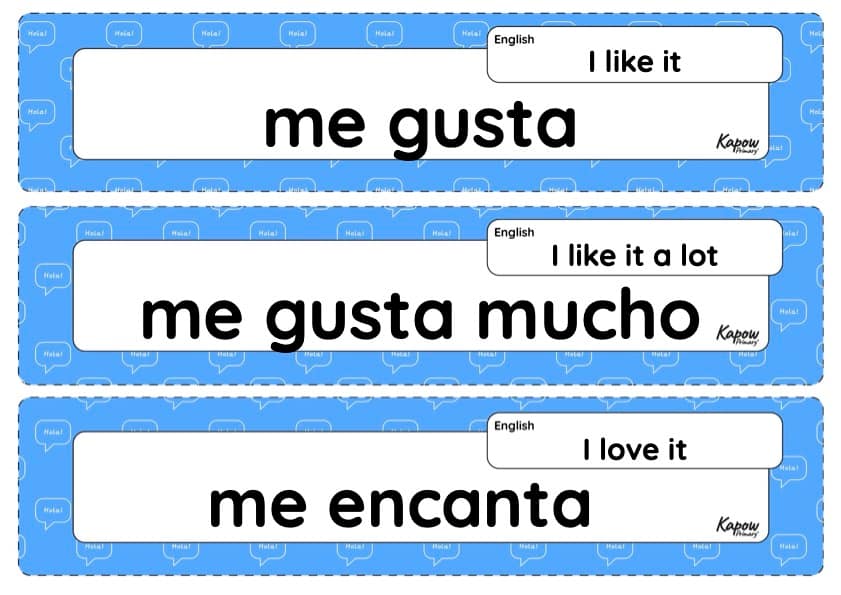
This unit vocabulary display includes keywords from the unit Spanish, Year 5/6 (B): School life in Spanish and additional unit-specific words that may be helpful in a display.