




Unit outcomes
Pupils who are secure will be able to:
- Make links between the creation story in Genesis and the concept of suffering.
- Suggest some ideas as to why suffering exists in the world.
- Discuss passages from Genesis that relate to free will, demonstrating an understanding of context.
- Identify different reasons why humans may make choices that cause suffering.
- Draw connections between stories from scripture.
- Explain why some people turn to prayer during times of suffering.
- Make connections between teachings about Jesus and how some Christians view and respond to suffering.
- Use scripture and personal responses to support their understanding.
In Lesson 2, the children begin adding to the Activity: Suffering snowflake. Keep these for future lessons in the unit.
For an extension of Lesson 6, if possible, interview Christian community members in the local area about how beliefs have helped them in times of suffering. This could be done in person (at school or in church) or online.
Suggested prior learning
Y5/6 (B): Why do Abrahamic religions look different around the world?
Get started
Teacher video: Why is there suffering? (Part 1) unit overview

Lessons
Y5/6 (B): Lesson 1: How do people suffer?
Y5/6 (B): Lesson 2: What is free will?
Y5/6 (B): Lesson 3: Why do we cause suffering?
Y5/6 (B): Lesson 4: Does being good always mean less suffering?
Y5/6 (B): Lesson 5: If God is all-powerful, can suffering not be stopped?
Y5/6 (B): Lesson 6: How might beliefs about Jesus affect responses to suffering?
Key skills
Disciplinary
- Asking challenging questions and

This content is for subscribers only. Join for access today.
Key knowledge
Substantive
To know:
- Free will means
This content is for subscribers only. Join for access today.
Key vocabulary
contradictory
Fall
This content is for subscribers only. Join for access today.
Related content
Unit resources


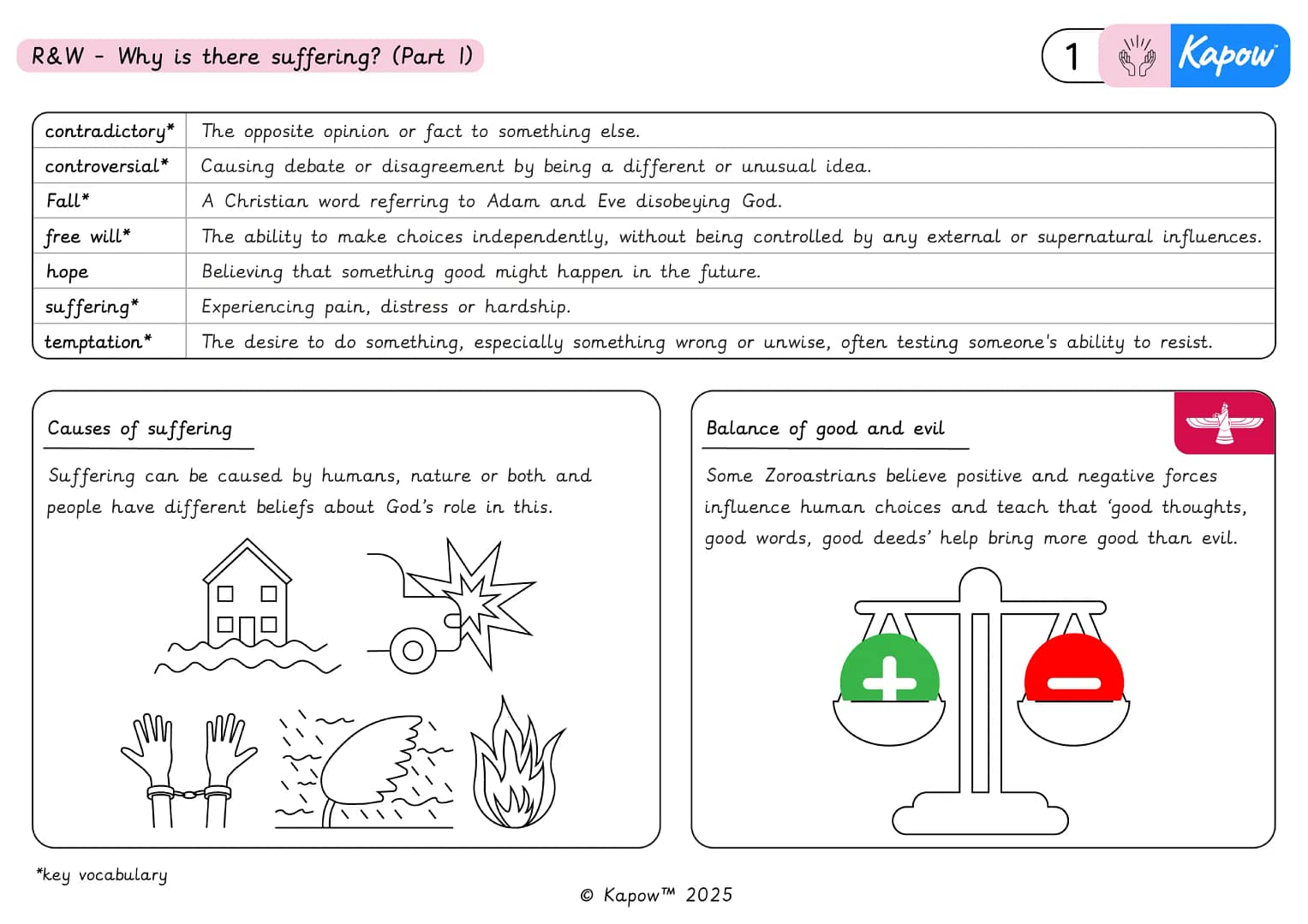
Knowledge organiser – R&W Y5/6 (B): Why is there suffering? (Part 1)
Aimed at pupils, a double page document that gives key facts and definitions from the unit.
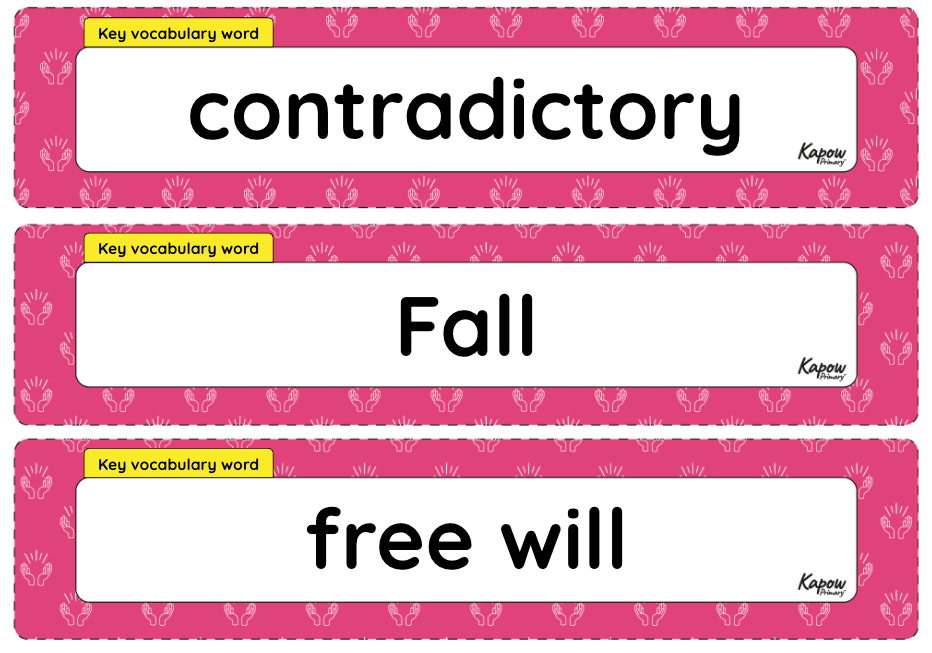
Vocabulary display – R&W Y5/6 (B): Why is there suffering? (Part 1)
A display version of the unit vocabulary.
Subject resources
This content is for subscribers only. Join for access today.
Cross-curricular opportunities
English: Spoken language
English: Reading
Geography: Human and physical skills
RSE/PSHE: Taking part in discussions
Build on the learning
Y5/6 (B): Why is it better to be there in person?
Get started
Popular content
- Religion & worldviews: Curriculum portal
- Religion & worldviews: Curriculum information
- R&W: Key skills and knowledge by unit
- Religion & worldviews: Vocabulary progression
- R&W: Transitioning to Kapow
- R&W: Personal development, SMSC and BV
- Webinar: Fieldwork And Your Local Area In Geography
- Webinar: Ace your role as a music subject leader