




This unit is archived. Our revised unit is aligned to current guidance. Visit the new unit
Please note
This unit has now been replaced by the Year 6 unit What can the census tell us about local areas?. Kapow no longer updates these lessons, and they may not reflect the national curriculum or current guidance. They remain a permanent part of your subscription and will continue to be available for reference and use. We recommend that you explore the new versions of the lessons.
Unit outcomes
Pupils who are secure will be able to:
- Identify the type of information the census gives about people.
- Use the census to make inferences about people from the past, providing supporting evidence for their statements.
- Make observations from the census and identify changes between periods of time.
- Identify the dangers of working in a textile mill.
- Create questions to identify the thoughts and feelings of a Victorian working child.
- Identify the key events of Mary’s life and interpret her thoughts and feelings.
- Extract information from the census to recreate the lives of people who lived in a household from the local area.
- Extract information from the census and decide whether a family was rich or poor.
- Describing change throughout time.
Suggested prior learning
Lessons
Lesson 1: What does the census tell us about the people living in our local area?

Lesson 2: What happened to Mary Bucktrout? (Part 1)
Lesson 3: What happened to Mary Bucktrout? (Part 2)
Lesson 4: How did Mary Bucktrout feel about the events in her life?
Lesson 5: Who lived in our local area? (Part 1)
Lesson 6: Who lived in our local area? (Part 2)
Key skills
- Sequencing events on a

This content is for subscribers only. Join for access today.
Key knowledge
- To know that change
This content is for subscribers only. Join for access today.
Key vocabulary
bobbin
can-hooker
This content is for subscribers only. Join for access today.
Related content
Unit resources


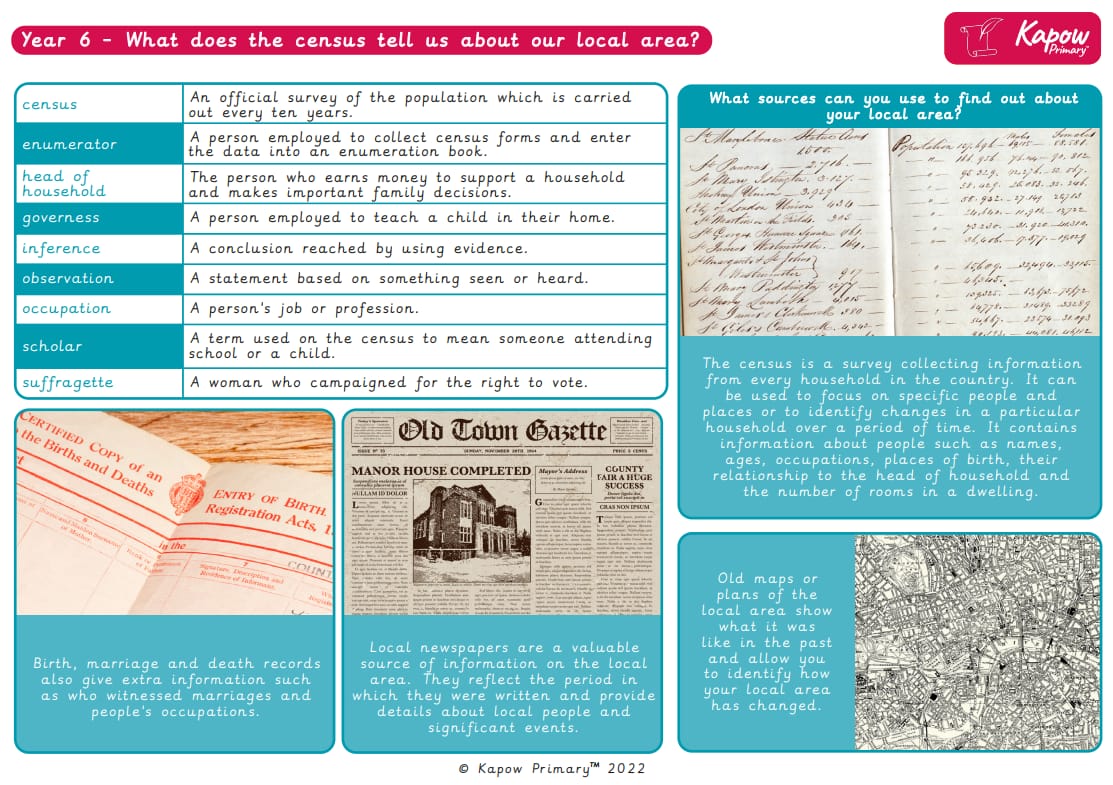
Archived Knowledge organiser: What does the census tell us about our local area?
Aimed at pupils, two pages providing key facts and definitions from the unit 'What does the census tell us about…
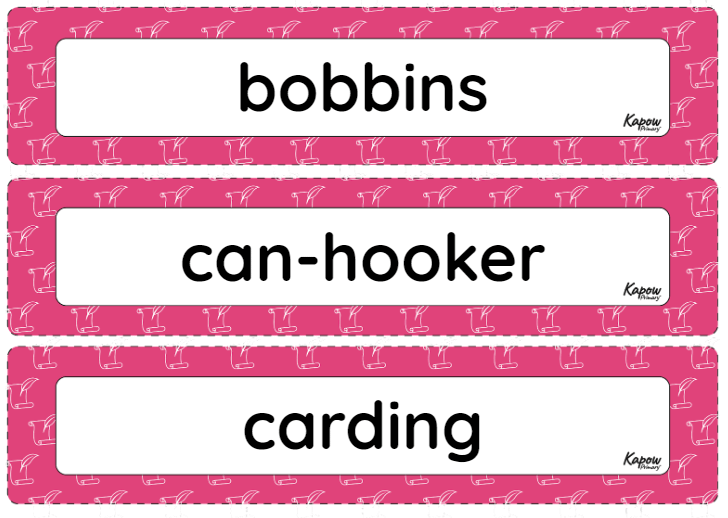
Vocabulary display: History – What does the census tell us about our local area?
A display version of the vocabulary from the 'What does the census tell us about our local area?.
Subject resources
This content is for subscribers only. Join for access today.
Cross-curricular opportunities
English
‘Pupils should be taught to:
- use spoken language to develop understanding through speculating, hypothesising, imagining and exploring ideas
- draft and write by:
- in narratives, describing settings, characters and atmosphere and integrating dialogue to convey character and advance the action’.