This unit vocabulary display includes keywords from the mixed-age unit Science, Y5/6 (B), Making connections: How does light affect the direction of plant growth? and additional unit-specific words that may be helpful in a display.
Key vocabulary is clearly labelled on the display, highlighting essential words that the pupils are expected to retain and reuse in future units. Understanding these words enhances comprehension of the subject and supports understanding of key scientific concepts and processes.
See the full Science: Progression of key vocabulary.
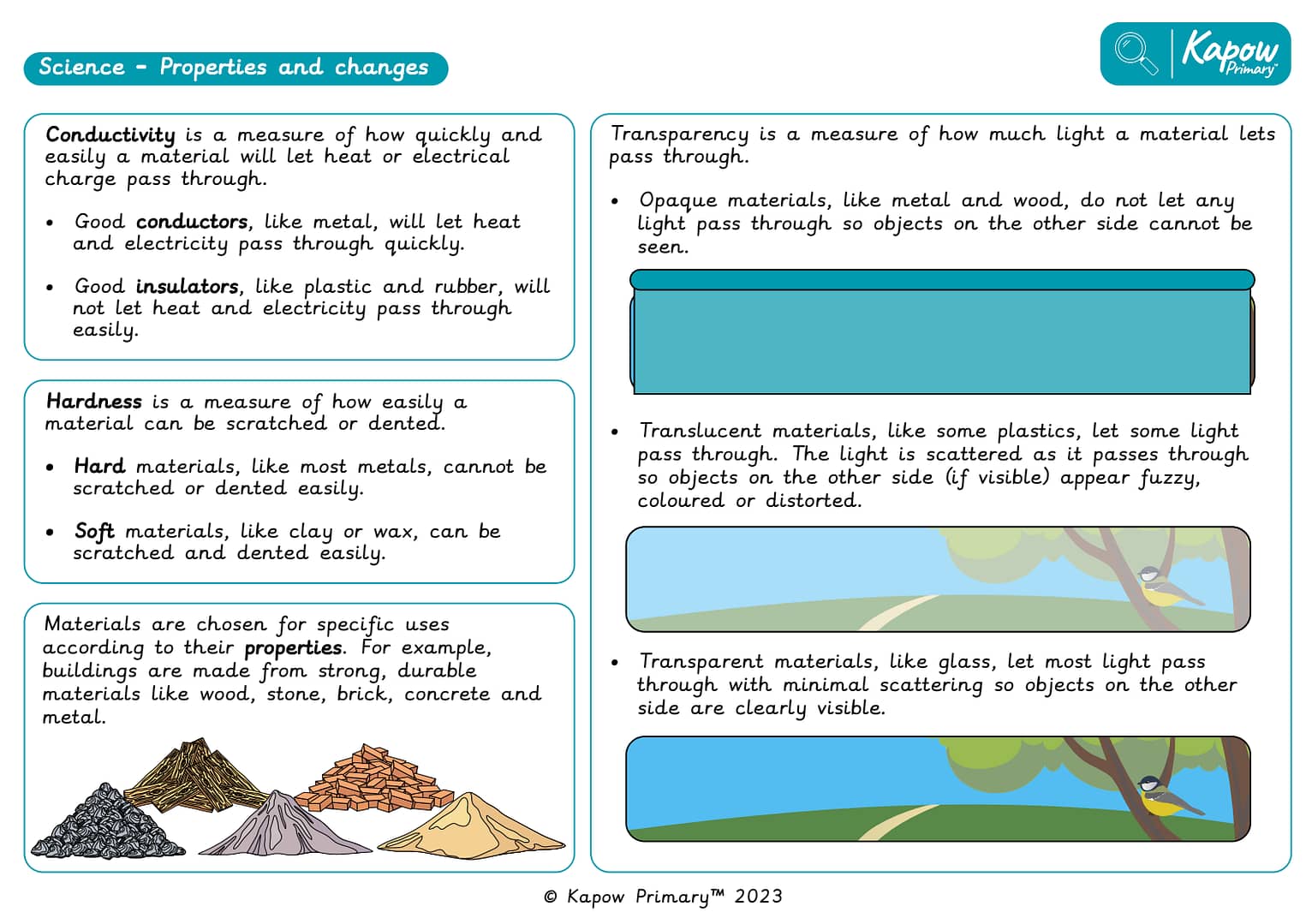
A Knowledge organiser that captures the essential knowledge and skills learnt throughout the mixed-age unit Science, Year 5/6 (A), Materials: Properties and changes.
This resource is designed to support the children as they explore the properties and changes of materials. It highlights key vocabulary and concepts, including conductivity, hardness, transparency and the suitability of materials for different uses. The resource also explains the difference between reversible and irreversible changes, with examples such as dissolving, melting, burning and rusting. It is perfect for consolidating essential knowledge and fostering an understanding of how materials behave and how they can be changed through physical and chemical processes.
This unit vocabulary display includes keywords from the mixed-age unit Science, Year 5/6 (A), Materials: Properties and changes and additional unit-specific words that may be helpful in a display.
Key vocabulary is clearly labelled on the display, highlighting essential words that the pupils are expected to retain and reuse in future units. Understanding these words enhances comprehension of the subject and supports understanding of key scientific concepts and processes.
See the full Science: Progression of key vocabulary.
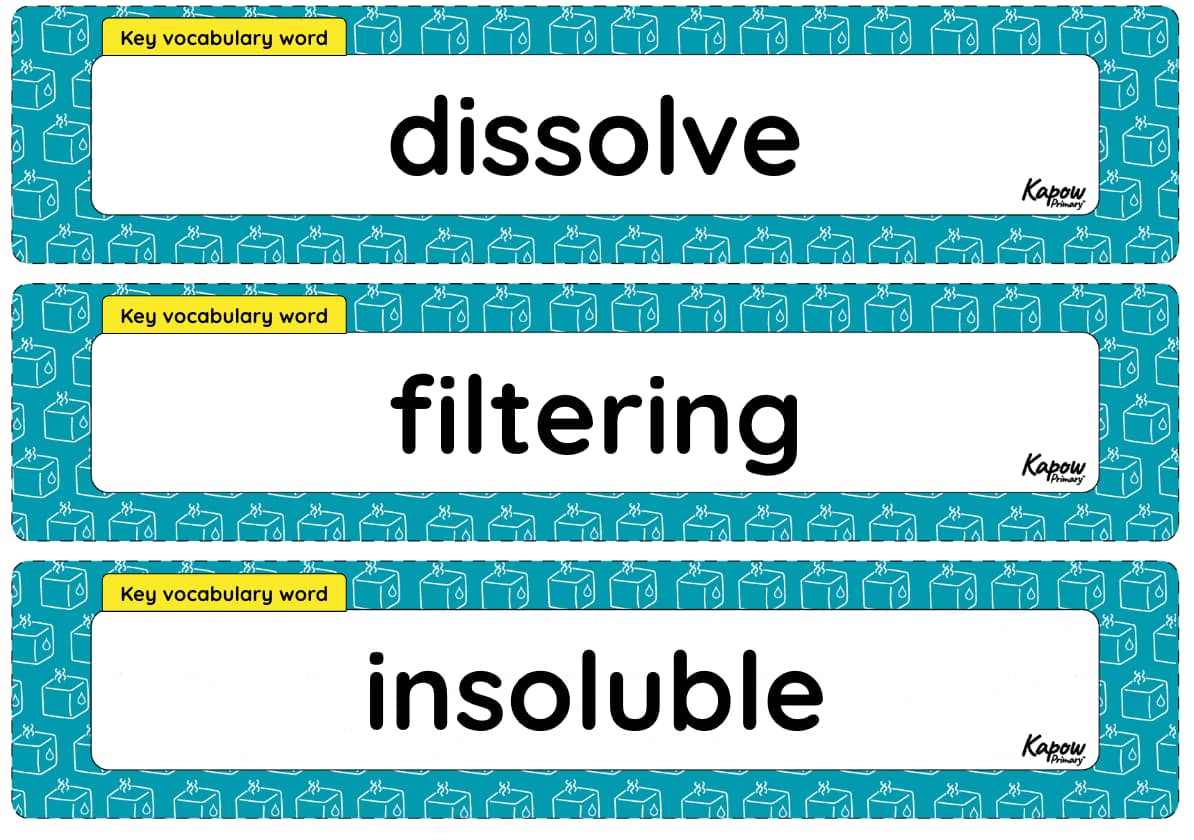
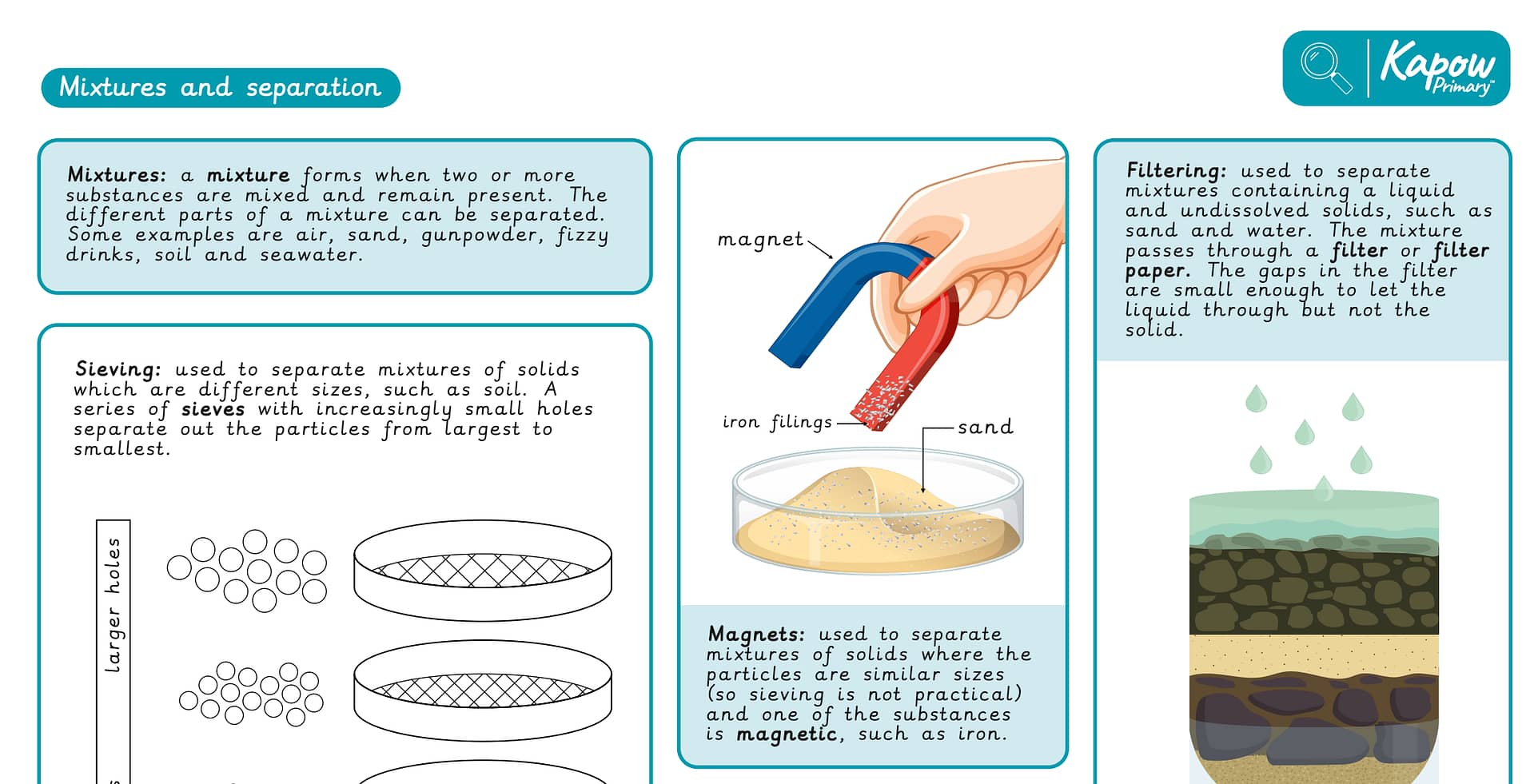
This unit vocabulary display includes keywords from the mixed-age unit Science, Y5/6 (A), Materials: Mixtures and separation and additional unit-specific words that may be helpful in a display.
Key vocabulary is clearly labelled on the display, highlighting essential words that the pupils are expected to retain and reuse in future units. Understanding these words enhances comprehension of the subject and supports understanding of key scientific concepts and processes.
See the full Science: Progression of key vocabulary.

This Religion and worldviews video introduces teachers to the changing nature of leadership and authority by examining different Muslim and Sikh worldviews.

This Religion and worldviews video introduces teachers to the changing nature of leadership and authority by examining different Muslim and Sikh worldviews.
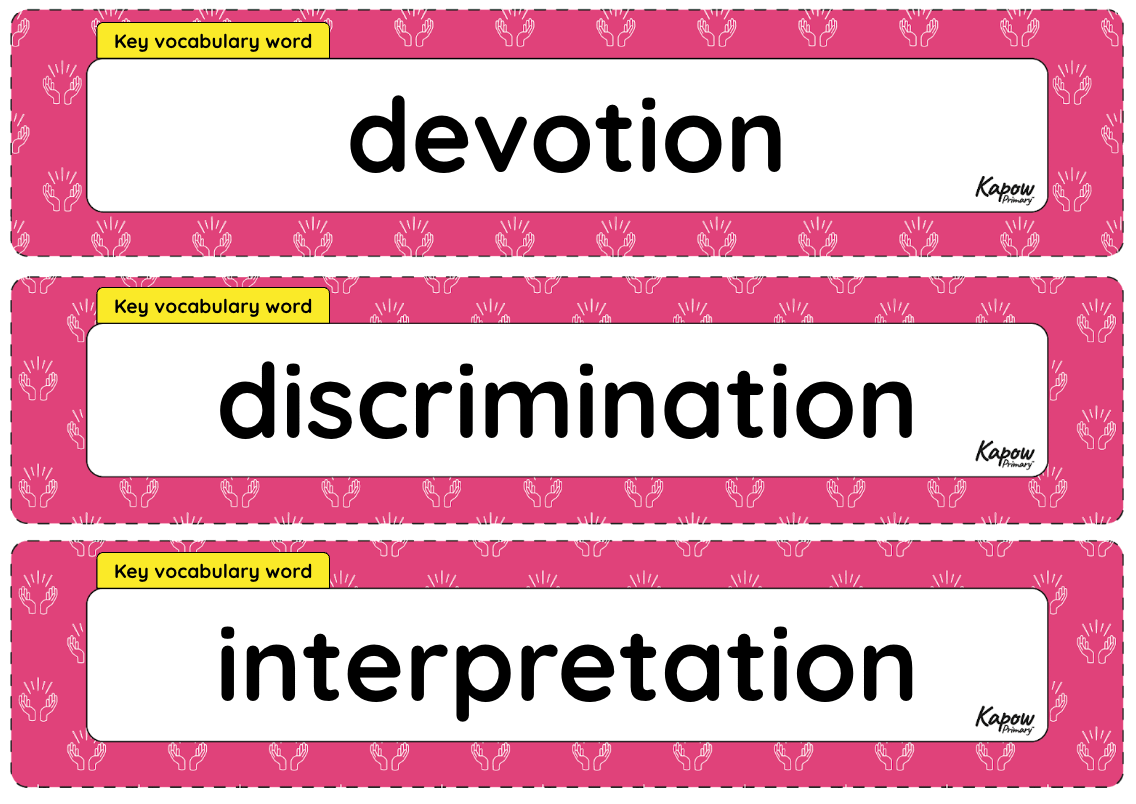
This unit vocabulary display includes keywords from the mixed-age unit Religion and worldviews, Y5/6, Who should get to be in charge? and additional unit-specific words that may be helpful in a display.
Key vocabulary is clearly labelled on the display, highlighting essential words that the pupils are expected to retain and reuse in future units. Understanding these words enhances comprehension of the subject and supports understanding of prominent organised worldviews.
See the full Religion and worldviews: Progression of key vocabulary.
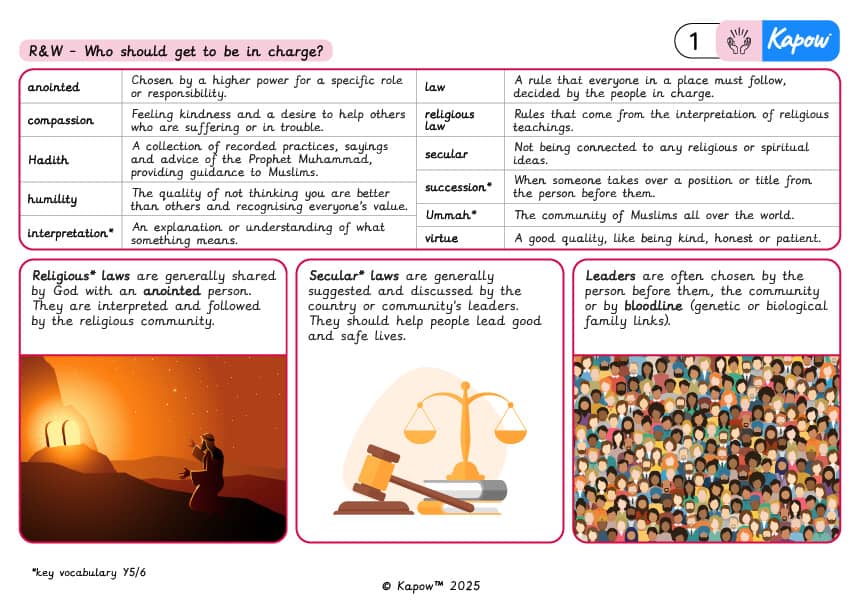
A Knowledge organiser that captures the essential knowledge and skills learnt throughout the mixed-age unit Religion and worldviews, Y5/6 (A), Who should get to be in charge?
This Religion and worldviews resource is designed to support children as they investigate the different ways religious leadership and authority are determined and consider how bloodline and virtues can influence how leaders are appointed. They explore religious and secular laws, revelation and characteristics when thinking about what can make a good leader. It is perfect for consolidating essential knowledge and supporting cross-cultural understanding.