




Unit outcomes
Pupils who are secure will be able to:
- Explain how religious laws are created, using Muslim examples.
- Describe the concept of a bloodline and its relevance to succession in the British monarchy.
- Explain how Muhammad’s successor influenced different groups of Muslims and why.
- Linking Muhammad’s practices, sayings or actions to the formation of some religious laws.
- Show an understanding of how Guru Nanak chose his successor.
- Compare and contrast the leadership qualities of Sikh Gurus, noting virtues and selection methods.
- Discuss how Sikh teachings in the Guru Granth Sahib guide followers.
During the unit, a member of one of the worldviews covered, or someone from the local community, could be invited to share how they follow religious or non-religious laws and the influence they have on their day-to-day life.
Suggested prior learning
What happens when we die? (Part 2)
Get started
Please note
Lessons and resources within this unit have been updated, focusing on pitch, lesson length and key vocabulary. The context, skills and knowledge covered and learning progression of the unit remain the same.
Teacher video: Who should get to be in charge?

Lessons
Lesson 1: How are laws created?
Lesson 2: How is a leader chosen?
Lesson 3: Where do religious laws come from?
Lesson 4: How did Guru Nanak choose a successor?
Lesson 5: When can someone become a leader?
Lesson 6: How can religious texts be leaders?
Key skills
Disciplinary
- Asking challenging questions and

This content is for subscribers only. Join for access today.
Key knowledge
Substantive
To know:
- Some of the
This content is for subscribers only. Join for access today.
Key vocabulary
devotion
discrimination
This content is for subscribers only. Join for access today.
Related content
Unit resources


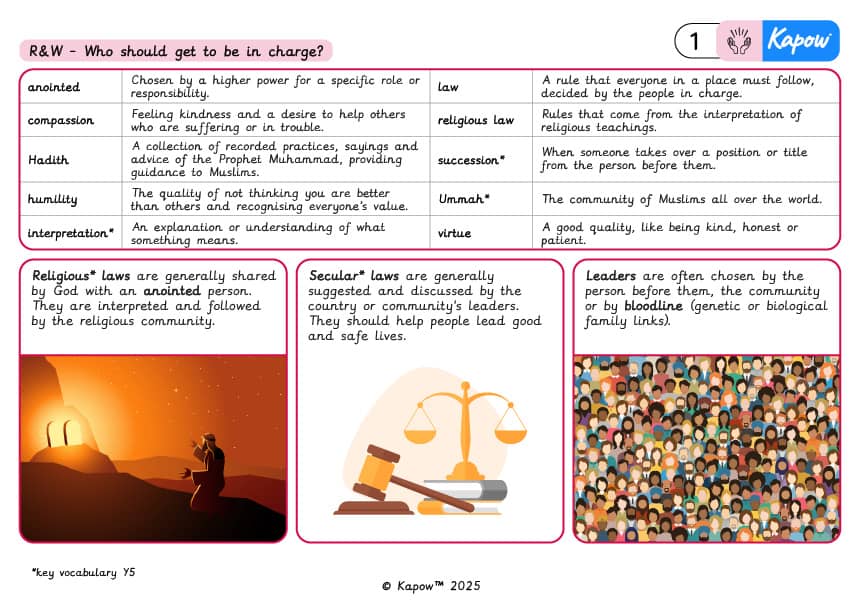
Knowledge organiser – R&W Y5: Who should get to be in charge?
Aimed at pupils, two pages providing key facts and definitions from the 'Who should get to be in charge?' unit.
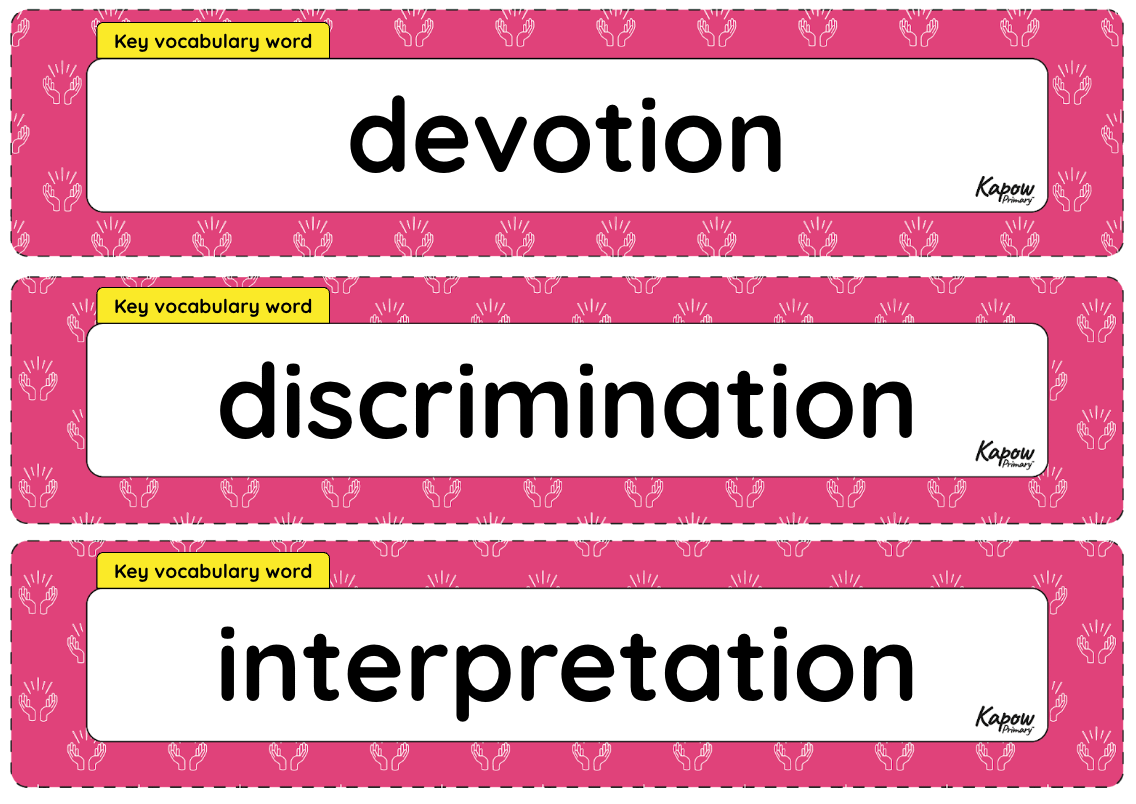
Vocabulary display – R&W Y5: Who should get to be in charge?
A display version of the vocabulary from the 'Who should get to be in charge?' unit.
Subject resources
This content is for subscribers only. Join for access today.
Cross-curricular opportunities
British Values: Democracy; Tolerance of different cultures and religions; Mutual respect.
English: Reading comprehension; Spoken language.
History: Significant historical events, people and places in their own locality.
RSE: Respectful relationships.
Build on the learning
Why are some places in the world significant to believers?
Get started