Before starting this unit you might want to check children can recall:
- How to use shapes to build initial sketches.
- How to mix colours with natural pigments to make natural colours.
- How to select equipment or paint to recreate specific features.
Art and design
Pupils should be taught to:
None.
Check all images, videos, links and presentation slides are suitable for your class.
Print in advance of the lesson.
The Knowledge organiser provides a visual summary of the key facts and vocabulary for the unit. The children can use it throughout the unit to check keyword meanings or spellings and to help them remember important information when completing an activity. Find further ideas for using the Knowledge organiser to support adaptive teaching here.
Before starting this unit you might want to check children can recall:
Display slide 1 of the Presentation: ‘Mont Saint-Victoire’ by Paul Cezanne. Ask individual children to come to the board and identify a dark green or light green. Ask how they would mix a dark green colour, or a light green colour. They may well suggest adding water, adding yellow, white, blue or black.
Display slide 2 which introduces the terms tint and shade. To check their understanding, challenge individual children to come to the board and identify a green tint or a green shade from the Cezanne painting on slide 1.
Model yourself or use the Pupil video: Tints and shades to demonstrate colour mixing tints and shades.
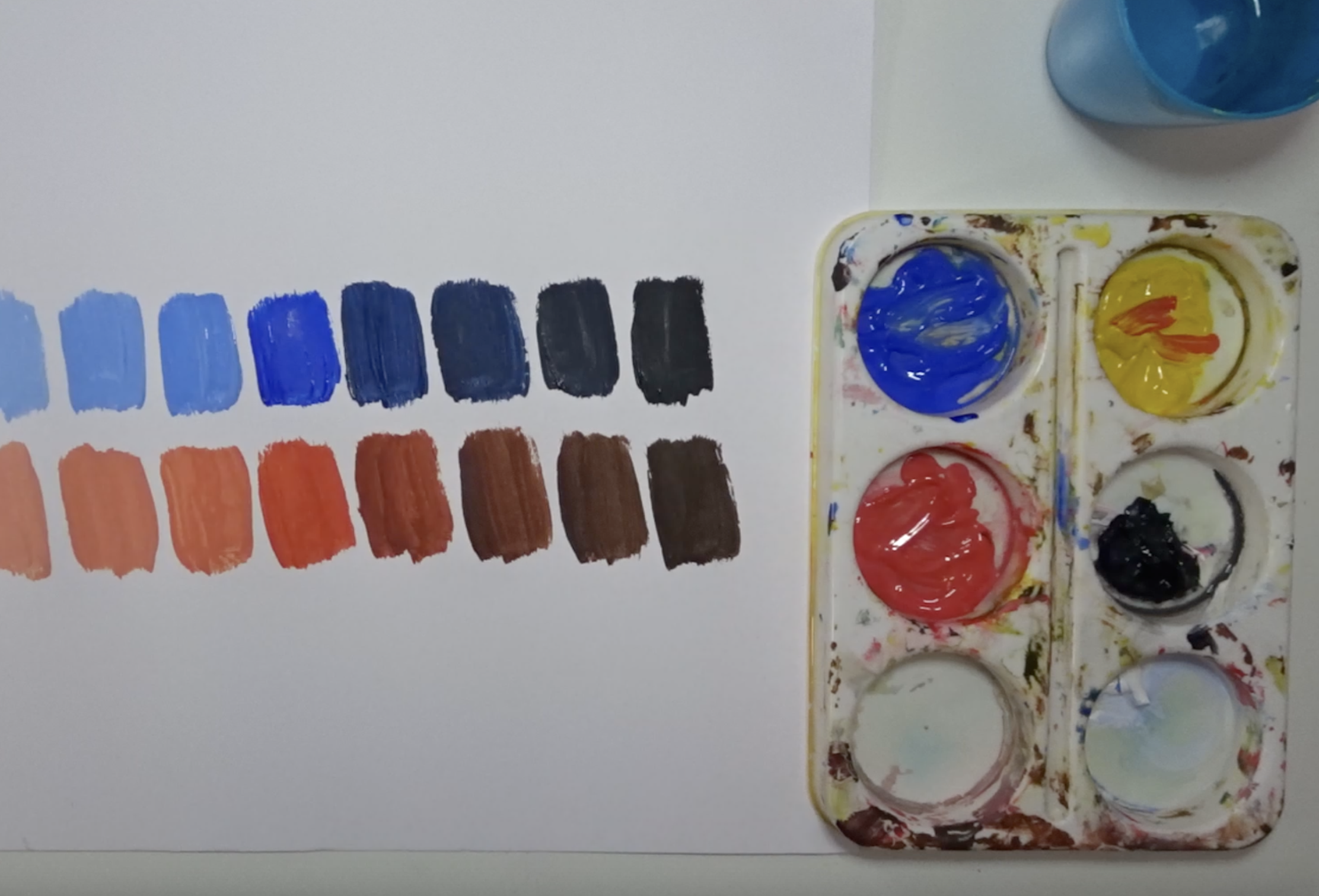
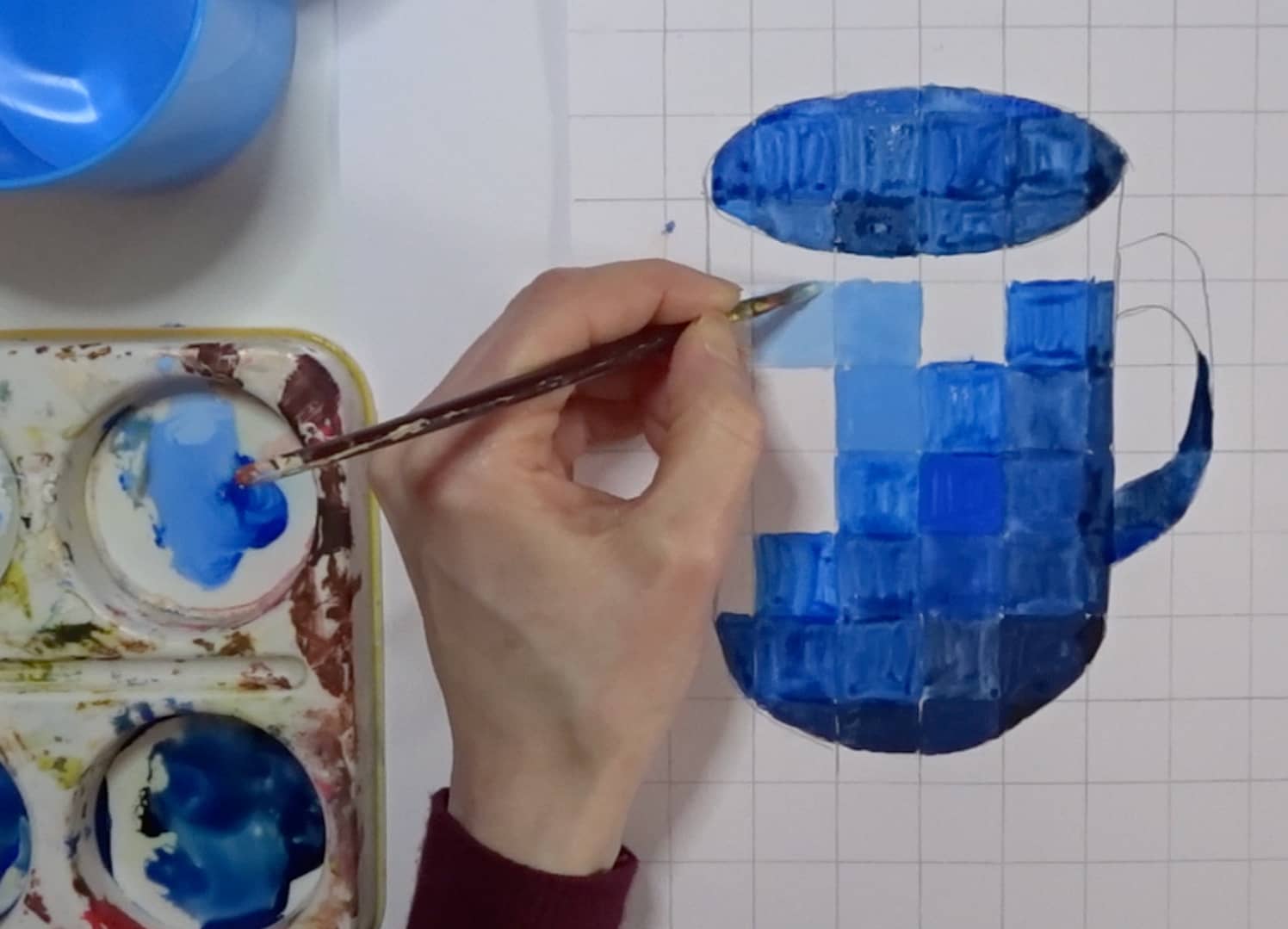
The children now work in their sketchbooks, practising mixing tints and shades of one starting colour. They paint small patches of colour across the page, gradually adding white to make tints and then black to make shades.
Ask the children to carry their sketchbooks around the classroom and try to find someone else who has mixed the same (or almost the same) tint or shade of a colour. Tell them to stand by that person once they think they have found a match. Alternatively, children could sit beside someone who has started with a very similar colour and try to identify the closest matching colour in both their sketchbooks.
How to extend your display to view the lesson page and preseantion mode simultaneously. Choose your operating system below to watch the video
If you need further support with extending your display,
please contact [email protected].
Extended-mode explainer video: For Mac
Extended-mode explainer video: For Windows
Pupils needing extra support
May need reminding about painting basics: keeping a clean water pot, adding black and white paint a small amount at a time, holding the paintbrush near the bristles for greater control; could use slide 1 of the Presentation: Odd painting out to help them in discussing the paintings.
Pupils working at greater depth
Could investigate the range of colours they can make even with very similar starting colours; should mix two quite similar original colours, e.g. two different greens, and then mix tints and shades of both to observe the differences in colour.
Pupils with secure understanding indicated by: being able to share their ideas about a painting; being able to describe the difference between a tint and a shade in painting; mixing tints and shades by adding black or white paint.
Pupils working at greater depth indicated by: being able to use some key art vocabulary to describe similarities and differences between paintings; mixing tints and shades confidently by adding black or white paint gradually.
Art where the subject doesn't necessarily look like it does in real life.
Looking at features of something which can often be seen most clearly close up.
Creating pictures or sculptures that look like real things.
A picture of countryside.
A colour that is not bright.
A design in which shapes, colours or lines are repeated.
A dark tone of a colour made by adding black.
A light tone of colour made by adding white.
Something that is very bright.