*Now updated to reflect the newly published Drawing units*
This version of our parent curriculum overview is for those schools that subscribe to both Art and DT and alternate between teaching Art and DT each half term, using our Half-termly Art and DT Long-term plan.
Join our Computing specialist, Sophia, as she leads you through engaging activities that inspire creativity and problem-solving in coding. Choose to watch the demonstration or code along! Gain practical ideas for integrating coding into your lessons and boost your confidence in teaching this essential skill.
Find more FREE coding resources here!
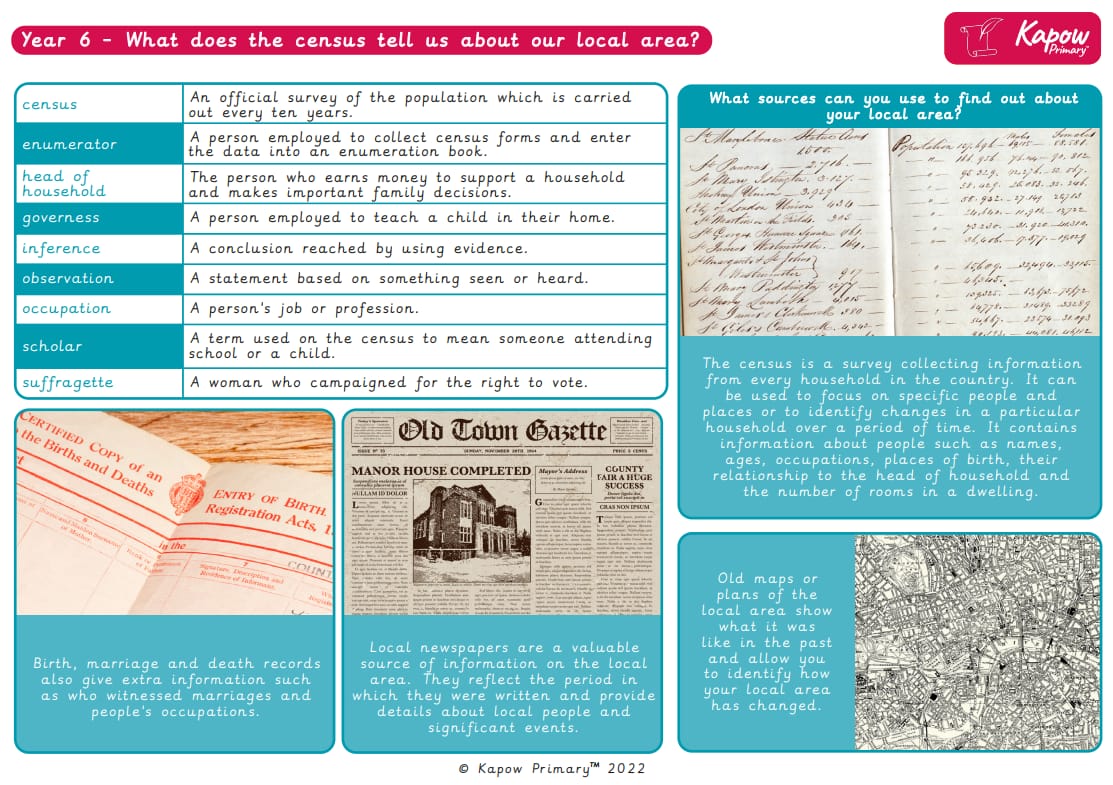
A Knowledge organiser that captures the essential knowledge and skills learnt throughout the unit Archived – History, Year 6, What does the census tell us about our local area?
This resource is designed to help pupils explore how census data provides insights into the lives of people in the past and present. It introduces key vocabulary such as “enumerator”, “inference”, and “head of household”, and explains the purpose and structure of the census. Through sources like birth and death records, newspapers, and maps, pupils investigate how local areas have changed over time. The historical timeline from 1801 to 2021 shows the development of census-taking in Britain, encouraging children to analyse data, draw conclusions, and understand the impact of demographic shifts. This is an ideal tool for building historical enquiry skills and deepening understanding of population studies and local history.
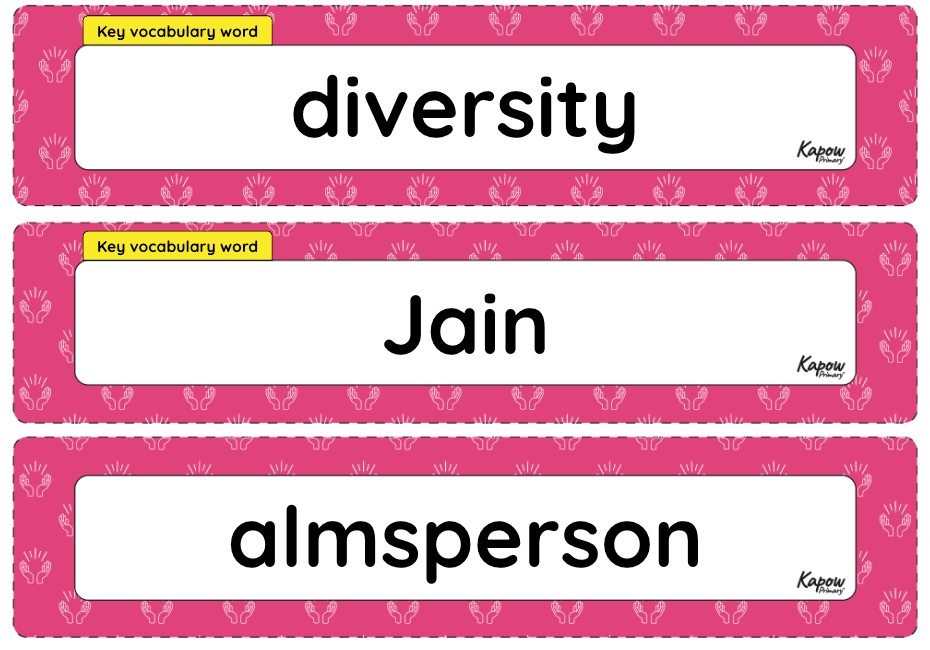
This unit vocabulary display includes keywords from the Year 6 unit Religion and worldviews, Y6, Why does religion look different around the world? (Part 2) and additional unit-specific words that may be helpful in a display.
Key vocabulary is clearly labelled on the display, highlighting essential words that the pupils are expected to retain and reuse in future units. Understanding these words enhances comprehension of the subject and supports understanding of prominent organised worldviews.
See the full Religion and worldviews: Progression of key vocabulary.
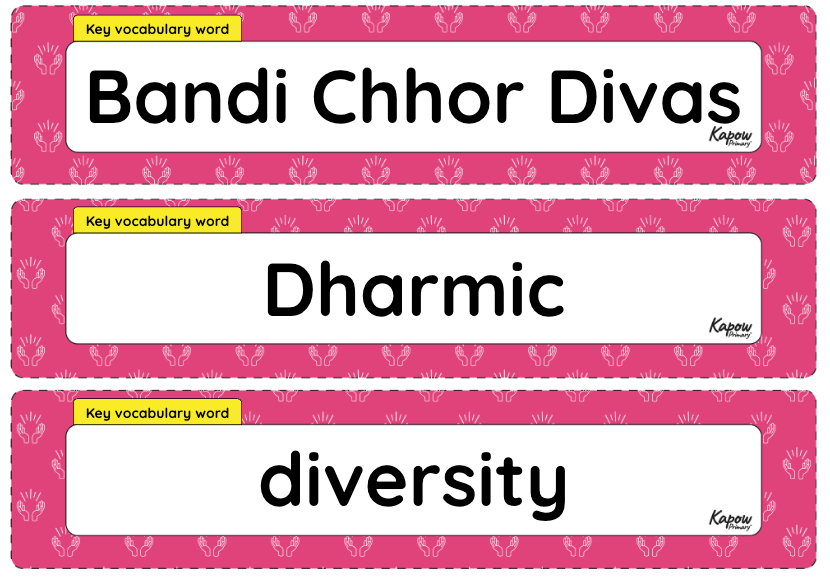
This unit vocabulary display includes keywords from the mixed-age unit Religion and worldviews, Y5/6 (A), Why do Dharmic religions look different around the world? and additional unit-specific words that may be helpful in a display.
Key vocabulary is clearly labelled on the display, highlighting essential words that the pupils are expected to retain and reuse in future units. Understanding these words enhances comprehension of the subject and supports understanding of prominent organised worldviews.
See the full Religion and worldviews: Progression of key vocabulary.
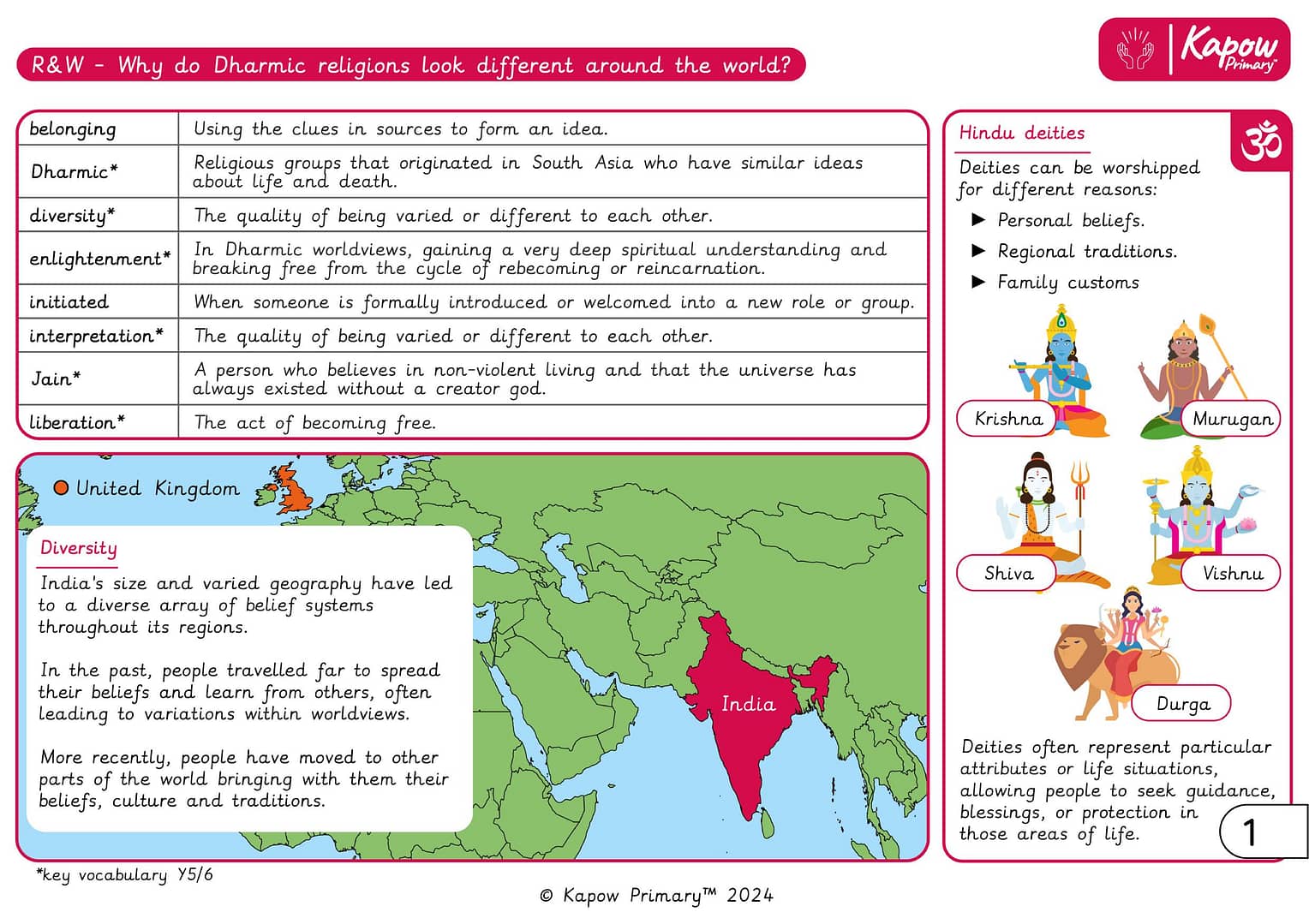
A Knowledge organiser that captures the essential knowledge and skills learnt throughout the unit Religion and worldviews, Year 5/6 (A), Why do Dharmic religions look different around the world?
This resource is designed to support pupils in understanding the diversity within Dharmic religions and how beliefs and practices vary globally. It introduces the concept of religious diversity influenced by regional geography, cultural traditions, personal beliefs, and historical movement of people. The organiser highlights key vocabulary such as “liberation,” “enlightenment,” and “interpretation,” while also exploring symbolic elements like light in festivals and the significance of Hindu deities. It explains how Buddhist practices differ between schools such as Theravada and Mahayana, and how Sikh identity can be expressed through initiation rituals and the five articles of faith. This resource is perfect for deepening understanding of religious diversity and cultural identity across the world.
No changes to this document needed for 25/26.
A curriculum guide which can be published on your school website to show parents and carers the RSE & PSHE lesson plans.
No changes to this document needed for 25/26.
A curriculum guide which can be published on your school website to show parents and carers what will be covered in the RSE & PSHE lesson plans.