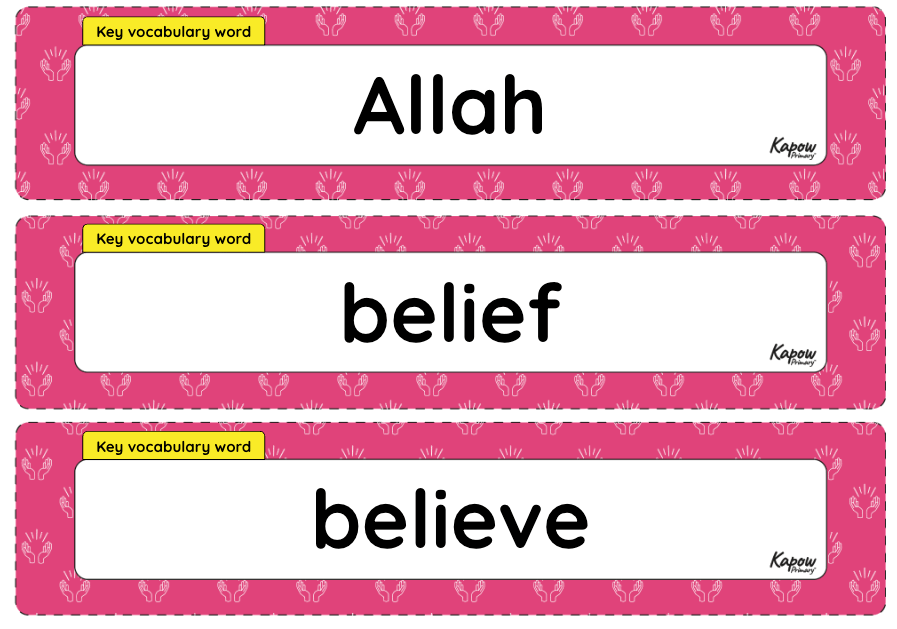
This unit vocabulary display includes keywords from the mixed-age unit Religion and worldviews, Y1/2 (A), What do some people believe God looks like? and additional unit-specific words that may be helpful in a display.
Key vocabulary is clearly labelled on the display, highlighting essential words that the pupils are expected to retain and reuse in future units. Understanding these words enhances comprehension of the subject and supports understanding of prominent organised worldviews.
See the full Religion and worldviews: Progression of key vocabulary.
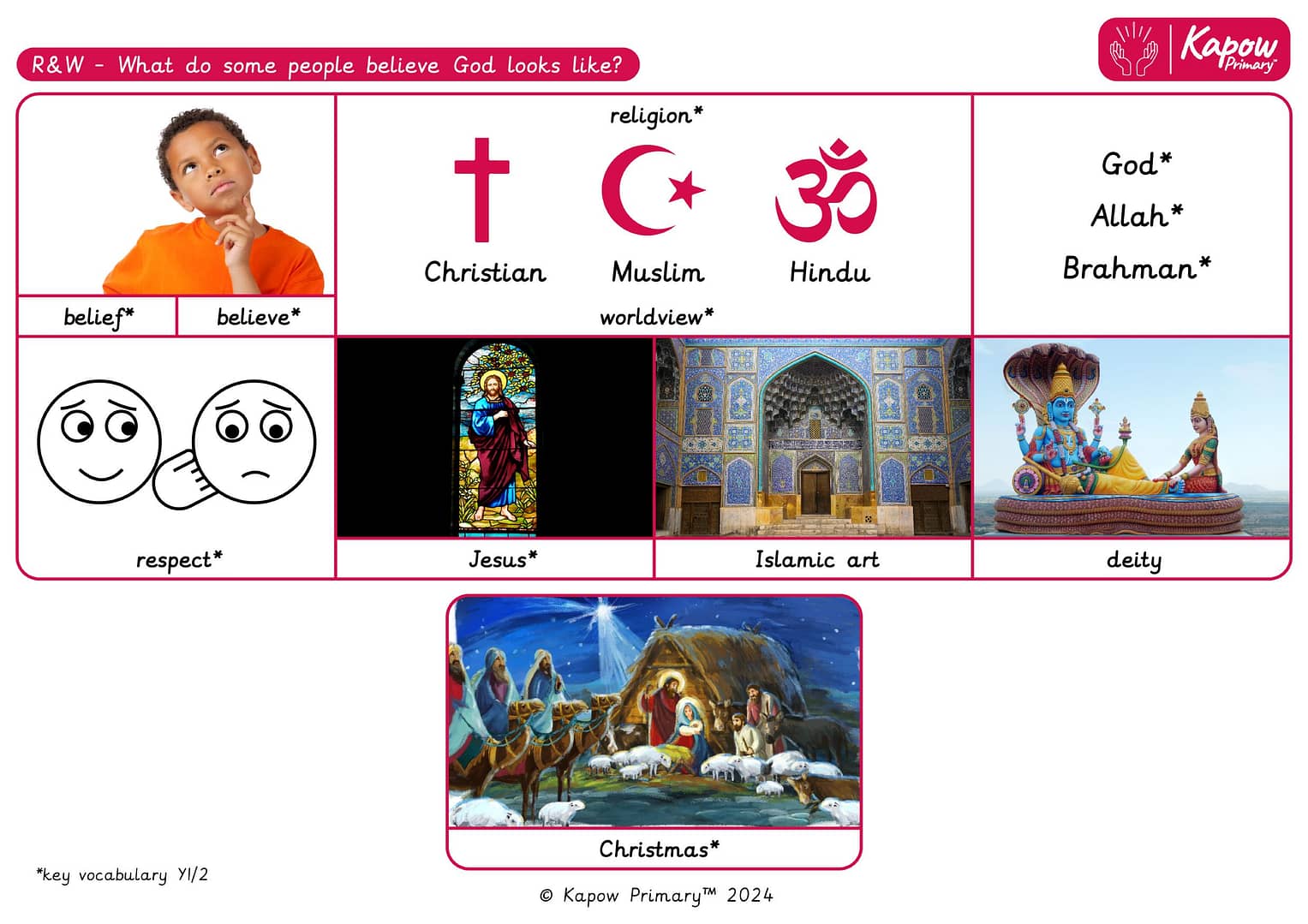
A Knowledge organiser that captures the essential knowledge and skills learnt throughout the mixed-age unit Religion and worldviews, Y1/2 (A), What do some people believe God looks like?
This resource is designed to support pupils as they begin to explore how different religions express their beliefs about God. It introduces key vocabulary including “belief,” “deity,” “Brahman,” and “Allah,” alongside visual representations of Christian, Muslim, and Hindu worldviews. Through images of Jesus, Islamic art, and Hindu deities, pupils gain a visual and conceptual understanding of how ideas of God are expressed in different faiths. This organiser promotes respect for diversity and helps lay the foundation for future learning in religious education.
This unit vocabulary display includes keywords from the unit Computing, Year 2, Programming: MakeCode and additional unit-specific words that may be helpful in a display.
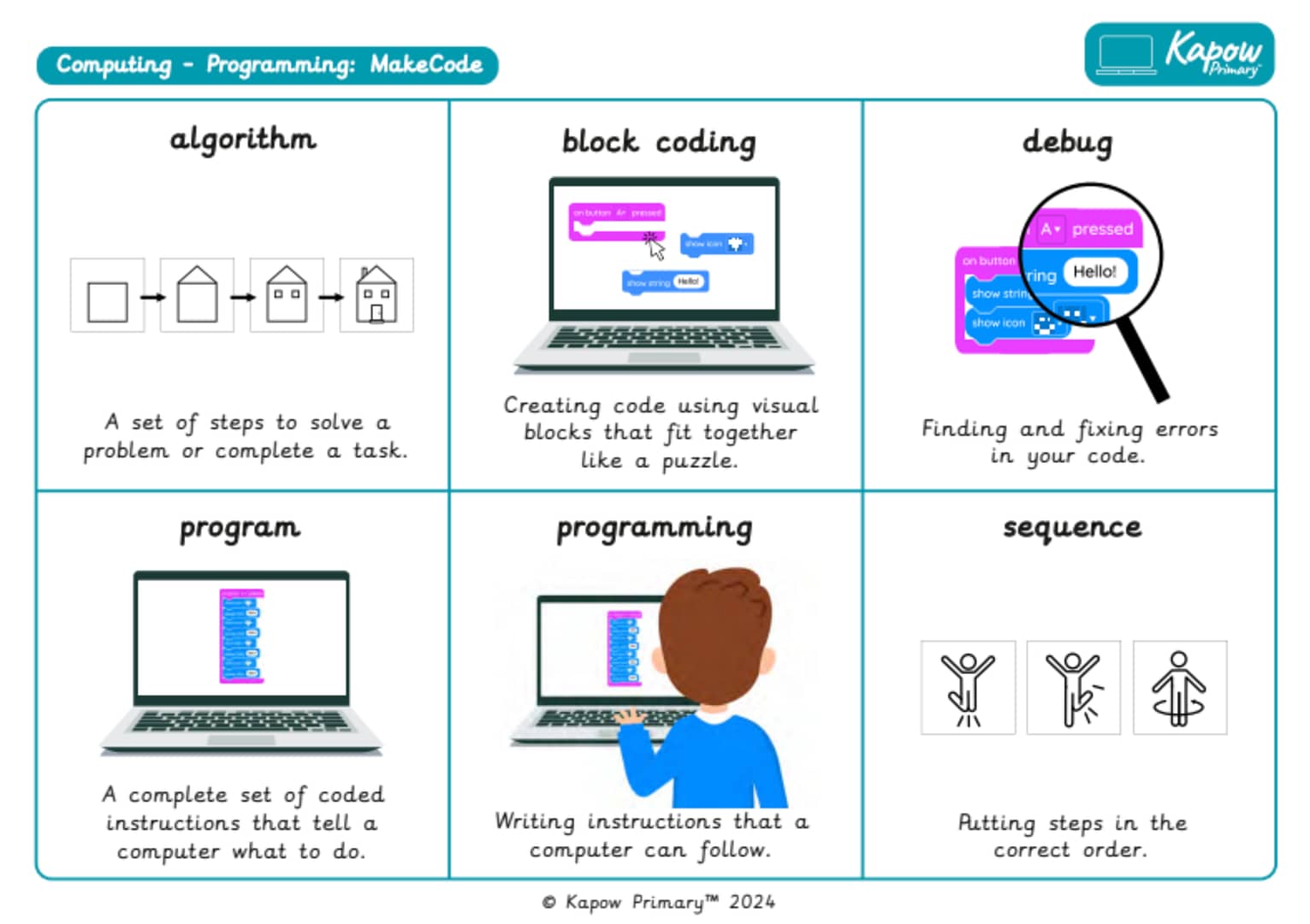
A Knowledge organiser that captures the essential knowledge and skills learnt throughout the unit Computing, Year 2, Programming: MakeCode.
This resource is designed to support the children as they develop their understanding of programming using MakeCode. It introduces key vocabulary and concepts, such as algorithms, block coding and debugging, helping the children build a strong foundation in Computing. The organiser also explores how the BBC micro:bit can be programmed to display patterns and messages, reinforcing essential coding skills. It is perfect for consolidating knowledge and supporting the children as they learn to create, test and debug their own programs.
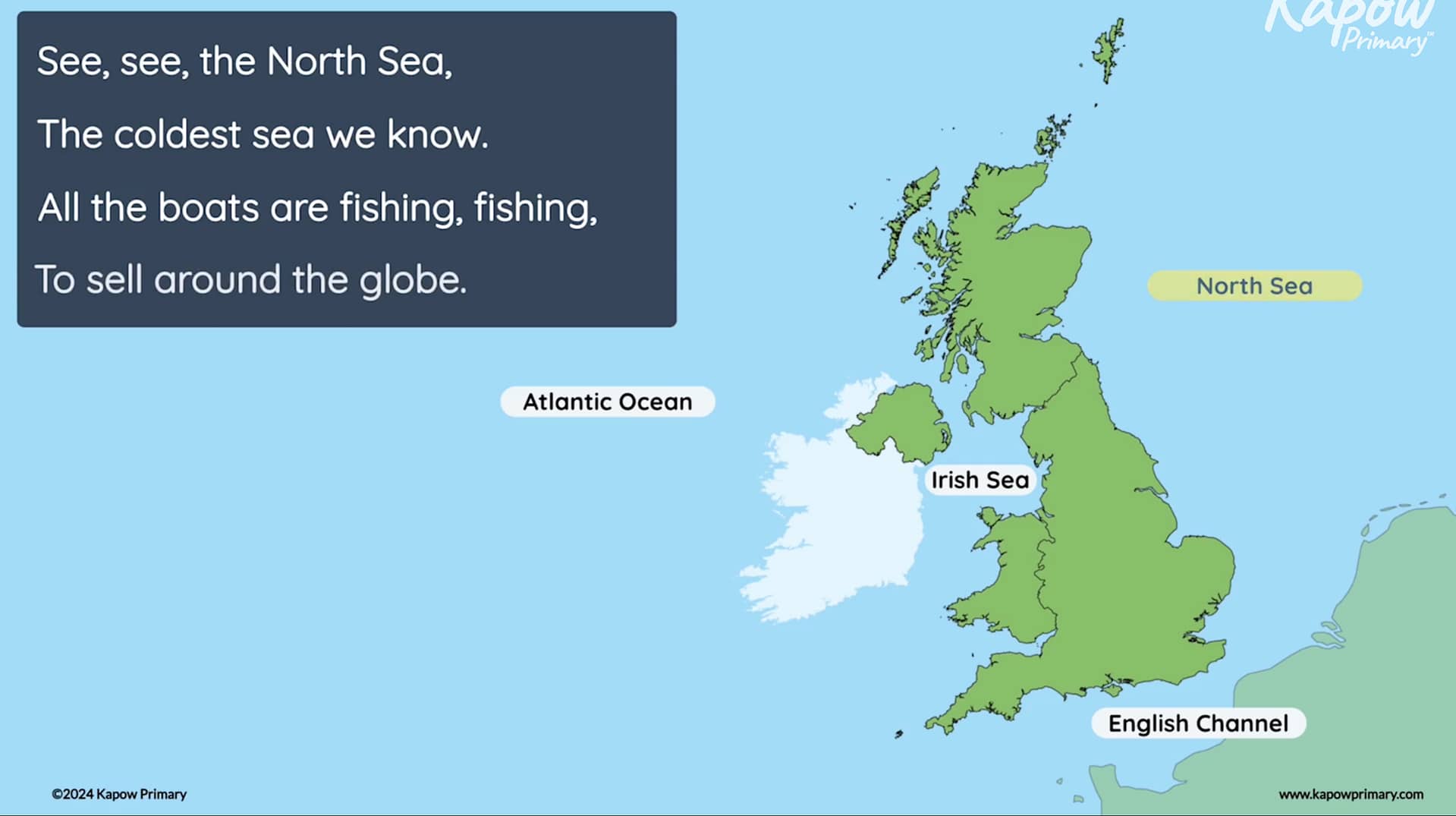
This video helps pupils learn the names and positions of the seas surrounding the UK through a fun and memorable song.

Watch our Geography session recording, led by expert Sarah Lawson-Quick, tailored for primary school teachers. Sarah discusses how to use local landmarks, maps, and community data to enrich your lessons and connect pupils with their local surroundings.
Key topics include:
- Integrating local geography into your curriculum
- Connecting pupils with their community
- Tips for effective fieldwork
- Enhancing lessons with Kapow Primary’s Geography curriculum resources
This recording offers practical strategies for teachers seeking to bring their local area into the classroom.