This archived Art and design scheme of work video is part of a lesson in which pupils explore the formal element of tone by creating realistic-looking planets.
Children begin by drawing a circle to form the base of their planet, then experiment with chalks and pastels to match the colours they need. They learn how to hold and use the side of the chalk to create smooth effects, and how blending with cotton wool can soften tones and add depth. Pupils gradually build layers of light and dark areas, giving their planets a three-dimensional appearance. Once complete, the planets are cut out and mounted on dark backgrounds, enhancing their shape and impact.
This activity builds pupils’ confidence in shading and blending techniques while showing how tone can be used to transform flat shapes into 3D forms.
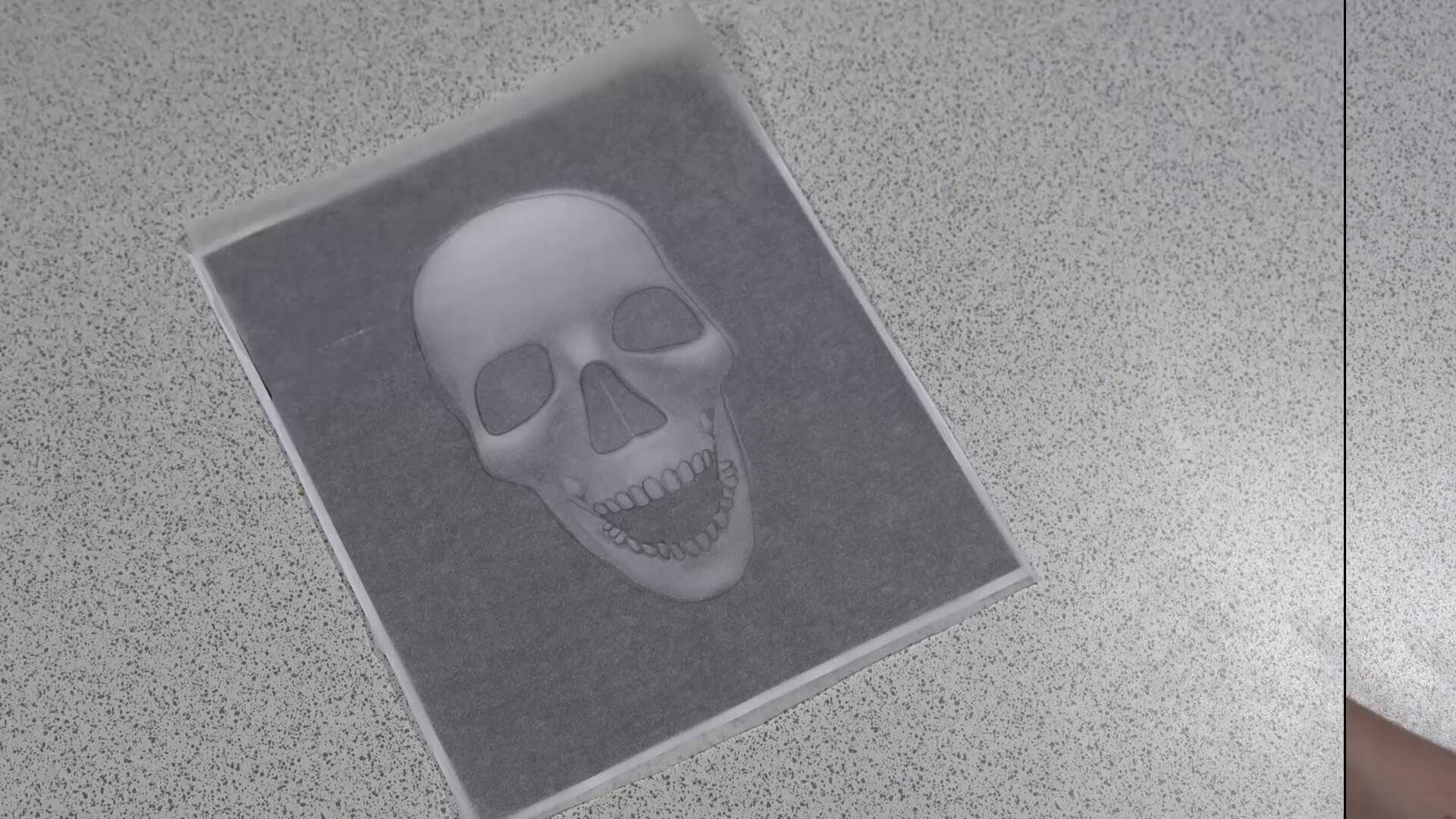
This archived Art and Design scheme of work video is part of a lesson in which pupils explore the structure and features of the human skull while developing their observational drawing skills.
Children begin by examining a skull model or image, tracing key features with their fingers to understand its form. They then place tracing paper over the image, sketching the outlines lightly in pencil before going over them in felt tip. Photocopies of these tracings provide the starting point for creative experimentation. Pupils can choose to shade their skulls with pencil, add tonal effects with charcoal and chalk, or use oil pastels and crayons to create bold, colourful designs. By the end of the lesson, they will have produced a range of expressive skull artworks, building confidence in both observation and technique.
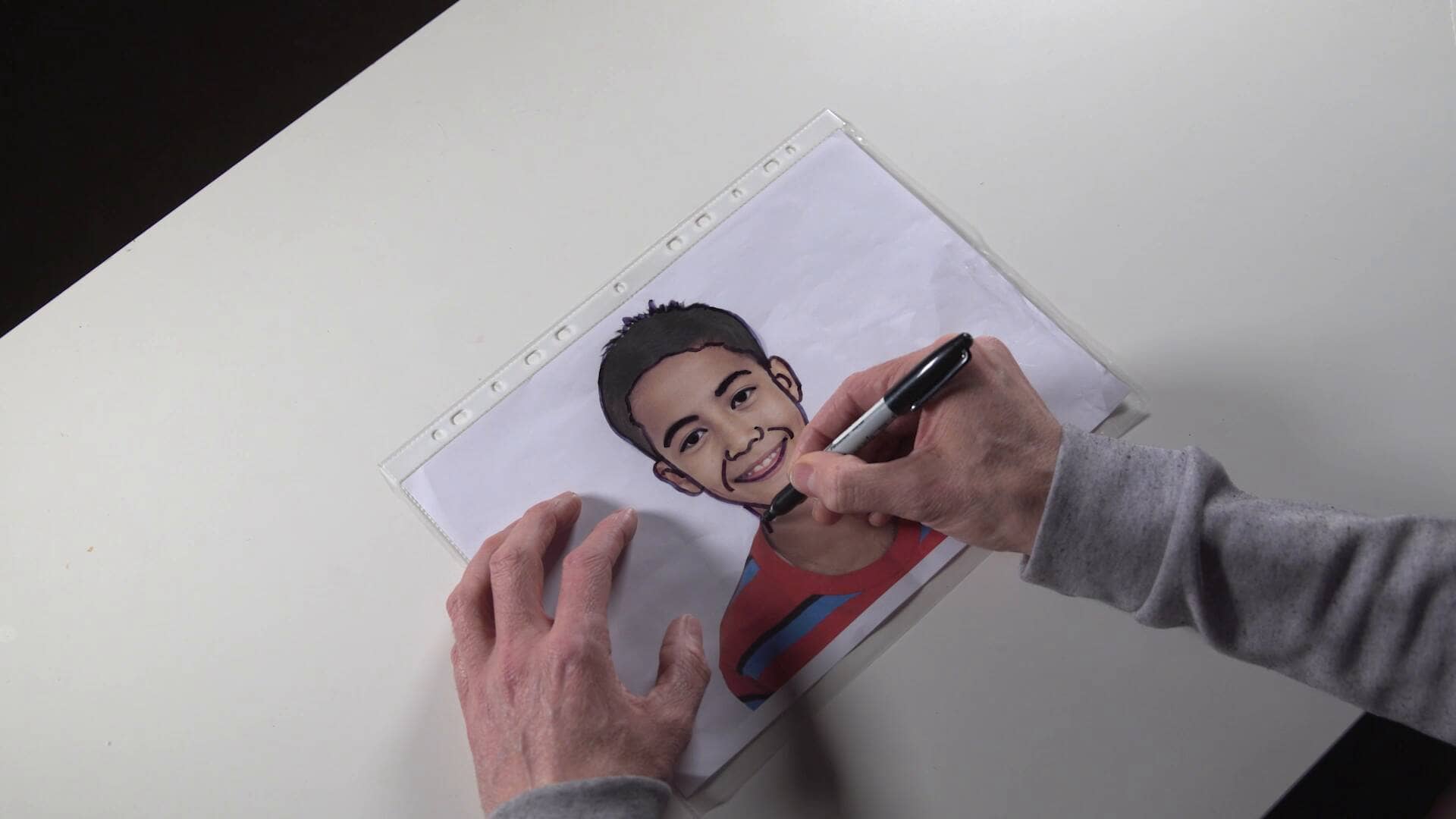
This archived Art and Design scheme of work video is part of a lesson in which pupils transform photographs into portraits inspired by British artist Julian Opie.
Children begin by tracing around a photograph placed inside a plastic wallet. Using only their fingers to guide them, they identify where Opie would use strong, simple lines and trace along these shapes. With marker pens, pupils outline features, reducing them to the distinctive dots and lines of Opie’s style. Once complete, the photograph is removed and replaced with white or coloured paper, creating a bold Opie-style portrait. More confident pupils may extend their work by adding blocks of colour with paints, pens or cut paper. Through this activity, children learn how artists simplify and stylise features to create a unique visual language.
This archived Art and Design scheme of work video is part of a lesson in which pupils create peg figures, combining craft skills with imagination and storytelling.
Children begin by making a figure from a wooden peg and pipe cleaner, twisting the arms into place and adding details such as hands, hair, or facial features. They can draw directly onto the peg or use paper, string, wool, or fabric to decorate. Pupils then personalise their figures by designing clothes and accessories, using markers, fabric, paint, or glue.
To extend the activity, children can create a setting for their peg figures using everyday materials, before writing a short paragraph to describe their character or scene. This lesson develops fine motor skills and encourages pupils to express creativity through both art and narrative.
This Art and design scheme of work video introduces teachers to a lesson on the human form, where Key stage 2 pupils work collaboratively to create a human alphabet.

This Religion and Worldviews video introduces teachers to Jatakarma and Namakarana, Hindu ceremonies that welcome a newborn through sacred words, symbolic acts and naming rituals expressing beliefs about life, spirituality and heritage.

This video supports teachers in understanding infant baptism, a Christian ceremony that welcomes a baby into the church through symbols of water, prayers and the baptismal candle.
This Art and design scheme of work video introduces teachers to a lesson inspired by Roy Lichtenstein’s pop art, where Key stage 2 pupils experiment with colour mixing, washes, and dot techniques.
This archived Art and design scheme of work video introduces teachers to the final stage of a large collaborative artwork, where Key stage 1 pupils use pastels to add colour, tone, and definition.