


This unit vocabulary display includes keywords from the unit Computing, Year 6, Bletchley Park and the History of Computers and additional unit-specific words that may be helpful in a display.
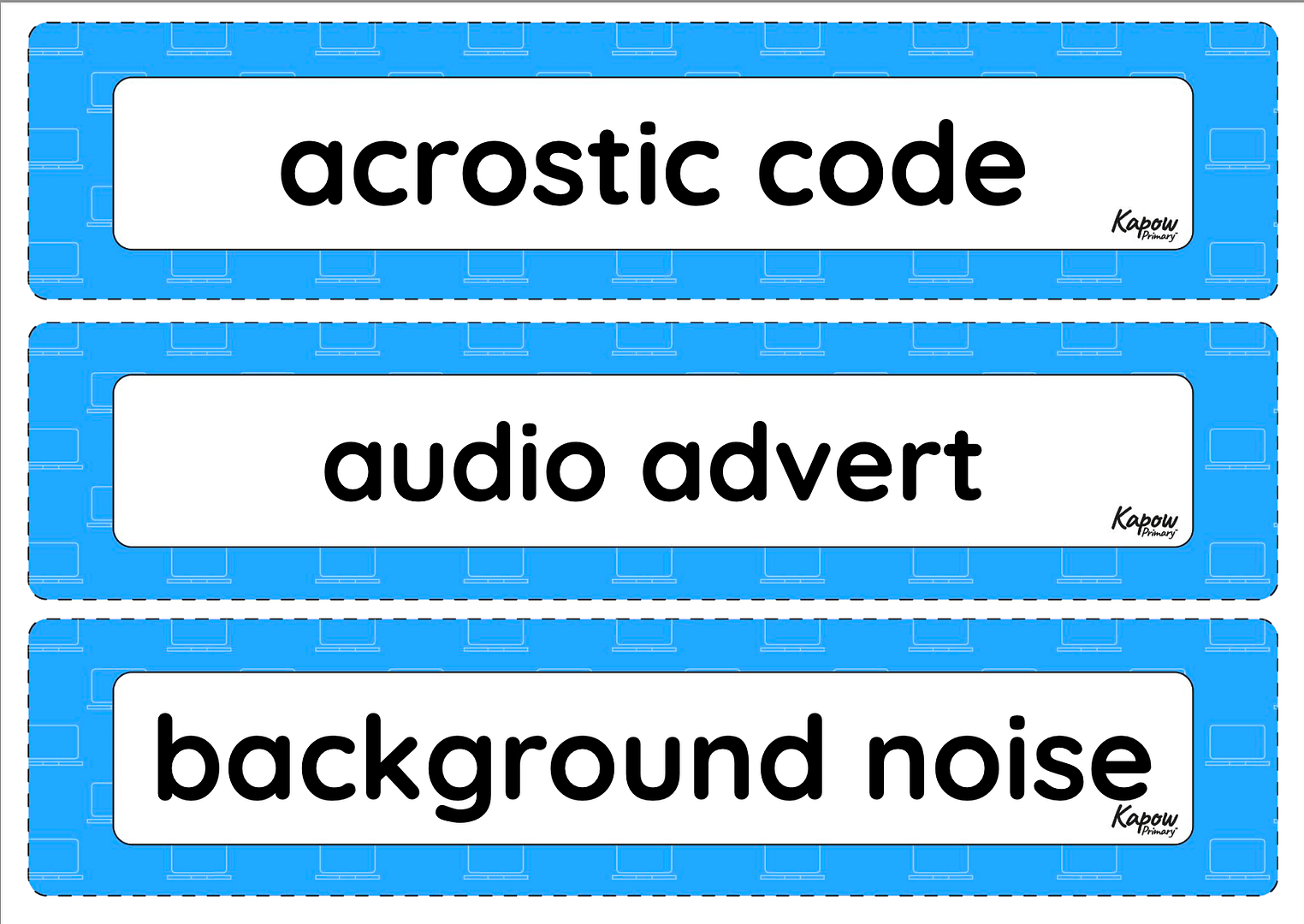
This unit vocabulary display includes keywords from the unit Computing, Year 6, Bletchley Park and the History of Computers and additional unit-specific words that may be helpful in a display.
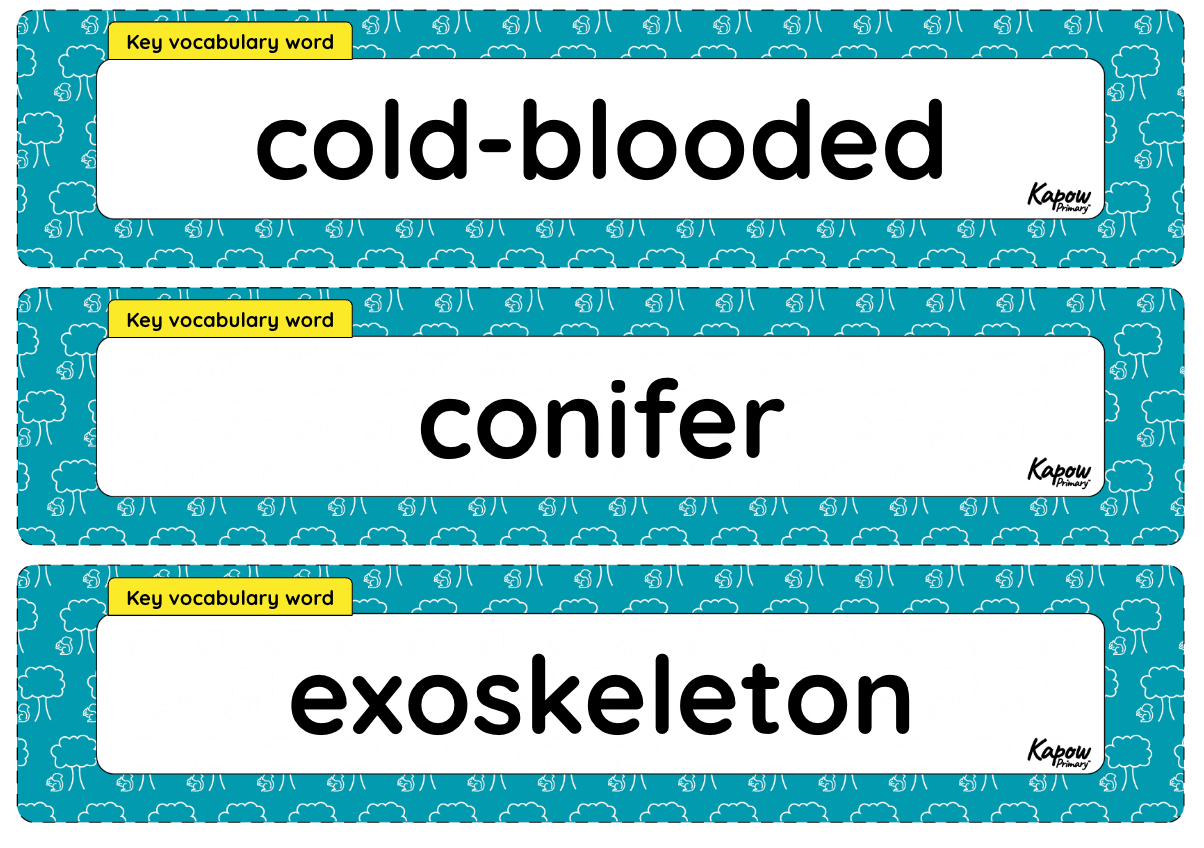
This unit vocabulary display includes keywords from the unit Science, Year 6, Living things: Classifying big and small and additional unit-specific words that may be helpful in a display.
Key vocabulary is clearly labelled on the display, highlighting essential words that the pupils are expected to retain and reuse in future units. Understanding these words enhances comprehension of the subject and supports understanding of key scientific concepts and processes.
See the full Science: Progression of key vocabulary.
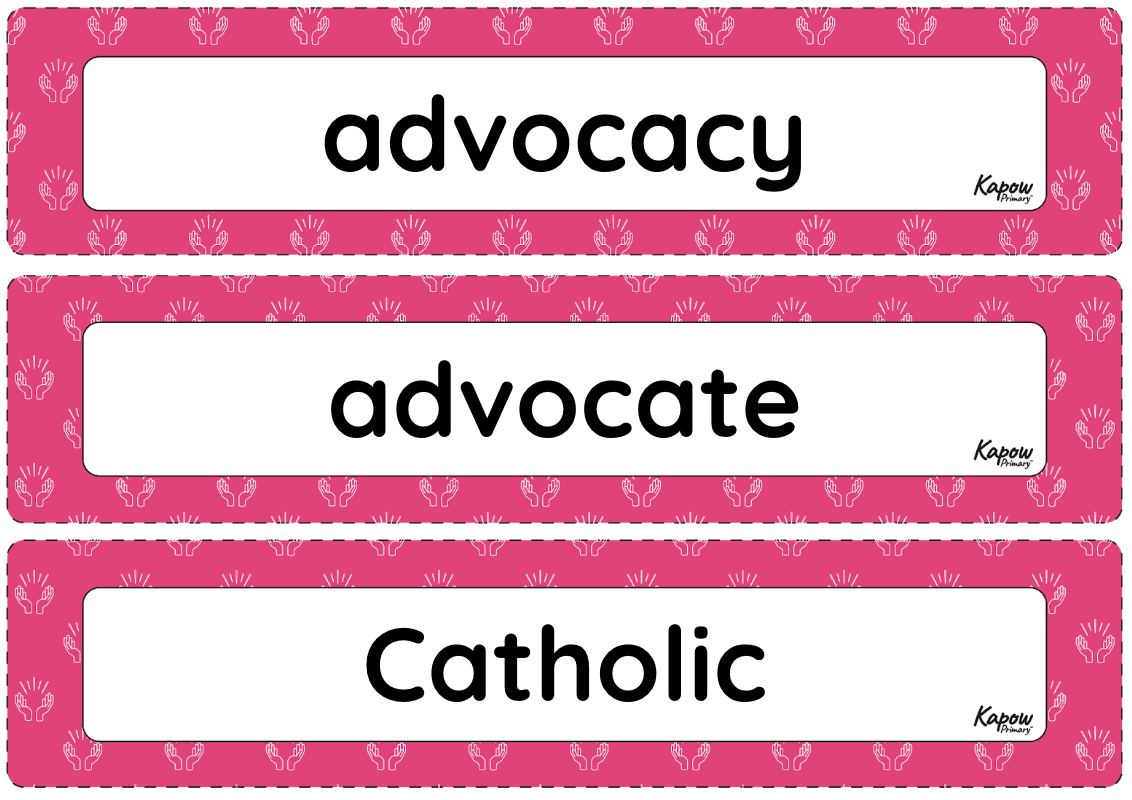
A display version of the vocabulary from the ‘Why do people have to stand up for what they believe in?’ unit.
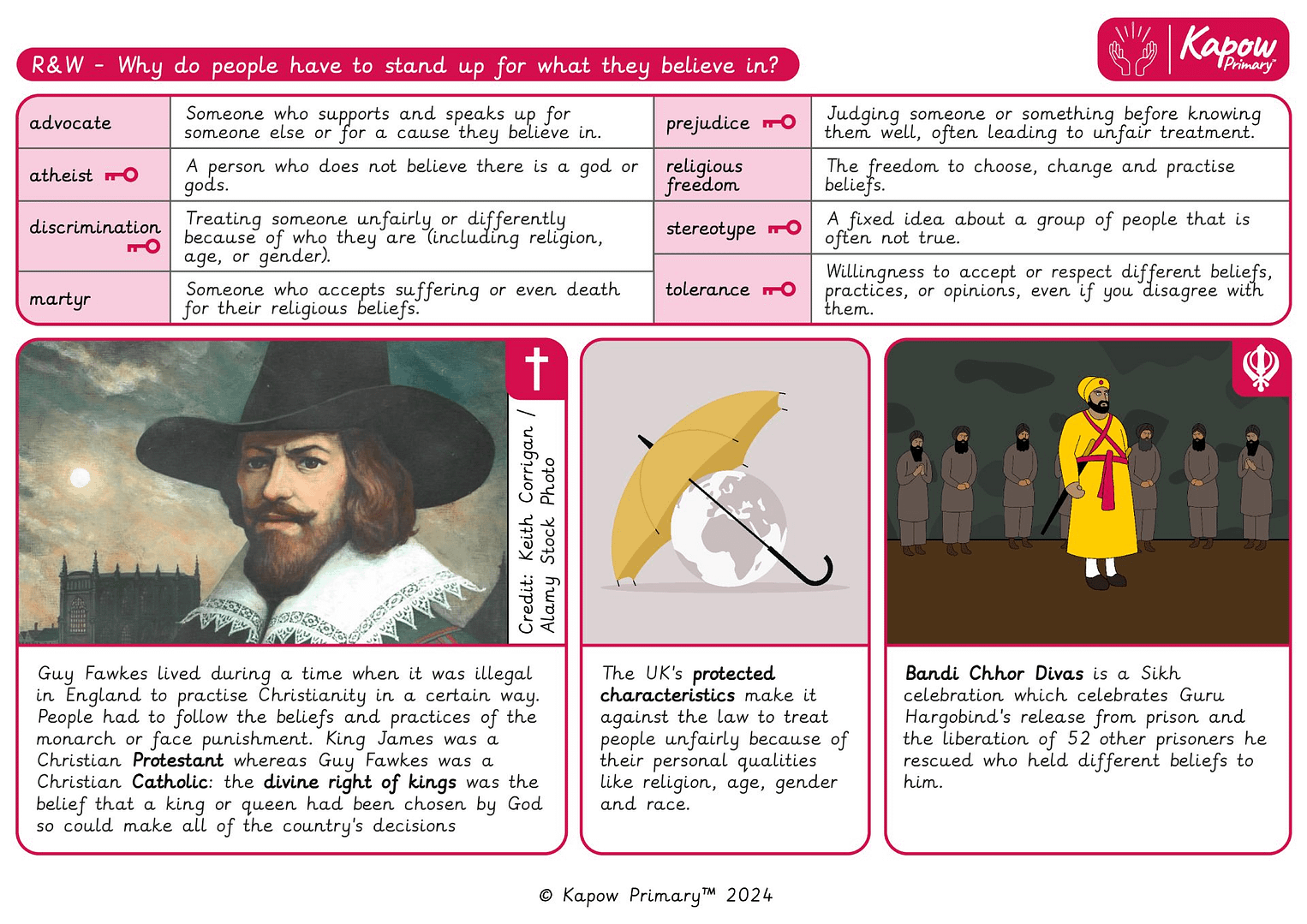
A Knowledge organiser that captures the essential knowledge and skills learnt throughout the unit Religion and worldviews, Year 5/6 (A), Why do people have to stand up for what they believe in?
This resource is designed to help pupils understand how religious and personal beliefs influence people’s decisions to stand up for justice and equality. Through key vocabulary such as tolerance, advocate, prejudice, and religious freedom, pupils explore historical and cultural examples like Guy Fawkes and Bandi Chhor Divas. The organiser encourages reflection on protected characteristics, the consequences of discrimination, and the role of personal conviction in defending others’ rights. It is ideal for deepening understanding of social justice, moral courage, and respect for diversity.
This video aims to help subject leaders gain an understanding of the Kapow Primary Music scheme of work, describing the strands and the documentation that can further support you in your role.
We’re excited to announce enhancements to our Music scheme, reflecting our commitment to staying current with the latest educational guidance. Starting in the 2024/2025 academic year, we will introduce two new strands, ‘Creating Sound’ and ‘Notation’, beginning with Key stage 1 Music. These additions will further enrich our curriculum, with plans to extend them to Key stage 2 Music (Y3/4) and (Y5/6) the following year. More details will follow as we update our key documents to reflect these changes.

Thank you to Haimo Primary School, London, for allowing us to use images of children working.

This video aims to help subject leaders gain an understanding of the Kapow Primary RSE & PSHE scheme of work, describing the strands and the documentation that can further support you in your role.
This video aims to help subject leaders gain an understanding of the Kapow Primary Design and technology scheme of work, describing the strands and the documentation that can further support you in your role.
Thank you to the following schools for allowing us to use images of children’s work:
This video aims to help History subject leaders gain an understanding of the Kapow Primary History scheme of work, describing the strands and the documentation that can further support you in your role.
Thank you to the following schools for allowing us to use images of children’s work:
This video aims to help subject leaders gain an understanding of the Kapow Primary French scheme of work, describing the strands and the documentation that can further support you in your role.
