




Before you continue

This unit is archived. Our revised unit is aligned to current guidance. Visit the new unit
Please note
This unit has been replaced and will no longer be updated. Kapow no longer updates these lessons, and they may not reflect the national curriculum or current guidance. They remain a permanent part of your subscription and will continue to be available for reference and use. We recommend that you explore the new versions of the lessons.
Unit outcomes
Pupils who are secure will be able to:
- Explain the meaning and origin of the prefix ‘omni’ and understand the significance of omni words in religious circumstances.
- Compare similarities and differences between the Abrahamic religions.
- Recall why different worldviews may have interpreted similar origins differently.
- Give reasons about why Shabbat can be observed differently.
- Consider how geography and culture can affect religious traditions.
- Explain why people may choose to wear head wear or hair coverings to support their belief.
Suggested prior learning
Why are some places in the world significant to believers?
Get started
Teacher video: What does religion look like around the world?

Lessons
Lesson 1: How do some religions believe in the same God?
Lesson 2: How might a Jewish person observe Shabbat?
Lesson 3: Why is Friday night dinner different?
Lesson 4: What can a head covering tell us about identity?
Lesson 5: Why might someone want to cover their hair?
Key skills
Disciplinary
- Asking challenging questions and

This content is for subscribers only. Join for access today.
Key knowledge
Substantive
To know:
- The meaning of
This content is for subscribers only. Join for access today.
Key vocabulary
liberal
mitzvot
This content is for subscribers only. Join for access today.
Related content
Unit resources


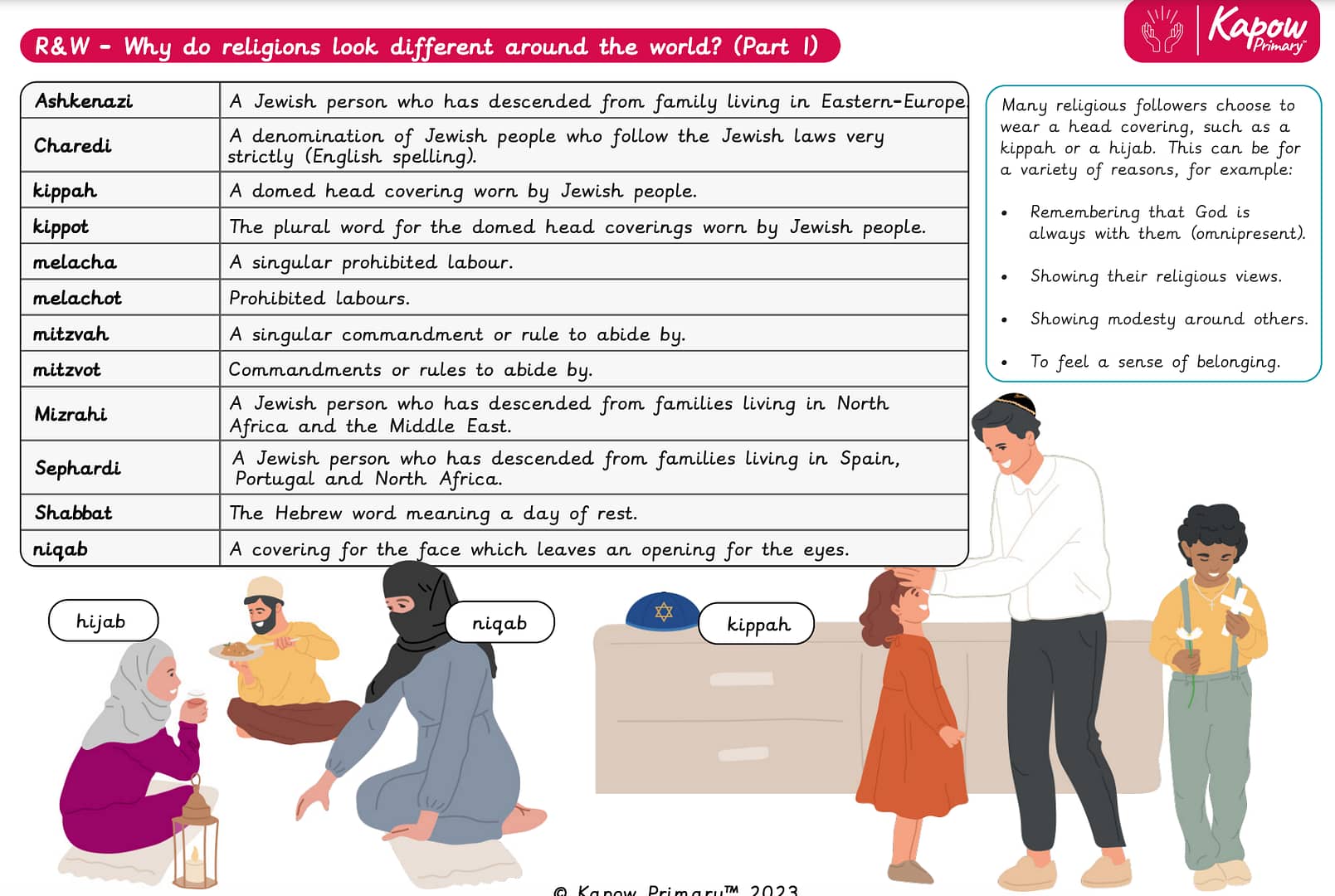
Knowledge organiser – R&W Y6: Why does religion look different around the world? (Part 1)
Aimed at pupils, a double page document that gives key facts and definitions from the 'Why does religion look different…
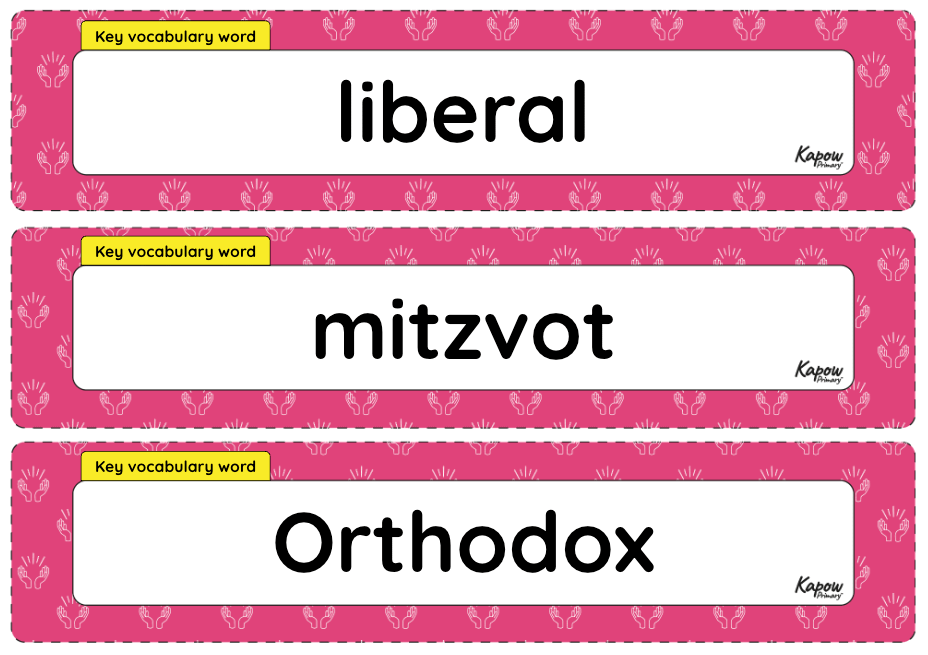
Vocabulary display – R&W Y6: Why does religion look different around the world? (Part 1)
A display version of the vocabulary from the 'Why does religion look different around the world? (Part 1)' unit.
Cross-curricular opportunities
British values: Mutual respect, Tolerance of those with different beliefs.
English: Reading – comprehension, Writing – transcription.
Geography: Human and physical geography.
Build on the learning
Why does religion look different around the world? (Part 2)
Get started