




Please note
This unit’s name has changed to better reflect its content and some minor updates have been made to enrich the lessons.
Unit outcomes
Pupils who are secure will be able to:
- Describe the features of Ancient Greece.
- Identify the key periods in the ancient Greek civilisation.
- Make inferences about Greek gods.
- Research a Greek god.
- Compare Athens and Sparta.
- Understand the different types of democracy.
- Explain how Athenian democracy worked.
- Explain what philosophy is.
- Identify the achievements of the ancient Greek philosophers.
- Identify the ancient Greeks’ legacies and their impact.
Suggested prior learning
Y5/6 (B): What can the census tell us about local areas?
Get started
Lessons
Year 5/6 (B): Lesson 1: Who were the ancient Greeks and when did they live?
Year 5/6 (B): Lesson 2: Who lived on Mount Olympus?
Year 5/6 (B): Lesson 3: How was Ancient Greece governed?
Year 5/6 (B): Lesson 4: Did the ancient Greeks give us democracy?
Year 5/6 (B): Lesson 5: How do the ancient Greek philosophers influence us today?
Year 5/6 (B): Lesson 6: What is the legacy of the ancient Greeks?
Key skills
- Sequencing events on a

This content is for subscribers only. Join for access today.
Key knowledge
- To understand the term
This content is for subscribers only. Join for access today.
Key vocabulary
citizen
democracy
This content is for subscribers only. Join for access today.
Equipment list
Equipment needed across all lessons in this unit.
This list does not include equipment which is usually readily available in the classroom (e.g pencils, A4 paper etc)
 Download
Full equipment list for the subject
Quantities marked × will update. Items without quantities are unaffected
-
Flipchart or poster paper
×1 - Roll of backing paper, cut into sheets approximately 100cm by 50cm ×1
- Scissors right- and left-handed options recommended. ×30
- Rulers ×15
- Glue sticks ×15
- Coloured paper ×30
- Permanent markers ×30
- Laptops/tablets ×15
- Large space such as a hall or playground. ×1
- Sticky notes
- Colouring pencils
This content is for subscribers only. Join for access today.
Related content
Unit resources


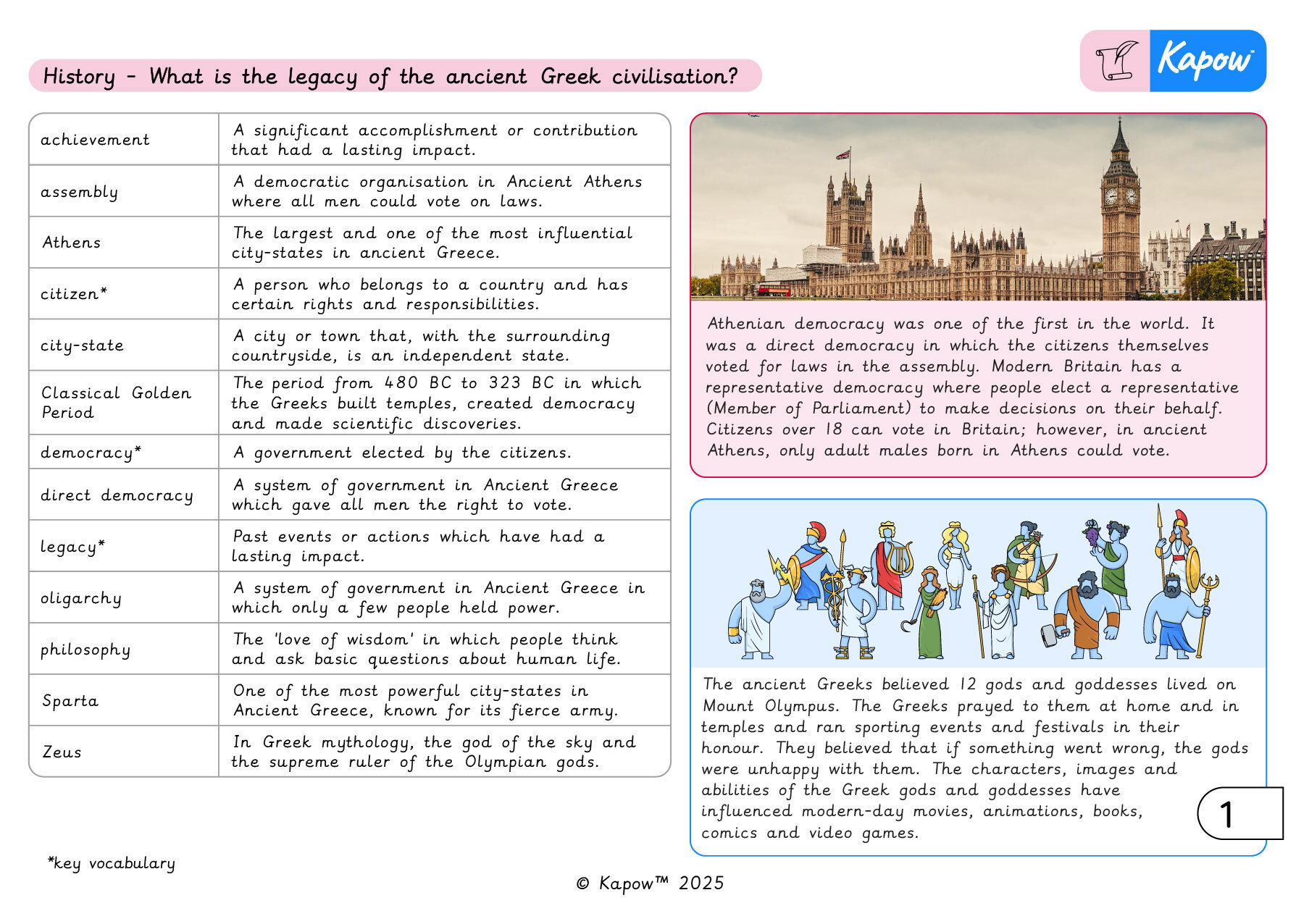
Knowledge organiser- History Y5/6: What is the legacy of the ancient Greek civilisation?
Aimed at pupils, two pages providing key facts and definitions from the unit ‘What is the legacy of the ancient…
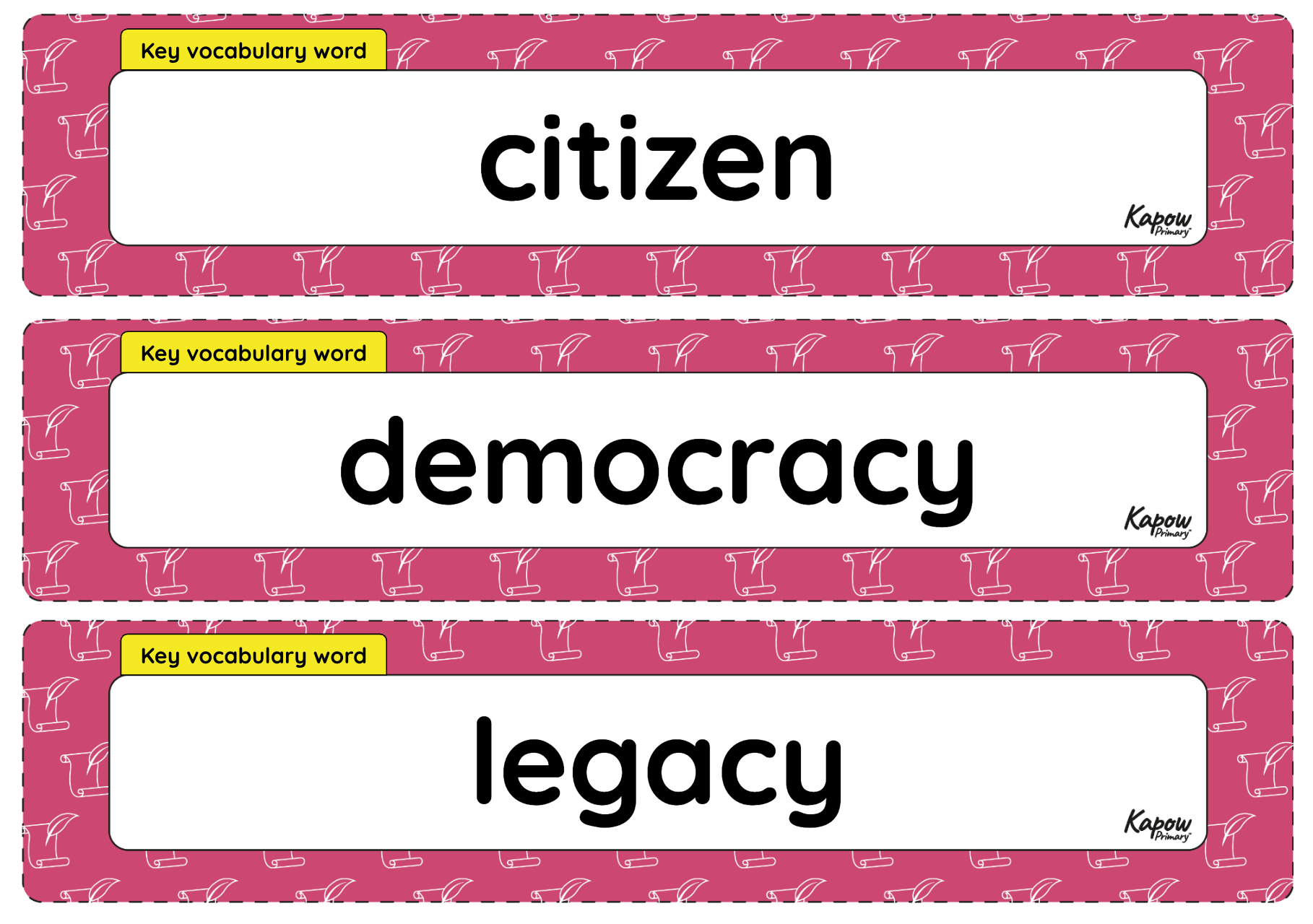
Vocabulary display – History Y5/6 (B): What is the legacy of the ancient Greek civilisation?
A display version of the unit vocabulary.
Subject resources
This content is for subscribers only. Join for access today.
Cross-curricular opportunities
Geography: Human and physical geography, Geographical skills and fieldwork
Maths: Ratio and proportion
English: Spoken language
British values: Democracy, rule of law
Build on the learning
Y5/6 (B): What was the Sikh Empire?
Get started
