Y1/2 (A): Lesson 3: Ocean litter
Investigating what happens to different types of litter soaked in water over time to work out which will impact ocean habitats the least. This lesson is part of the mixed-age scheme.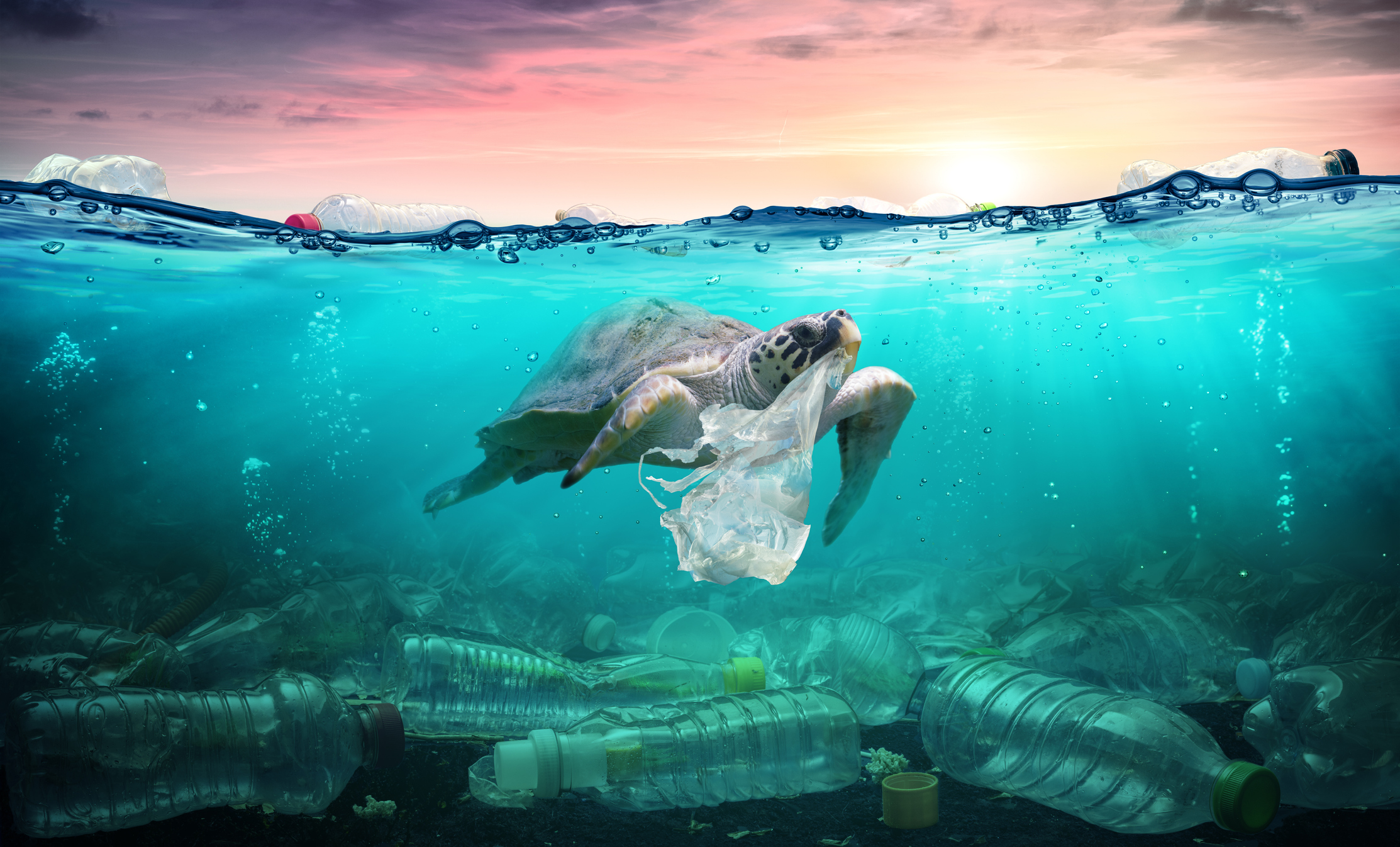
Learning objectives
Knowledge
-
To describe some ways humans affect the ocean.
Working scientifically
-
To investigate what happens to different materials in the ocean.
Success criteria
Knowledge
-
I can recall some different types of litter that affect ocean habitats.
-
I can describe some of the problems linked to ocean litter.
-
I can suggest ways to reduce how human litter affects the ocean.
Working scientifically
-
I can begin to plan an experiment to see what happens to materials in ocean water over time.
-
I can predict changes to materials over time.
-
I can observe and make comparisons of materials soaked in water.
Before the lesson
Check all images, videos, links and presentation slides are suitable for your class.
- Presentation: Sorting ocean objects.
- Presentation: Investigating ocean litter.
- Real objects to sort (optional - see Recap and recall):
netting (for example, from oranges) to represent fishing nets;
1 plastic straw;
1 piece of rubbish;
1 plastic carrier bag;
1 sea shell;
some seaweed or a plant to represent it;
1 toy fish;
some sand.
The book 'Somebody Swallowed Stanley' by Sarah Roberts (one teacher copy).
- Equipment to investigate ocean litter (see Main event):
a range of litter such as plastic and paper straws, toilet tissue and paper towels, polystyrene and starch packing chips, nets from oranges to represent fishing nets, freezer or carrier bags and biodegradable or regular baby wipes (one piece between two);
transparent plastic bottles (one between two);
whiteboard pens or permanent markers (one between two);
access to water;
salt to add to the water to represent salty ocean water (optional).
- Link: CBeebies - Somebody Swallowed Stanley (optional) - this is an external website and we do not have control over its content - please check before showing it to the children.
Subject knowledge
This lesson revises subject knowledge from the units Science, Year 1/2 (A), Living things: Habitats. Look for any associated misconceptions in the unit lessons.
The children may notice that the paper straws do not break up as much as expected. It is because they are often coated with wax or plastic to stop them from going soggy while in use.
Paper straws may break down quicker than plastic alternatives, but some research suggests they contain other 'forever chemicals' that can contaminate water supplies and cause problems. This may mean they are not a better, more sustainable alternative to plastic straws.
However, plastic straws' rigidity is more likely to harm animals that come into contact with them.
Enquiry type
- This lesson includes an observing over time enquiry. It looks for changes in litter integrity when soaked in water over time.
Lesson organisation
Use the link: CBeebies - Somebody Swallowed Stanley if a copy of 'Somebody Swallowed Stanley' by Sarah Roberts is unavailable.
- Test available litter rather than purchasing items specifically to reuse non-biodegradable materials. Examples of biodegradable and non-biodegradable materials being experimented on can be seen and shared with the class in the Pupil video: Investigating ocean litter (from 0:50).
Health and safety
Remind the children:
To use the equipment only as directed by the teacher.
Sensitivities
The lesson deals with themes of animal distress or harm due to ocean litter.
Lesson plan
Display the Presentation: Sorting ocean objects or arrange the equivalent objects in front of the class (see Have ready).
Ask the children to discuss with a partner how they would sort the objects into two piles:
Things that belong in the ocean.
Things that do not belong in the ocean.
Ask for a volunteer to be in charge of either moving the objects or dragging the items in the presentation. Take class votes for each item to help decide which pile it belongs in. Encourage the children to justify opinions that differ from the majority, for example, the toy fish should not be in the ocean but a real fish should.
Hold up the storybook 'Somebody Swallowed Stanley' by Sarah Roberts and inform the class that things that do not belong in the ocean can be very confusing for the ocean animals that live there. Point to Stanley, the carrier bag, on the front of the book and ask the class:
- Does Stanley belong in the ocean? (No.)
Explain to the class that they should try to remember as many things as possible that do and do not belong in the ocean.
Read the story aloud or use the link: CBeebies - Somebody Swallowed Stanley and pause at key moments to draw attention to things found in the ocean or to relate to the feeding relationships explored.
Questions
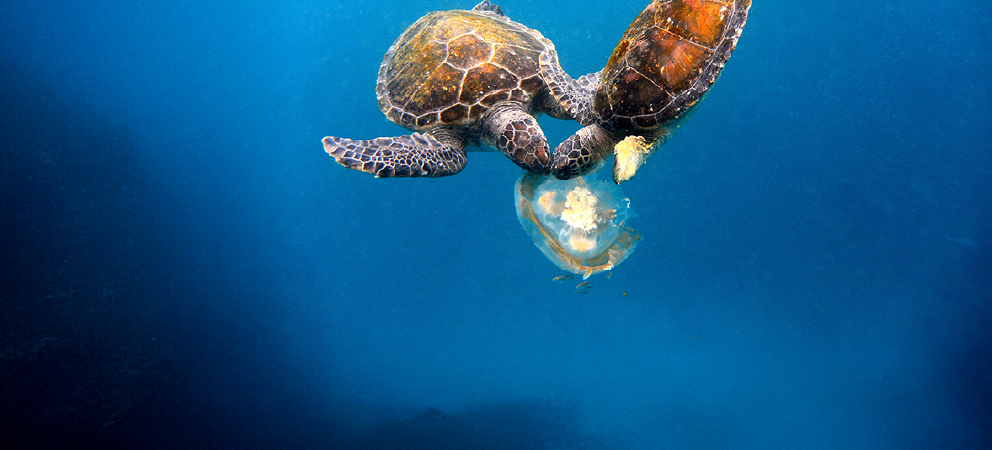
- What things did you see that belong in the ocean? (Jellyfish, fish, seaweed, the whale, barnacles, anemones and the sea turtle.)
- What things did you see that did not belong in the ocean? (Stanley, the carrier bag, Stanley as a kite and its string.)
- Why did the animals keep trying to eat Stanley? (Carrier bags floating in water look like jellyfish, which is food or prey for many ocean creatures.)
- Why is it dangerous for the animals trying to eat Stanley? (Carrier bags cannot be eaten and may harm or stop the animals from eating real food.)
Ask the class:
- How could scientists investigate what happens to litter if it ends up in the ocean?
Take initial ideas and emphasise that the method must not actually cause any harm to ocean habitats by testing it directly on them. Display slide 1 of the Presentation: Investigating ocean litter, which shows the enquiry cycle.
Click on the question to reveal the focus of the class investigation:
- What happens to litter if it ends up in the ocean?
Remind the class that scientists use various methods to find answers to questions. Click on the icons in turn to make the following points:
- Researching: the book read at the start of the lesson has shown some problems linked to litter in the ocean so it is a form of research.
- Observing over time: this would show what happens to litter when left in ocean water and whether it stays to carry on causing problems.
- Comparative and fair testing: this is more suitable for testing one particular type of litter or specific conditions.
- Grouping: the question does not require sorting or grouping objects.
- Spotting patterns: this question does not involve spotting patterns.
Explain to the class that they will observe over time to see what happens to different types of litter when soaked in ocean water. They can then decide how likely different litter is to cause problems in an ocean habitat.
Return to slide 1 by clicking on the pink arrow and select the observe, test and measure tile to display a shuffled method on slide 2. Read the steps aloud and allow the children to discuss in pairs which order they think the steps should go in. Ask for a volunteer to rearrange the steps in the presentation. Encourage the children to think about being fair in the method steps by giving exaggerated differences between groups, for example, asking if it is fair if one group shakes their bottle for one second compared to ten seconds or if a group leaves their bottle for one day but another leaves it for a week.
Questions
- What do you think will happen to the different litter over time?
- Why?
Allow time for paired discussion and ask them to write their prediction in their book.
Demonstrate how to complete the experiment with the available equipment or watch the Pupil video: Investigating ocean litter, until 00:50 if preferred.
Arrange the class into pairs and allow them to collect their equipment (one bottle, one piece of litter and one whiteboard pen or permanent marker). Show the children where to fill up their bottles, either from a water source within the classroom or available jugs.
At the point of shaking the bottles and observing initial changes, take feedback.
Questions
- Which litter has stayed the same so far?
- Which litter has begun to change? (At this point of the experiment, it may only be tissue and biodegradable packing chips that have broken apart.)
- How does this match your prediction?
Choose one bottle for each type of litter that has been soaking. Ask for a volunteer to hold each bottle at the front of the class. Invite the class to observe the changes to the materials inside the bottles. Ask them to help rearrange the volunteers from ‘most changed’ to ‘least changed’, based on what they can see. Discuss which material could be the worst for ocean animals. Ask the children how confident they are in their choice at this stage of the experiment. They may begin to justify their reasons based on the animals trying to eat Stanley from the book.
Explain to the class that they will leave their bottles in a set place for one week and return to check their predictions and observe the results.
Ask the class:
- Can you think of any ways we can help look after ocean habitats based on what we have learnt? (Ideas may include picking up litter on beaches so that it does not end up in the water; taking litter home with them after being on a beach; choosing materials that break up in water easily.)
Full-screen slides, ready for your classroom, chosen by you.
Knowledge
-
To describe some ways humans affect the ocean.
Working scientifically
-
To investigate what happens to different materials in the ocean.
We value your feedback
We welcome your feedback to help make our resources even better