Y1/2 (A): Lesson 1: Rockpooling
Exploring rock pools as an example of a habitat and how the plants and animals depend on each other to live there. This lesson is part of the mixed-age scheme.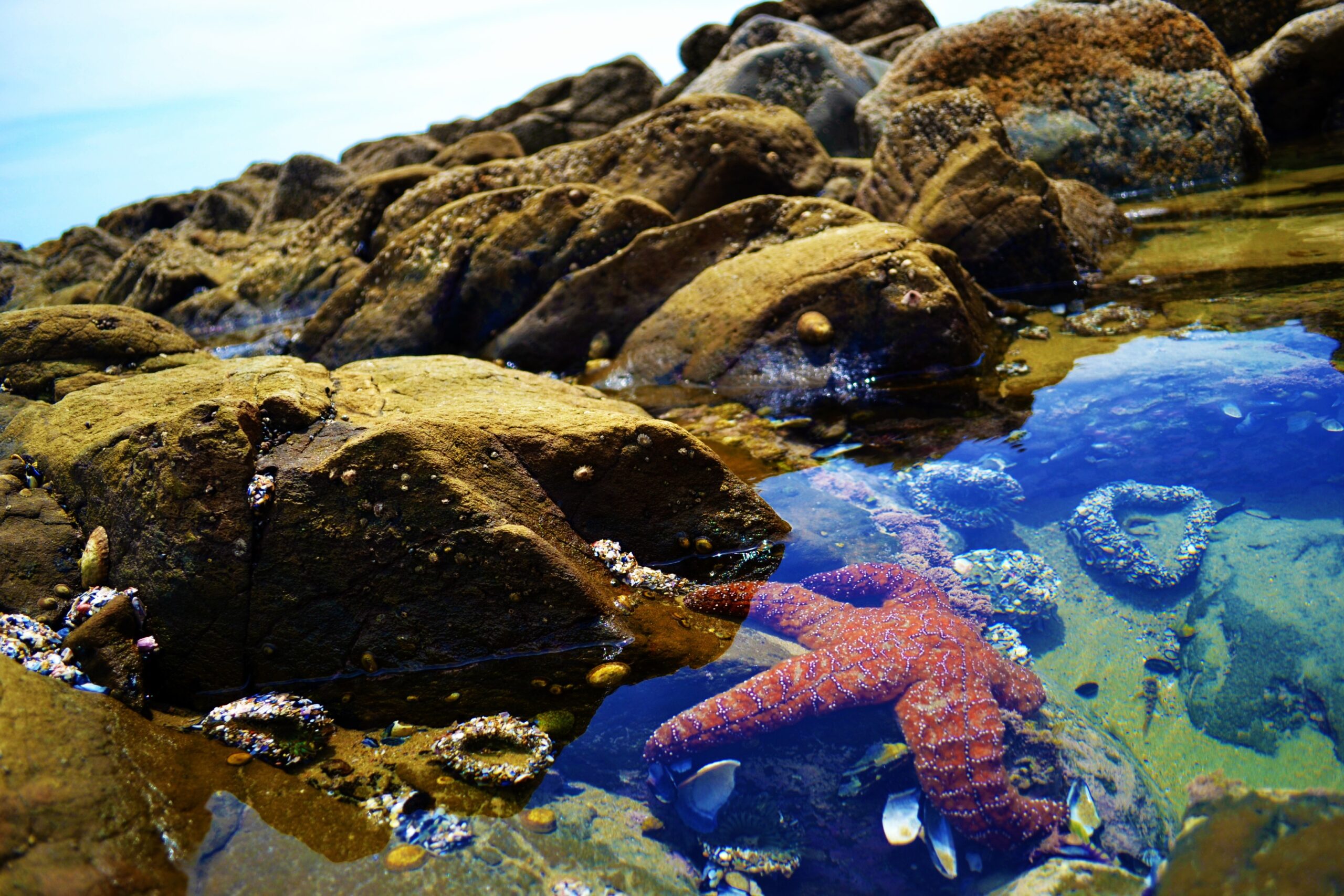
Learning objectives
Knowledge
-
To describe a rock pool as an example of a habitat.
Working scientifically
-
To record information about model rock pools.
Success criteria
Knowledge
-
I can recall some of the living things found within a rock pool.
-
I can describe how some living things in a rock pool have their needs met.
-
I can describe how rock pool conditions change.
Working scientifically
-
I can correctly complete a tally chart to record the living things in rock pools.
-
I can correctly summarise my observations of rock pools.
Before the lesson
Check all images, videos, links and presentation slides are suitable for your class.
- Presentation: Ocean habitat.
- Presentation: Rock pool habitat.
- Presentation: Living things in rock pools.
Plain paper, pre-cut to A6 size (one each).
Scissors (one each).
Colouring pencils or felt tip pens (optional).
- Equipment to model rock pools (per group of four - see Main event):
an outdoor space;
chalk to draw outlines and details on the ground;
rocks and pebbles (optional);
water supply or sprays (optional);
sand (optional).
Clipboards (optional - one each for tallying during the Main event).
A device for recording video (optional - one for the teacher).
Subject knowledge
This lesson revises subject knowledge from the unit Science, Year 1/2 (A), Living things: Habitats. Look for any associated misconceptions in the unit lessons.
- Year 2 pupils will be able to use their knowledge from the unit Science, Year 1/2 (B), Living things: Microhabitats to identify that a rock pool is an example of a microhabitat. It will serve as pre-teaching for Year 1 pupils this term.
Feeding relationships
Key information about the feeding relationships of the named rock pool organisms:
Algae and seaweed are producers that use light to make their own food. The pupils will refer to these as 'plants' at this stage.
Sea snails are mostly herbivores that eat producers in rock pools but some get their nutrition from other shelled creatures.
Limpets are herbivores and eat producers in rockpools.
Anemones are carnivorous and eat small creatures, normally microscopic animals.
Starfish are carnivores and eat shellfish like snails and limpets.
Fish eat small crustaceans and other small animals but may also graze on plants within the rock pools.
Common prawns are opportunistic feeders and scavengers, meaning they eat various things, including decaying seaweed and dead shellfish.
Crabs are omnivores that eat seaweed, algae, shellfish and smaller or dead animals.
Seagulls are opportunistic omnivores and eat seaweed, fish, crabs, shellfish, insects and even human waste.
Modelling
Modelling is an important part of the science curriculum because it helps children understand and explain scientific concepts that are not directly observable due to their scale or availability.
It allows them to simplify complex ideas, make predictions and test their thinking.
Unlike arts and crafts, modelling in science is purposeful and linked to learning objectives, not just creativity or decoration.
Questioning the children about a model's materials, layout or accuracy compared to the real thing can demonstrate how they have applied their scientific knowledge in a new context.
Lesson plan
Ask the class to recall what a habitat is (where something lives). Display the Presentation: Ocean habitat.
Ask the children to discuss in pairs before sharing with the class:
- What living things in the picture can you name? (Shark, jellyfish, turtle, stingray, seahorse, starfish, clownfish, crab, seaweed and anemone.)
- In what ways do living things get their needs met? (Click on the boxes to reveal some examples.)
- What words describe the habitat? (The children may suggest wet, cold or dark.)
Play the Pupil video: Rock pools. Ask the children to repeat the same challenge as the Recap and recall: look for living things in the rock pools, find out how they get their needs met and words to describe the habitat.
Take feedback. Answers may include:
Living things in rock pools include seaweed, anemone, limpets, prawns, starfish, crabs, snails, fish and seagulls.
Plants get their needs met by having access to sunlight and water. Animals get their needs met by finding shelter around the rocks and finding food within the rock pool.
Words to describe a rock pool include wet, sandy and bumpy.
Ask the class:
- Why might some people describe a rock pool habitat as 'changing'?
Encourage the children to reflect on what they have learnt about changes throughout the day and in different seasons from the unit Science, Y1/2 (A) Forces and space: Seasonal changes.
Questions
- How will the rock pool change throughout the day? (Changing amounts of daylight; some temperature changes.)
- How will the rock pool change between different seasons? (Big temperature changes; different weather from very hot and dry to freezing and snowy.)
- How will these changes affect the living things in the rock pool? (Plants need daylight to make their own food so this will change throughout the day and the year; some plants and animals may struggle to survive if it gets too hot or cold; if the water in the rock pool freezes, animals may not be able to move to get food.)
Display slide 1 of the Presentation: Rock pool habitat. Click the pink buttons to show how the living things have their needs met.
Click on the 'day and night' button and ask the children to recall the changes that occur between day and night. Click the pink buttons to reveal how this may affect their needs being met.
Click the buttons 'summer' and 'winter' and repeat the previous discussion, clicking the pink buttons in each section to reveal more information.
Arrange the children into groups of four. Display the Presentation: Living things in rock pools to show the simple outlines of living things found in rock pools.
Inform the children that each group member will draw one of the living things displayed on the slide. Explain that they can choose what to draw but they need to ensure that at least one person in their group picks a plant (algae or seaweed).
Hand out plain paper to each child and allow time for them to draw their rock pool living things. Display the Presentation: Living things in rock pools for them to refer to as they work. Provide colouring pencils and felt tip pens if desired.
Ask the children to add a label with the information they know about their selected living thing, such as whether it is a predator or prey or how it will have its needs met within the rock pool habitat. Point out the words on the slide and explain that they can use these to support them. Hand out scissors and ask them to cut out their pictures, ready to take them outside.
Take the children to an outside space and provide them with the equipment to model rock pools (see Have ready). Explain that they will create a model of a rock pool and place their living things inside.
Hand out the Activity: Recording rock pools (one each) and a clipboard, if available. Remind the children how to record the number of living things using a tally chart. Let them circulate the different rock pools and record the number of living things in the results table.
Optional: use a device to photograph or record the children's model rock pools and the tally chart activity.
Questions
- What did you find out when observing rock pools?
- What was there the most of?
- What was there the least of?
Ask the children to return to their original rock pool and discuss in their groups:
- What living things are in your group's rock pool? (The children will recall four living things from the original list of ten.)
- How do they have their needs met? (Answers will be based on the living things selected, such as seaweed, which depends on light to make its own food, anemones, which depend on the rocks for shelter, snails and limpets, which are herbivores and eat the plants for nutrition, or crabs, which are omnivores and can eat the plants or other animals for nutrition.)
Take feedback and share examples as a class.
Full-screen slides, ready for your classroom, chosen by you.
Knowledge
-
To describe a rock pool as an example of a habitat.
Working scientifically
-
To record information about model rock pools.
We value your feedback
We welcome your feedback to help make our resources even better