• Pricing
  • Join
Free trialLogin
  • Art and design
  • Computing
  • Design and technology
  • French
  • Geography
  • History
  • Music
  • Religion and worldviews
  • RSE & PSHE
  • Science
  • Spanish

Start using Kapow for free

No credit card required

Free trial
Children celebrating in a school hall
  • BESA Awards 2025 Winner badge in gold.
  • ERA 2024 Winner badge with bold letters and a black-and-white illustrated face.
  • UK Digital Growth Awards 2024 Winner badge in white text on a black background.
  • ERA 2025 Finalist badge with bold letters and a black-and-white illustrated face.
  • Geographical Association Publishers’ Award 2024 Silver badge.
  • BESA Awards 2024 Finalist badge in silver.
  • Teacher Tapp Gold Recommendation Award 2024 badge with a gold trophy.
  • EdTech Impact badge for Top Teacher Knowledge Tool 2025, as rated by users.
  • Teach Primary Awards 2023 badge stating “Highly Commended.”
  • EdTech Impact Recommended badge with three blue stars, dated November 2024.
  • Circular badge stating “250 reviews on EdTech Impact.”

Sign up to our newsletter

Receive news and resources directly to your inbox.

Subjects

  • Art and design
  • Computing
  • Design and technology
  • French
  • Geography
  • History
  • Music
  • RSE & PSHE
  • Religion & worldviews
  • Science
  • Spanish
  • Archive

Company

  • Our Story
  • Blog
  • Webinars
  • Careers
  • Artsmark support
  • Contact
  • Specialists
  • FAQs
  • Accessibility
  • Sustainability
[email protected]0204 634 9025

©2026 Kapow. Website Design & Development by SoBold

  • Terms of use
  • Privacy
  • Cookies

Registered office: Staverton Court Staverton Cheltenham Gloucestershire GL51 0UX VAT: GB 337 0474 07 Company number 09640574 Postal address: PO Box 79904 London SE1 3JW

  1. Subjects
  2. Archive
  3. Art and design
  4. Lower key stage 2
  5. Units
  6. ARCHIVED Year 4: Painting and mixed media: Light and dark
  7. Lesson 1: Tints and shades – Option 2: Christmas themed

Lesson 1: Tints and shades - Option 2: Christmas themed

Learning how to mix a 'tint' and a 'shade' to paint a tonal Christmas-themed shape or scene.
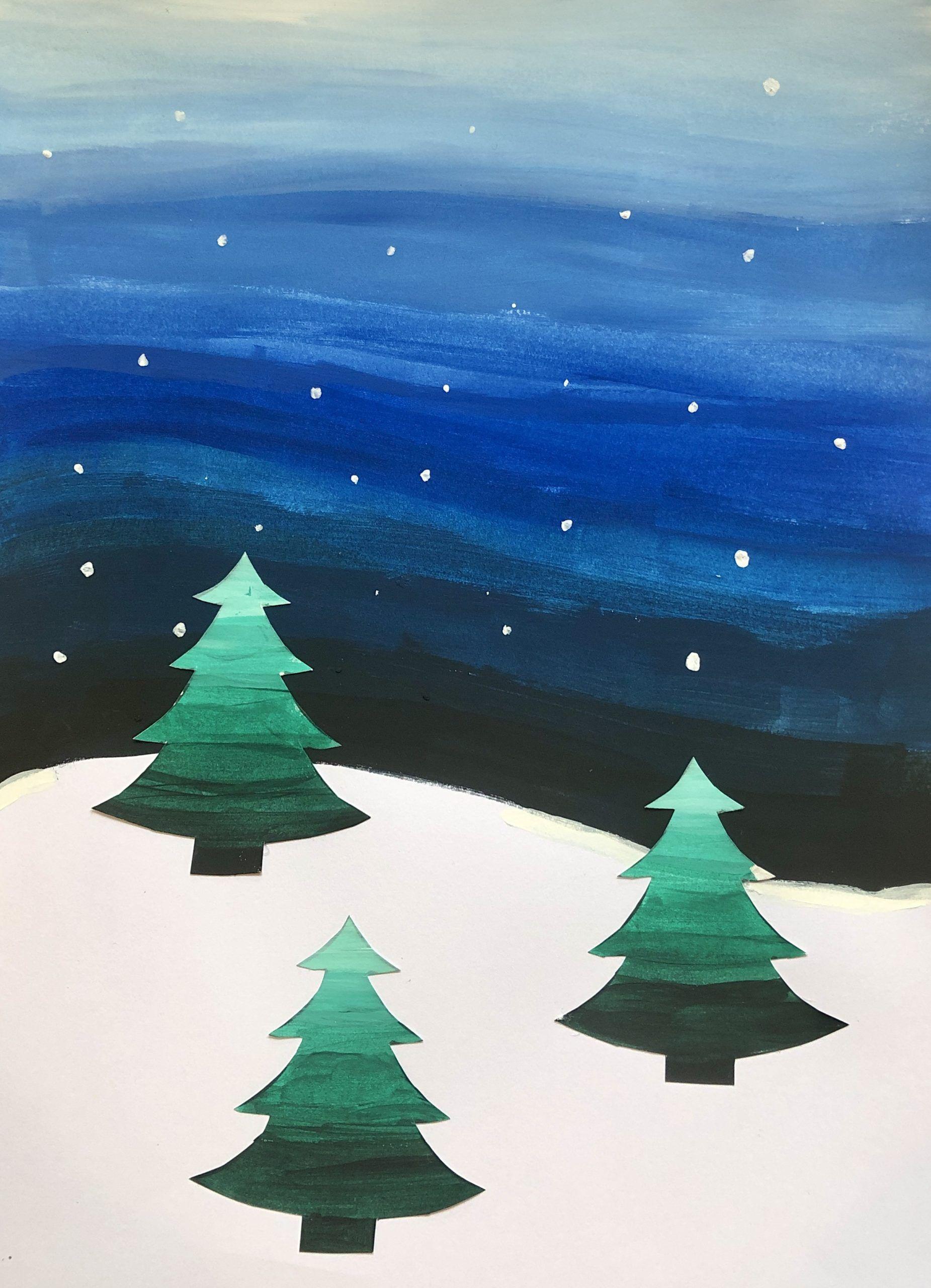
Christmas scene at night
Jump to:CPD video in this lesson
  • Key information
  • Before the lesson
  • Lesson plan
  • Adaptive teaching & vocabulary definitions
CPD video in this lesson

Learning objective

  • To know how to create tint and shade of a colour.

Success criteria

  • I can identify areas of dark and light in a painting or photograph.
  • I can make a tint to lighten a colour by adding white.
  • I can make a shade to darken a colour by adding black.
  • I can paint from light to dark in smooth and neat strokes.

Before the lesson

Watch

  • 1331 views

Watch

  • 1331 views

Lesson plan

Jump to:
  • Recap and recall
  • Attention grabber
  • Main event
  • Wrapping up

Before starting this unit you might want to check children can recall:

  • How to use shapes to build initial sketches.

  • How to mix colours with natural pigments to make natural colours.

  • How to select equipment or paint to recreate specific features.

Before starting this unit you might want to check children can recall:

  • How to use shapes to build initial sketches.

  • How to mix colours with natural pigments to make natural colours.

  • How to select equipment or paint to recreate specific features.

Allow the children to discuss the question:

Allow the children to discuss the question:

  • What does the word tone mean?

Presentation: Tints and shades

Display the link: Still Life with a Pewter Flagon and Two Ming Bowls by Jan Jansz. Treck on slide 2. Point out the way he has blended tones smoothly from dark to light. Ask the children the following questions:

  • Where can you see dark and light areas?
  • What do these dark and light areas show?
  • How do you think you could create darker and lighter colours?

The figures and objects look realistic like you could touch them. The painting could even be mistaken for a photograph!

Explain that the artist has created this illusion using tone – areas of dark and light.

Another good example of an artist using tints and shades of one colour is the painting ‘Green Apples’ by Paul Cezanne. You can find an image of this online.

Display slide 3 of the Presentation: Tints and shades, showing images of paint shade cards. Alternatively, you can use a selection of paint shade cards on the table from a DIY store.

Ask the children how they think a colour can be made lighter or darker.

Explain that an artist creates tone by adding darker or lighter colours to the original colour. The simplest way of creating tones of colour is by adding black or white to the paint. Adding white creates a tint and adding black creates a shade.

The children could practise mixing tints and shades by creating their own shade cards before completing their Christmas designs.

This can be completed in sketchbooks as follows.

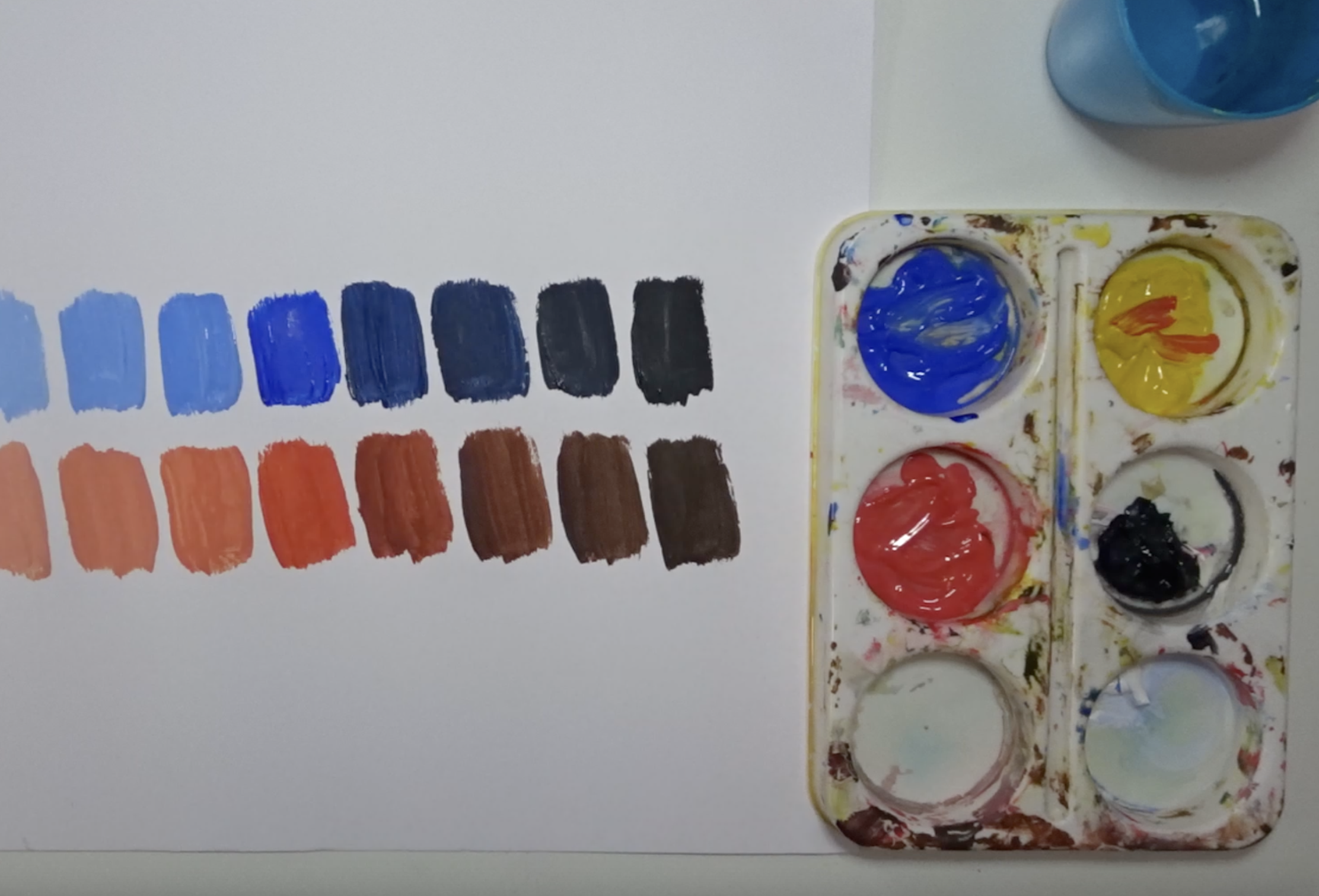
  • Split a drawn rectangle into seven equal sections.

  • Start with the unchanged colour in the middle; work one way, adding black and then the other way, adding white.

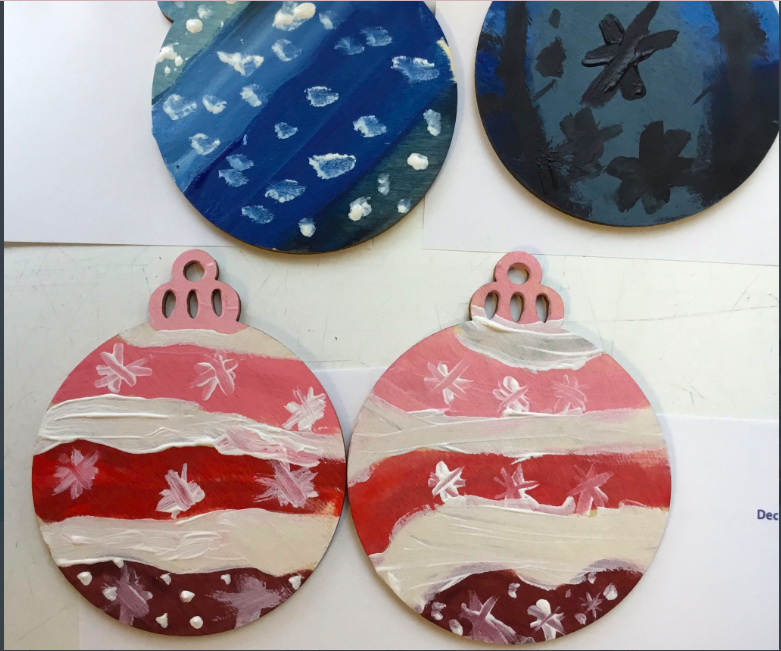
This same technique can then be applied to one of the Christmas-themed shape templates.

Give each child a paint palette which includes:

  • White (to create the tint).

  • Black (for the shade).

  • One colour.

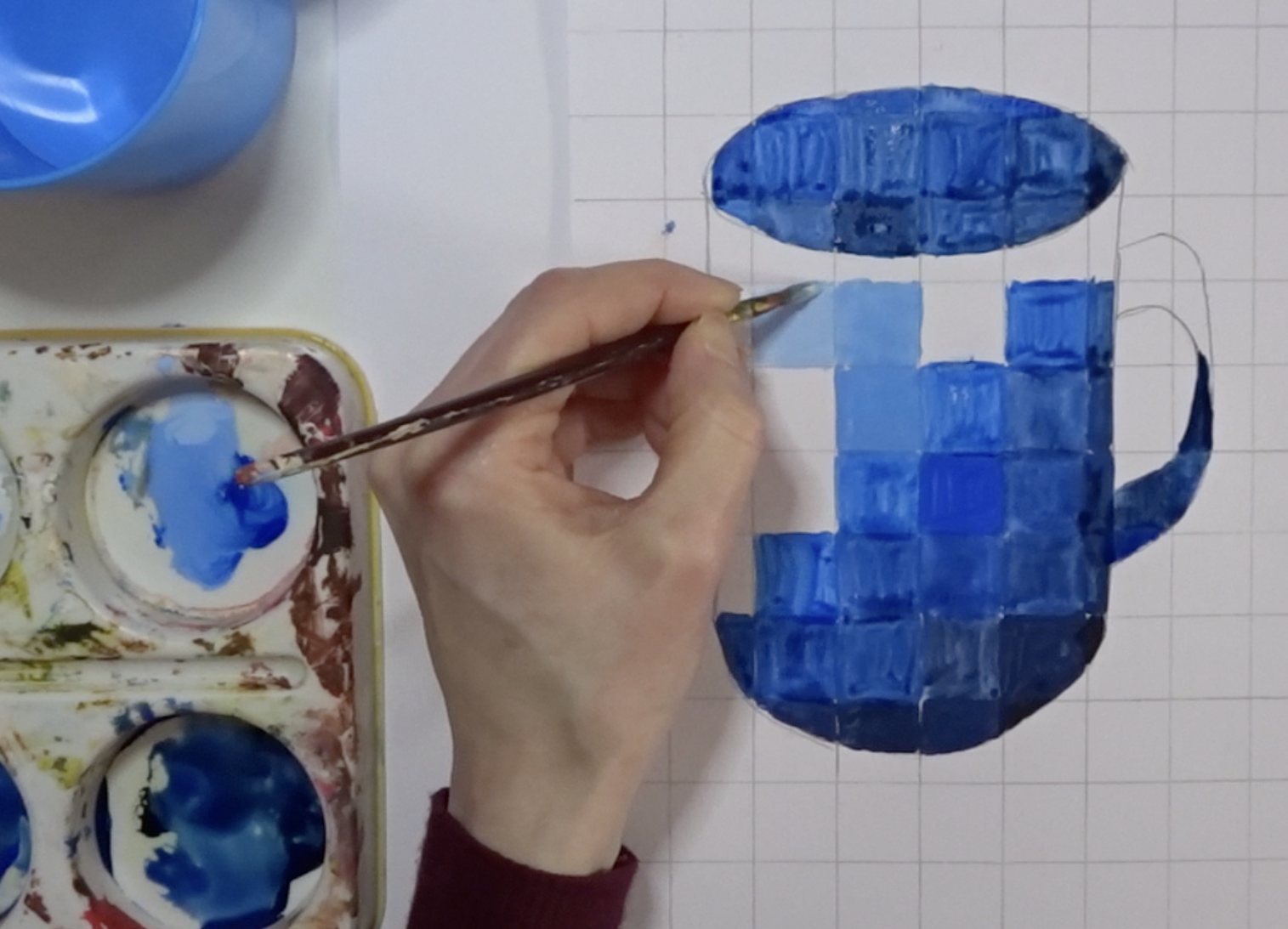
Demonstrate painting a template yourself or use the Pupil video: Tints and shades - Christmas themed.

The emphasis should be on careful mixing to achieve a tonal transition from one shade or tint to the next, while smoothly blending tones from dark to light.

As a class, look at everyone’s work and refer back to the original art pieces from the start of the lesson.

Ask the children if they have blended their tones smoothly without showing hard edges like the artists’ work looked at in the lesson.

Slide with a yawning cat under the heading Introduction.
Full-screen slides, ready for your classroom, chosen by you.
Teach in presentation mode

Success criteria

  • I can identify areas of dark and light in a painting or photograph.
  • I can make a tint to lighten a colour by adding white.
  • I can make a shade to darken a colour by adding black.
  • I can paint from light to dark in smooth and neat strokes.
Was this lesson effective?

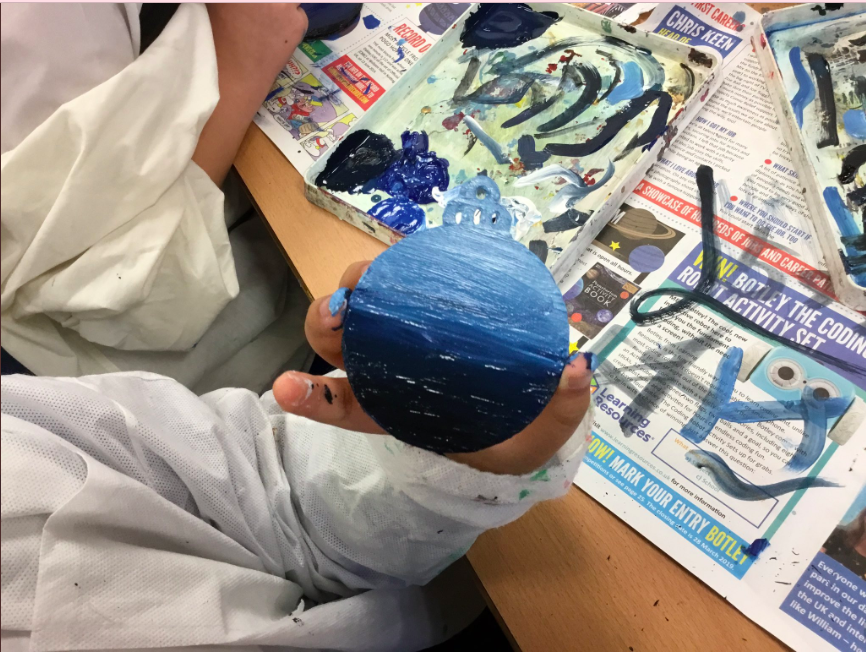
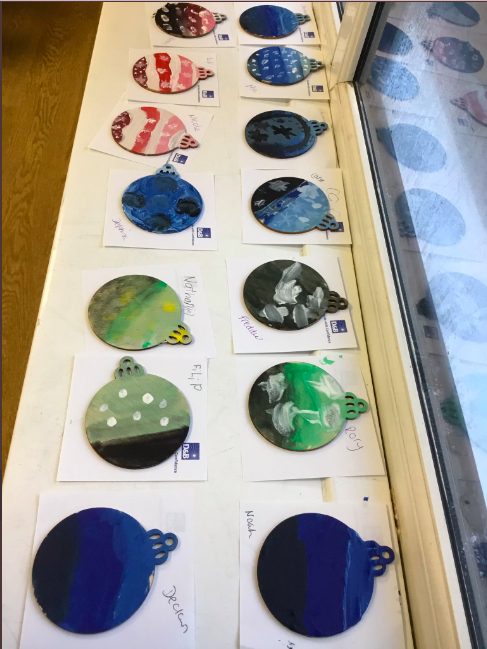
Example work

Screenshot 2022 12 14 at 11.55.11

St Joseph's Primary School, Bracknell
Screenshot 2022 12 14 at 11.55.00

St Joseph's Primary School, Bracknell
Screenshot 2022 12 14 at 11.54.48

St Joseph's Primary School, Bracknell
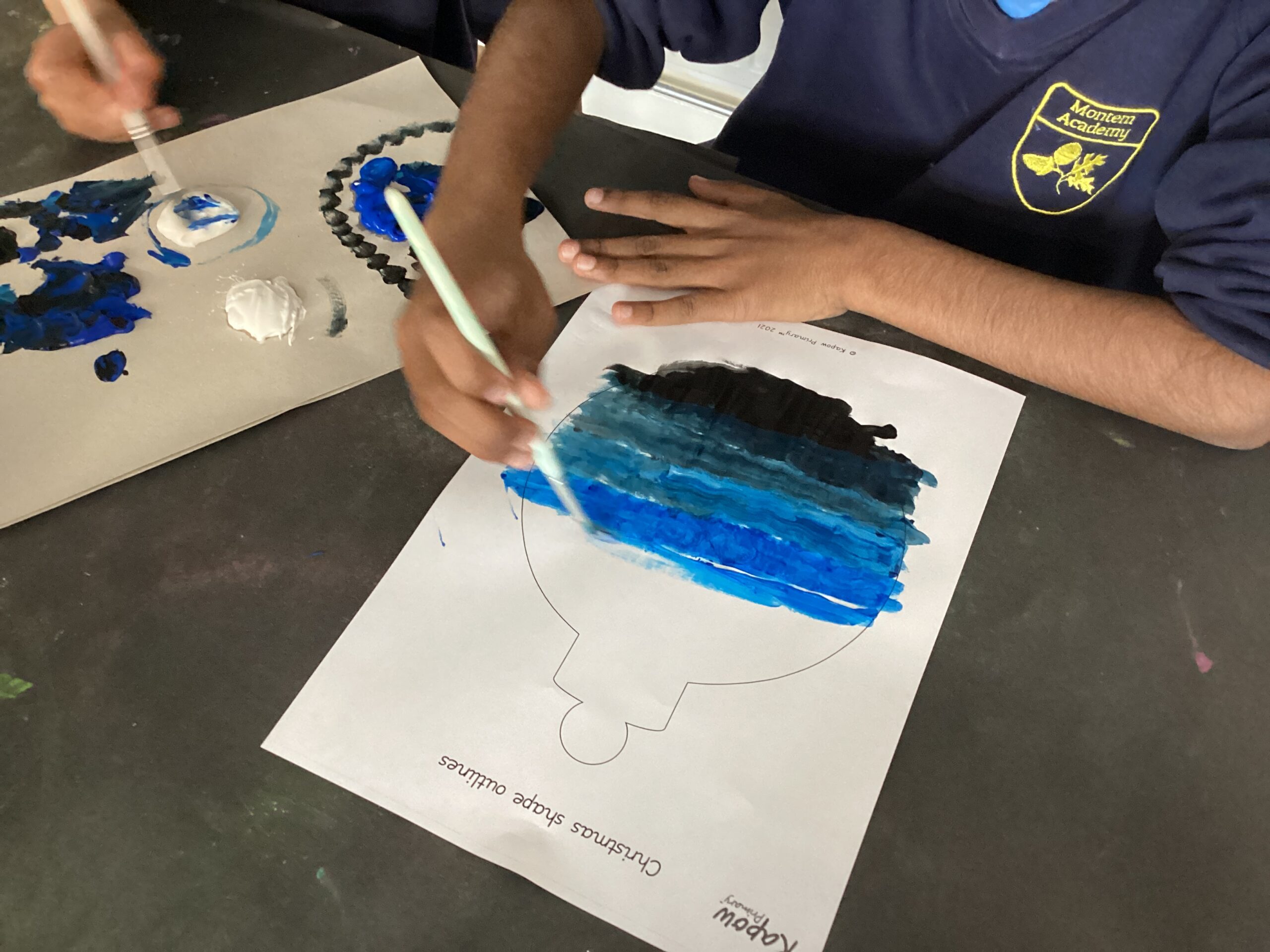
Montem Academy, Slough
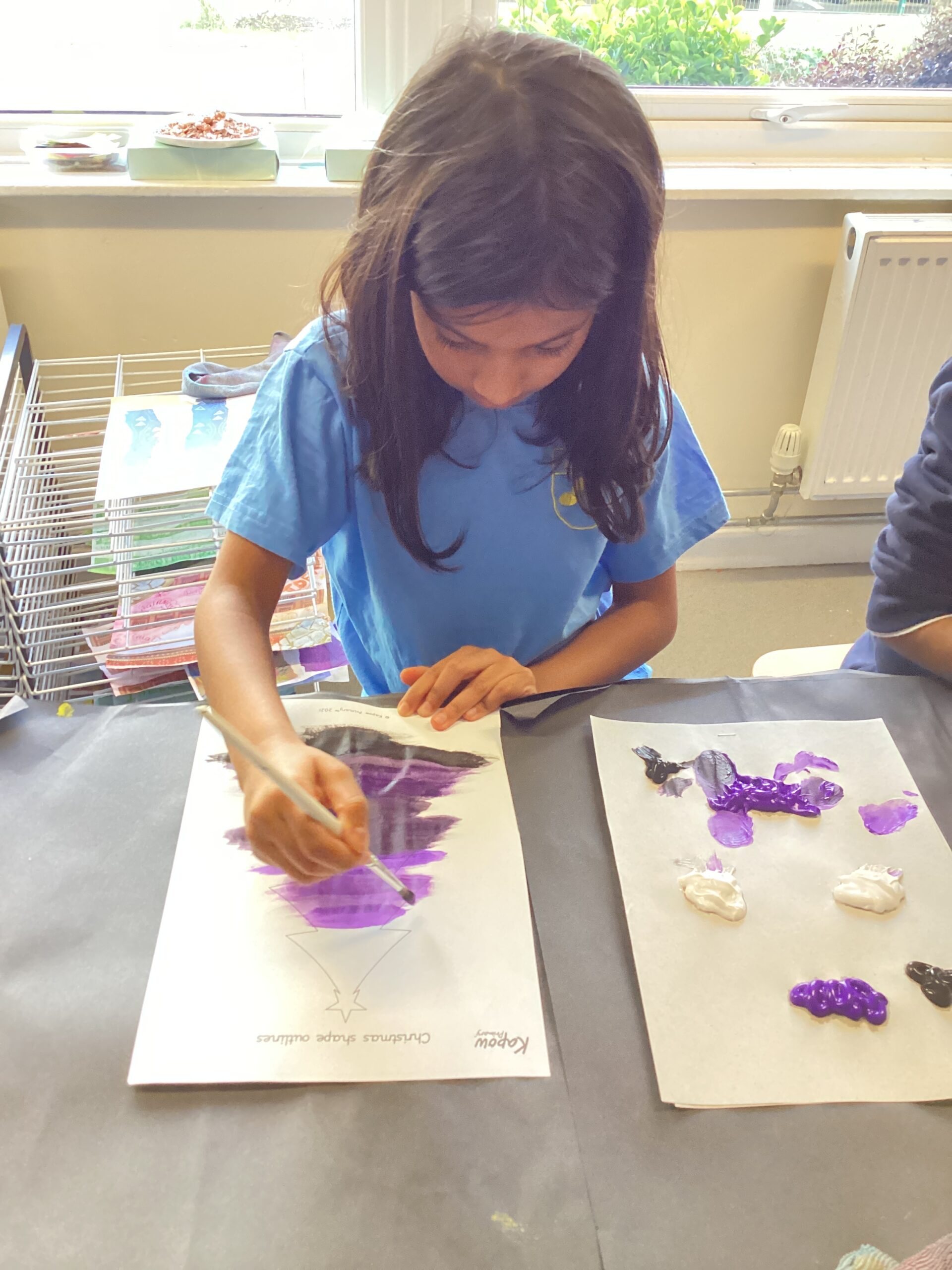
Montem Academy, Slough
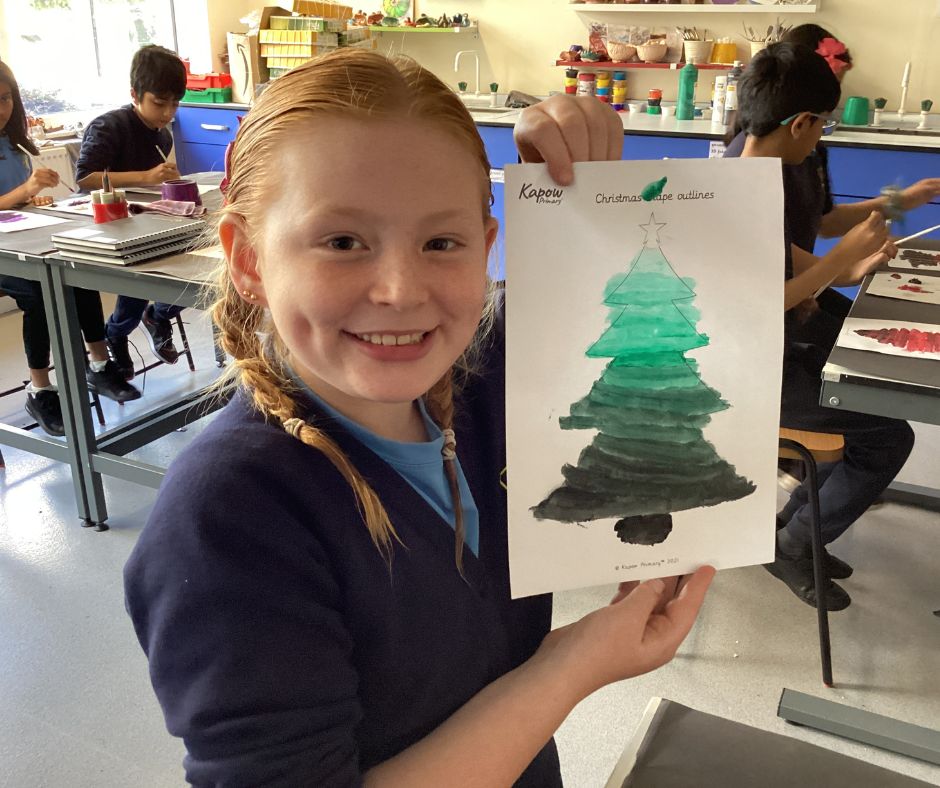
Montem Academy, Slough
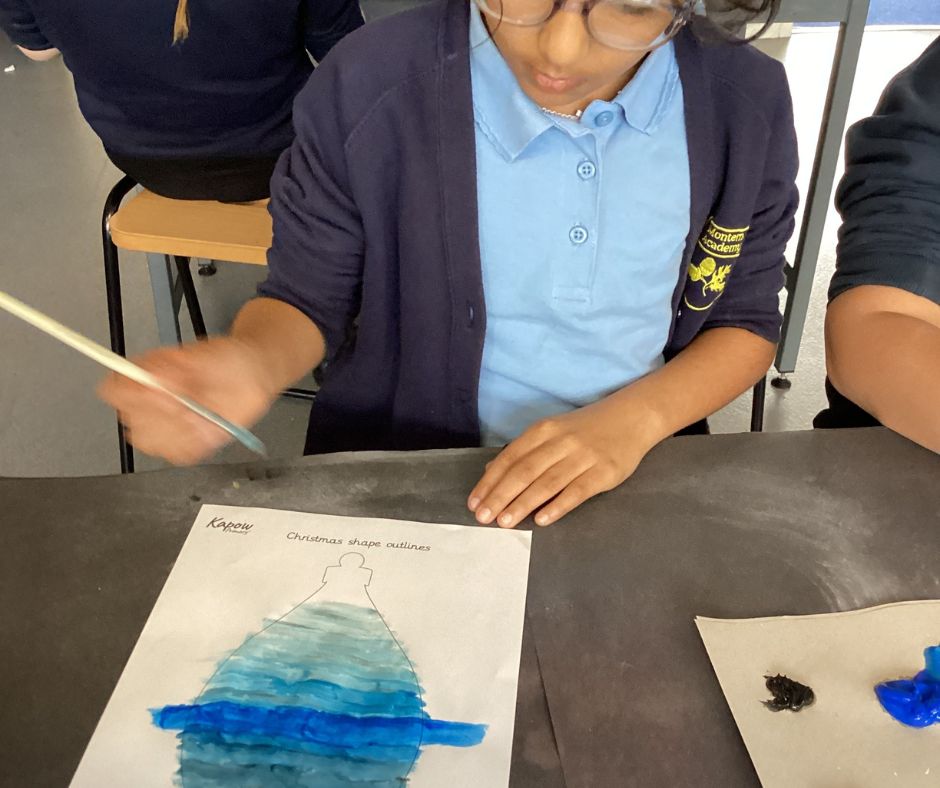
Montem Academy, Slough
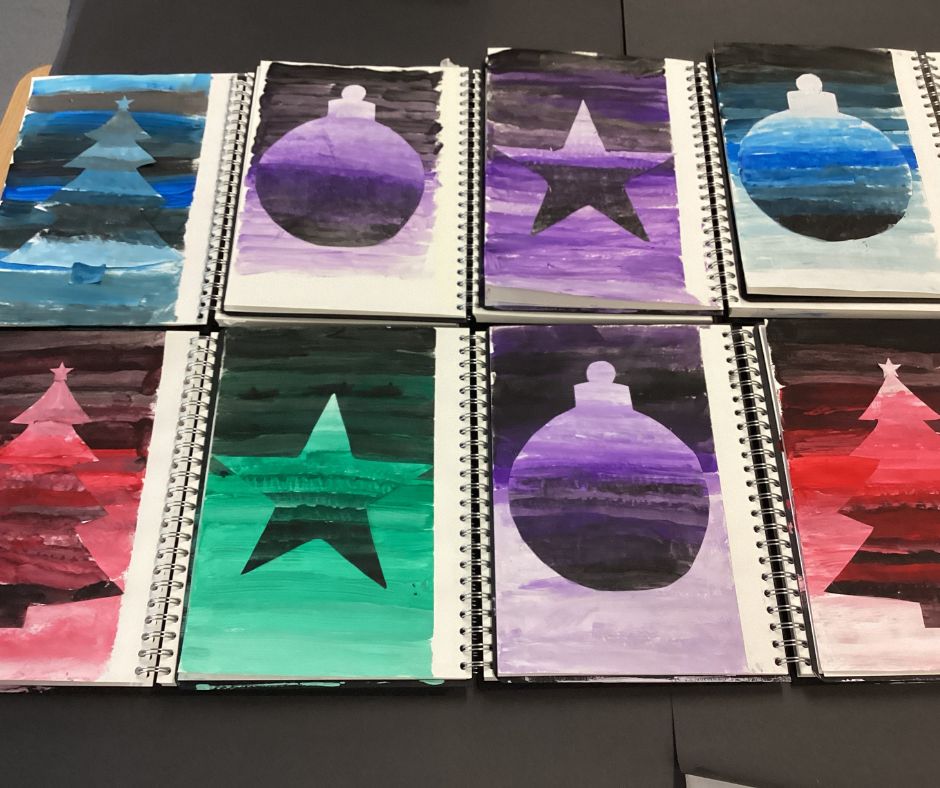
Montem Academy, Slough
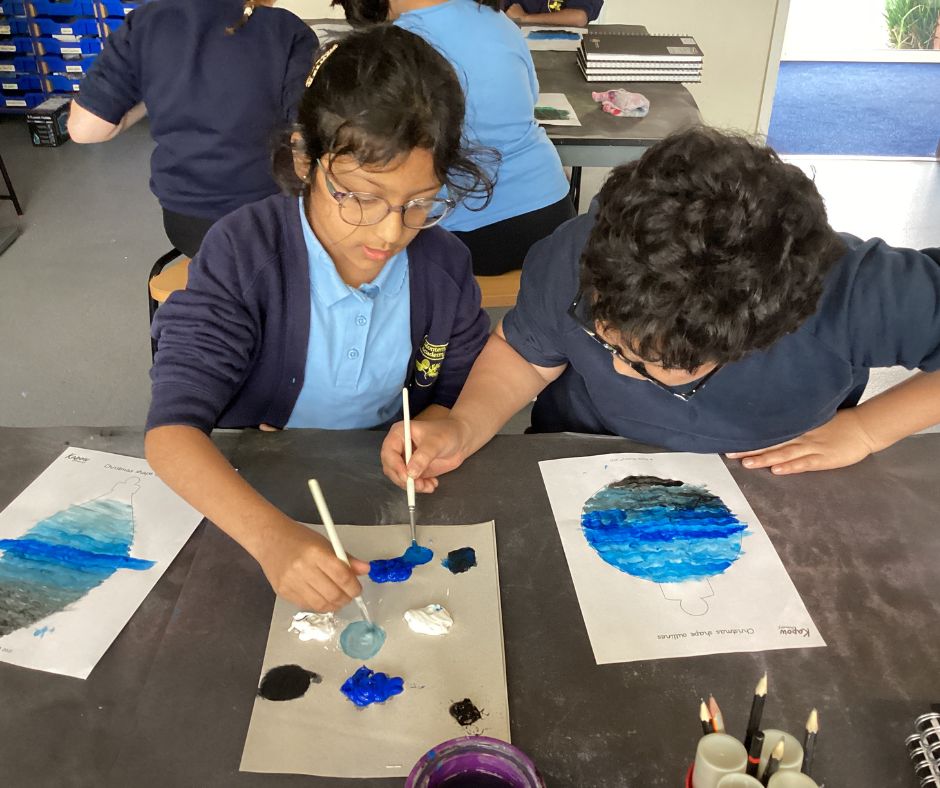
Montem Academy, Slough

Explore more pupil work on our gallery

Open gallery

We value your feedback

We welcome your feedback to help make our resources even better
Please rate this content
1=poor  5=excellent

As a subscriber you have read and agree to our Privacy Policy

For general enquiries not relating specifically to this subject, please contact us

In this unit

  • Assessment – Art and design Y4: Painting and mixed media

    View assessment
  • Lesson 1: Tints and shades – Option 1

    View lesson
  • Current lesson

    Lesson 1: Tints and shades – Option 2: Christmas themed

  • Lesson 2: Three dimensions

    View lesson
  • Lesson 3: Painting techniques

    View lesson
  • Lesson 4: Composition

    View lesson
  • Lesson 5: Still life

    View lesson
Created by: Kapow Primary Team | Maintained by: Kapow team
Last update: 13 November 2026
Meet the specialists

Related content

Drawings on blackboard of people holding yellow stars
Art and design

Assessment – Art and design Y4: Painting and mixed media

Assessment quiz for use at the end of the unit to assess pupil progress.

View lesson
Paint tints and shades
Art and design

Lesson 1: Tints and shades – Option 1

Analysing different painting techniques, comparing paintings by artists according to elements such as texture or colour and practising creating tints and shades when colour mixing.

View lesson
F1C4CE91 C951 4631 A70C 3E1E0C23159C
Art and design

Lesson 2: Three dimensions

Children learn more about the effect of light on colour in everyday life and in art. Applying what they learned previously, they paint a simple object, mixing and using tints and shades to give the appearance of three dimensions.

View lesson
Use presentation mode

Share lessons with your friends and colleagues for free.

  • Join
  • Free trialLogin

    Start using Kapow for free

    No credit card required

    Free trial
    Children celebrating in a school hall

    Used in 8,390 schools!