• Pricing
  • Join
Free trialLogin
  • Art and design
  • Computing
  • Design and technology
  • French
  • Geography
  • History
  • Music
  • Religion and worldviews
  • RSE & PSHE
  • Science
  • Spanish

Start using Kapow for free

No credit card required

Free trial
Children celebrating in a school hall
  • BESA Awards 2025 Winner badge in gold.
  • ERA 2024 Winner badge with bold letters and a black-and-white illustrated face.
  • UK Digital Growth Awards 2024 Winner badge in white text on a black background.
  • ERA 2025 Finalist badge with bold letters and a black-and-white illustrated face.
  • Geographical Association Publishers’ Award 2024 Silver badge.
  • BESA Awards 2024 Finalist badge in silver.
  • Teacher Tapp Gold Recommendation Award 2024 badge with a gold trophy.
  • EdTech Impact badge for Top Teacher Knowledge Tool 2025, as rated by users.
  • Teach Primary Awards 2023 badge stating “Highly Commended.”
  • EdTech Impact Recommended badge with three blue stars, dated November 2024.
  • Circular badge stating “250 reviews on EdTech Impact.”

Sign up to our newsletter

Receive news and resources directly to your inbox.

Subjects

  • Art and design
  • Computing
  • Design and technology
  • French
  • Geography
  • History
  • Music
  • RSE & PSHE
  • Religion & worldviews
  • Science
  • Spanish
  • Archive

Company

  • Our Story
  • Blog
  • Webinars
  • Careers
  • Artsmark support
  • Contact
  • Specialists
  • FAQs
  • Accessibility
  • Sustainability
[email protected]0204 634 9025

©2026 Kapow. Website Design & Development by SoBold

  • Terms of use
  • Privacy
  • Cookies

Registered office: Staverton Court Staverton Cheltenham Gloucestershire GL51 0UX VAT: GB 337 0474 07 Company number 09640574 Postal address: PO Box 79904 London SE1 3JW

  1. Subjects
  2. Archive
  3. RSE & PSHE
  4. Lower key stage 2
  5. Units
  6. ARCHIVED Y4 Families and relationships
  7. Lesson 7: Families in the wider world

Lesson 7: Families in the wider world

Learning that other families, whether in school or the wider world, may be different from our own family and these differences should be respected.
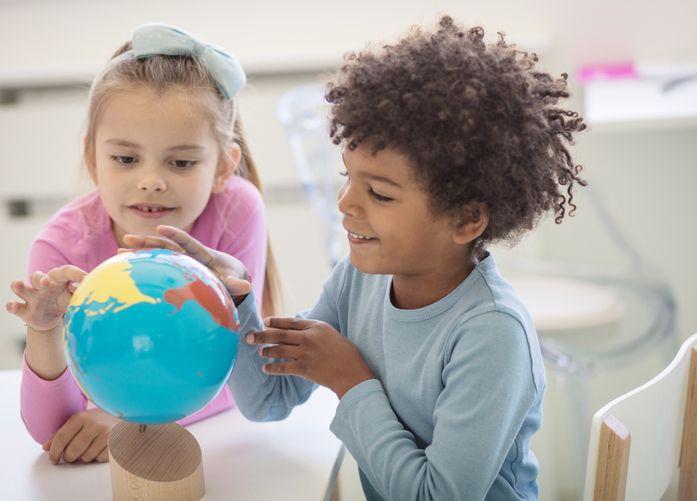
iStock 1154950781
Jump to:
  • Key information
  • Before the lesson
  • Lesson plan
  • Adaptive teaching & vocabulary definitions

Learning objective

  • To begin to understand that families are very varied, in this country and across the world.

Success criteria

  • I understand that families are all different and I should respect these differences.
  • I can identify differences and similarities in families in other countries.
  • I know that no country will have only one type of family.

Important: not aligned with current statutory guidance

This lesson was created before the updated RSE statutory guidance, which came into effect in September 2026, and has not been revised to reflect its requirements.

We do not recommend using this content to plan or deliver RSE lessons under the current statutory guidance.

It is retained for historical reference only and is no longer updated or included in Kapow Primary’s current curriculum progression and planning.

For updated resources aligned with current statutory guidance, visit the RSE & PSHE subject page.

Before the lesson

Check all images, videos, links and presentation slides are suitable for your class.

  • Access to the internet.

  • Books about families or daily life in different countries.

Slide with a yawning cat under the heading Introduction.
Teach this lesson in presentation mode
Full-screen slides, ready for your classroom, chosen by you.

Lesson plan

Jump to:
  • Recap and recall
  • Attention grabber
  • Main event
  • Wrapping up

Ask the children to unscramble some of the key vocabulary used in the previous lesson.

Ask the children to unscramble some of the key vocabulary used in the previous lesson.

Presentation: Anagrams

Give each child a copy of Activity:Family quiz and ask them to complete it about their family. There are no right or wrong answers; we just examine how different families operate.

Ask the children to share the answers and ask the other children to mark on their list whether they have the same answer or a different answer.

Questions

  • What are the similarities and differences between families?

Explain to the children that they will work in groups to learn about families around the world.

Get the children into pairs or groups of three and give each group a copy of the Activity:Families around the world and access to any relevant books and the internet.

Briefly discuss the search terms they can use to help with their online research, including that they will need to include the country's name each time.

Following their research, the children can share the most interesting information they have found with the rest of the class.

When you have discussed the different families, stress that these differences should be celebrated.

Discuss that much of the information the children have found about other countries will be average or generalised. Bring this to life by talking about the differences between families in the class or others that children know. Highlighting that there are many different family setups in our country and worldwide. Reinforce again the need to have respect for others.

Slide with a yawning cat under the heading Introduction.
Full-screen slides, ready for your classroom, chosen by you.
Teach in presentation mode

Success criteria

  • I understand that families are all different and I should respect these differences.
  • I can identify differences and similarities in families in other countries.
  • I know that no country will have only one type of family.
Was this lesson effective?

We value your feedback

We welcome your feedback to help make our resources even better
Please rate this content
1=poor  5=excellent

As a subscriber you have read and agree to our Privacy Policy

For general enquiries not relating specifically to this subject, please contact us

In this unit

  • Assessment – RSE & PSHE Y4: Families and relationships

    View assessment
  • Lesson 1: Respect and manners

    View lesson
  • Lesson 2: Healthy friendships

    View lesson
  • Lesson 3: How my behaviour affects others

    View lesson
  • Lesson 4: Bullying

    View lesson
  • Lesson 5: Stereotypes: Gender

    View lesson
  • Lesson 6: Stereotypes: Disability

    View lesson
  • Current lesson

    Lesson 7: Families in the wider world

  • Lesson 8: Change and loss

    View lesson
Created by: Kapow Primary Team | Maintained by: Kapow team
Last update: 23 November 2026
Meet the specialists

Related content

Drawings on blackboard of people holding yellow stars
RSE & PSHE

Assessment – RSE & PSHE Y4: Families and relationships

Assessment quiz and Knowledge catcher for use at the start and/or end of the unit to assess pupil progress.

View lesson
iStock 1007226886 1
RSE & PSHE

Lesson 1: Respect and manners

Learning about courtesy, respect and manners in a range of situations.

View lesson
Three friends with arms over each others shoulder happy and content
RSE & PSHE

Lesson 2: Healthy friendships

Understanding the physical and emotional boundaries in friendships, including relationships in a digital context.

View lesson
Use presentation mode

Share lessons with your friends and colleagues for free.

  • Join
  • Free trialLogin

    Start using Kapow for free

    No credit card required

    Free trial
    Children celebrating in a school hall

    Used in 8,390 schools!